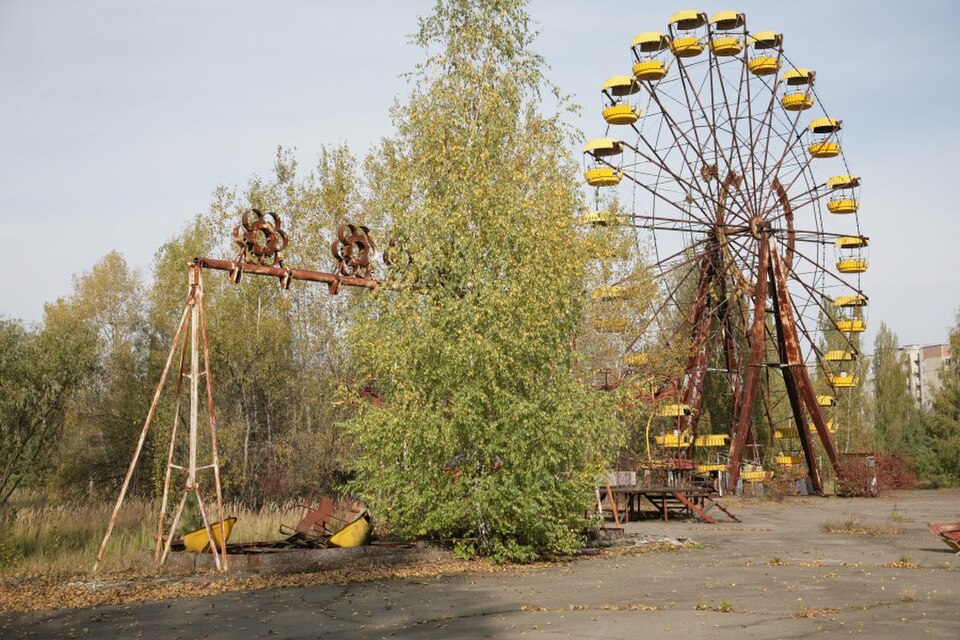
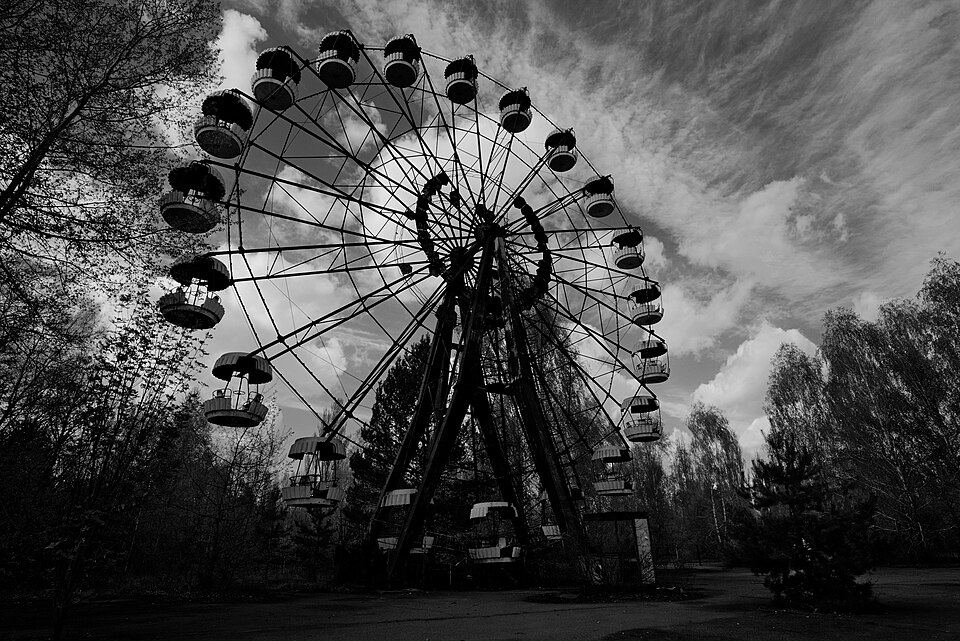
A bright yellow Ferris wheel stands over the dead city of Pripyat, and in nearly forty years it has never officially carried a single paying rider. It was built for a grand opening that was only days away when the reactor a few kilometers north tore itself apart. Today the Pripyat Ferris wheel is the most photographed object of the Chernobyl disaster — a cheerful carnival ride frozen in a town no one is allowed to live in, with radiation still hiding in the moss beneath its cars.
What Pripyat Amusement Park Was
Pripyat was not an old town slowly falling apart. It was brand new. Founded in 1970 to house the workers of the Chernobyl Nuclear Power Plant, it was a model Soviet city — young, modern, and full of families. The average resident was in their twenties, and the town was designed to feel like a reward for the people building the nuclear future.
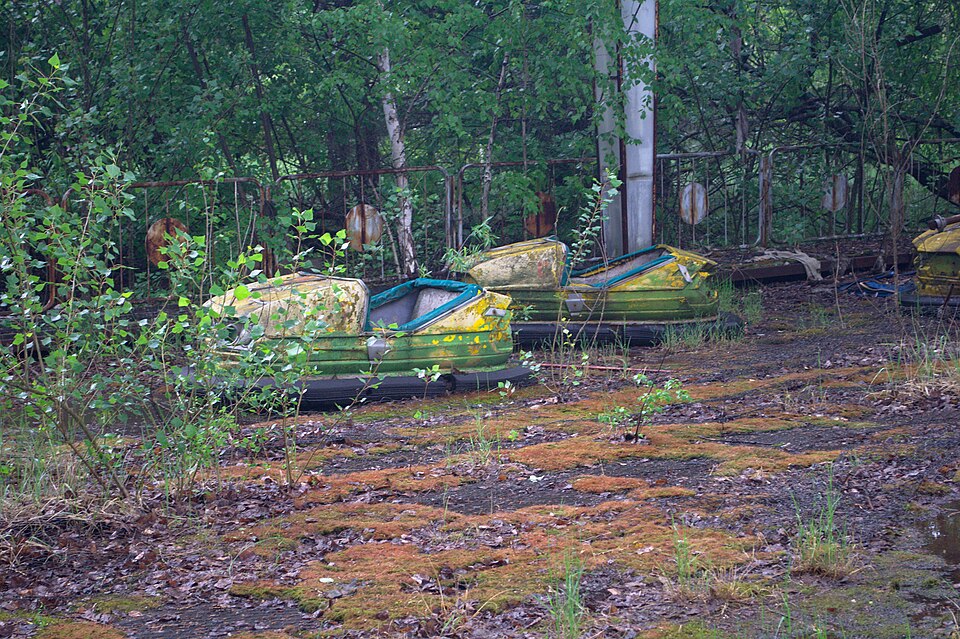
The amusement park was part of that promise. Tucked beside the central Palace of Culture, it held a small but complete set of attractions: the now-famous Ferris wheel, a set of bumper cars, a paratrooper ride, swing boats, and a carnival shooting gallery. The plan was for the whole park to open on May 1, 1986 — May Day, the biggest holiday on the Soviet calendar, when the city would fill with parades and celebration.
That opening never came.
Why It Was Abandoned
On April 26, 1986, reactor No. 4 at the Chernobyl plant exploded during a botched safety test, throwing radioactive material high into the air. For the first day, life in Pripyat carried on almost normally. Officials said little, and residents went about their weekend not knowing that an invisible cloud had already settled over their streets.
The order to evacuate came on the afternoon of April 27. Around 49,000 people were told to pack a small bag and leave for what they were assured would be only a few days. Buses lined the streets by the hundreds. Nobody was allowed to come back. The park, decorated and ready for a holiday that was four days away, was simply switched off and left behind.
The Eerie Part: Radiation in the Moss
What makes the Pripyat Ferris wheel and its park so unsettling is not just the silence — it is what the ground still holds.
Radiation does not spread evenly here. The paved and concreted areas of the park have largely weathered clean and are considered relatively safe to stand on for a short time. But moss is different. Over the decades, the soft green moss that has crept across the pavement, into the bumper-car floor, and beneath the Ferris wheel has quietly soaked up and trapped radioactive particles like a sponge. Guides who bring dosimeters to the park report that readings can spike sharply the moment the device is lowered toward the moss, even though the concrete a step away stays calm. Some of the highest radiation readings in all of Pripyat have been recorded in this small patch of former fun.
So the danger is strangely intimate. A visitor can walk the midway feeling reasonably safe, then watch their meter scream over a cushion of moss no bigger than a doormat. The carnival looks harmless. The ground remembers everything.
What It Looks Like Today
Pripyat sits inside the Chernobyl Exclusion Zone, and for years it could only be visited on guided tours. The amusement park became the single most recognizable stop on that route — the yellow wheel appearing in documentaries, video games, and thousands of photographs as shorthand for the whole disaster.
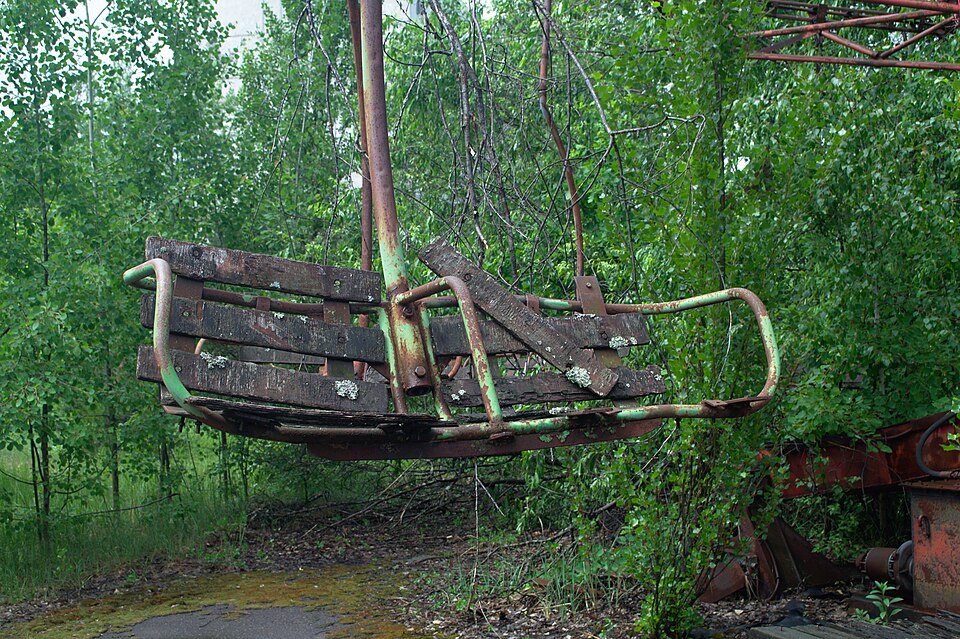
The Ferris wheel itself has not turned in normal service since 1986. It stands 26 meters tall, its steel now streaked with rust and its cabins peeling, though the yellow still glows faintly through the decay. In September 2017, a group of Polish visitors reportedly managed to rotate it by hand — said to be the first time the wheel had moved in over thirty years. Visitors sometimes leave stuffed animals in the empty cars, small quiet memorials to a childhood the town never got to have. Around it, the [dead city of Pripyat](#) is slowly being swallowed by forest, and each year the trees push a little closer to the ride that was built for a crowd that never arrived.
Legends & Disputed Stories
One story clings to the park: that it was opened for just a few hours on April 27, 1986, to keep residents calm and distracted as the evacuation loomed. Some accounts state it as fact, but historians note the claim is largely unverified, and the official grand opening on May 1 unquestionably never happened. Whether or not a handful of children rode the bumper cars in those final hours, the truth at the heart of it holds: the Pripyat Ferris wheel was never meant to spin in an empty city.
For a town built to celebrate the future, it is a bitter kind of irony — a park that was ready for its happiest day, and got the end of the world instead. Like [other amusement parks the world simply walked away from](#), it survives now only as a photograph of the moment everything stopped.