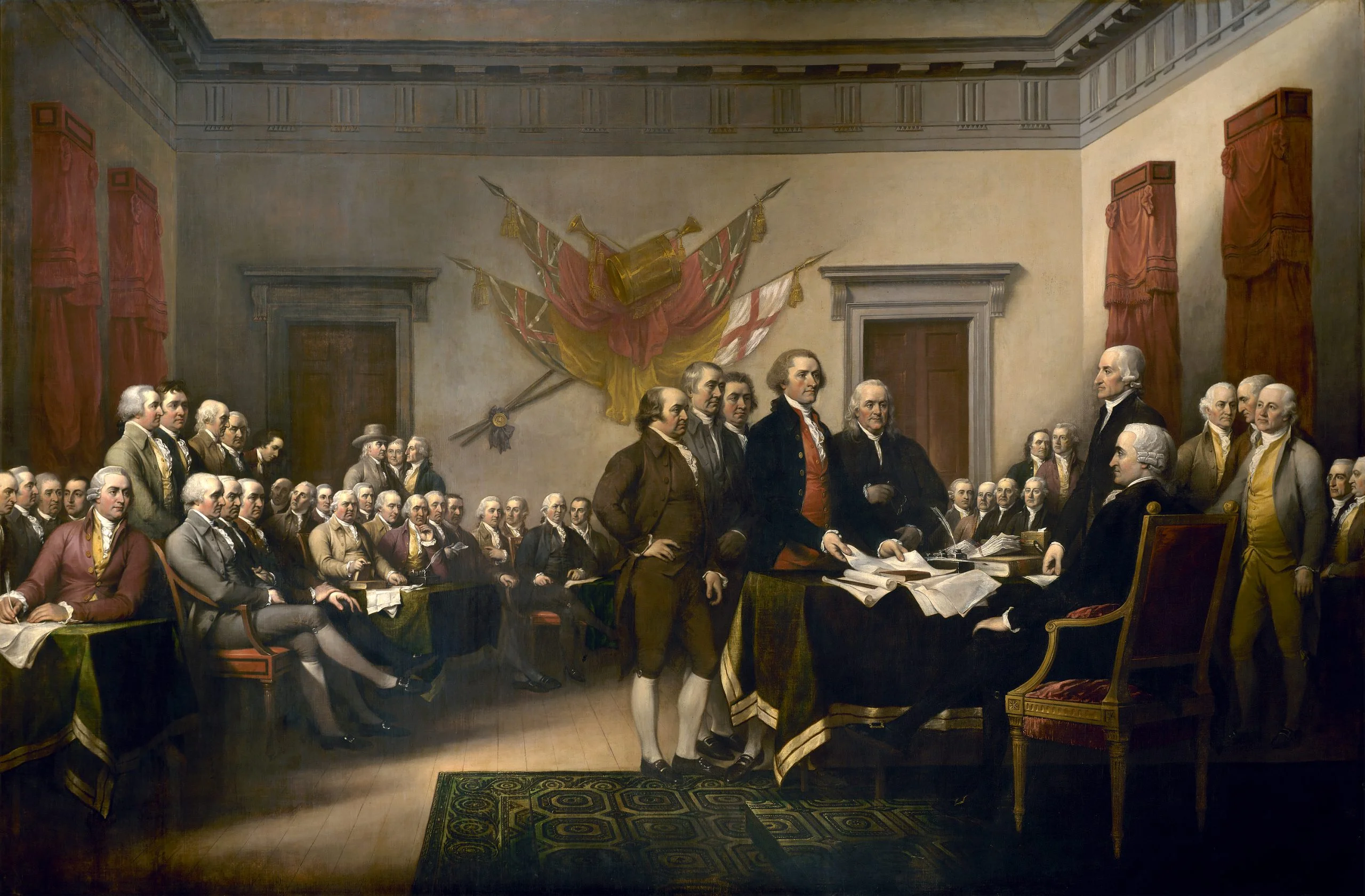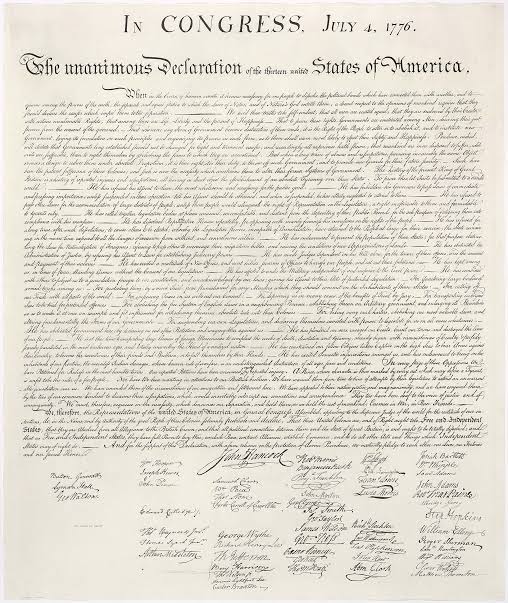
Most of the 56 signers of the Declaration of Independence survived the Revolution and lived long, often successful lives. A popular essay called “The Price They Paid,” shared every Fourth of July, claims they were tortured, ruined and killed for signing. That’s mostly false. Five signers were captured during the war, but four were taken as ordinary prisoners of war and none died in captivity. Nine died during the war, but none in battle or at British hands. Some lost homes and property; a few later went bankrupt, but decades afterward and mostly from land speculation.
The real story doesn’t need exaggeration. These men really did commit treason in British eyes, and they knew it.
Key Facts
- Signers: 56 delegates from 13 colonies; most signed on August 2, 1776
- Captured during the war: 5 — none died as prisoners
- Died during the war (1776–1783): 9 — none killed in battle
- Oldest signer: Benjamin Franklin, 70
- Youngest signer: Edward Rutledge, 26
- Last surviving signer: Charles Carroll of Carrollton, died 1832
What Does “The Price They Paid” Claim?
The essay has circulated for decades and went viral by email in the late 1990s. Radio hosts read it on air, and it reappears on social media every July. It claims that five signers “were captured by the British as traitors and tortured before they died,” that twelve had their homes burned, and that several died in poverty.
Fact-checkers and historians, including Snopes and the History News Network, have taken it apart line by line. Here’s how the main claims hold up:
| Claim in the essay | What really happened |
|---|---|
| Five signers were captured as traitors and tortured before they died | Five were captured, but four were taken as ordinary prisoners of war while serving in the militia. They were not tortured and none died in captivity. Only Richard Stockton was badly mistreated. |
| Nine fought and died from wounds or hardships of the war | Nine signers did die between 1776 and 1783, but none died in battle. Most died of illness or old age; one was killed in a duel. |
| Twelve had their homes ransacked and burned | Several signers’ homes and estates were damaged, looted or occupied — a real loss — but not always deliberately because they had signed. |
| Carter Braxton and Robert Morris died in rags | Both went bankrupt, but years after the war, largely through business and land speculation. Morris spent about three years in debtors’ prison in the 1790s. |
Which Signers Were Captured by the British?
- Richard Stockton (New Jersey): captured by Loyalists in November 1776 and held by the British in harsh conditions. He was released after several weeks, signed an oath not to take further part in the war, and his health never recovered. He died in 1781. Many historians believe his signature on the Declaration is why he was treated so badly.
- George Walton (Georgia): wounded and captured while commanding militia at the Battle of Savannah in December 1778; exchanged in 1779. He later became governor of Georgia.
- Thomas Heyward Jr., Arthur Middleton and Edward Rutledge (South Carolina): captured when Charleston fell to the British in May 1780 and held at St. Augustine, Florida, until exchanged in 1781. All three went on to long careers; Rutledge later became governor.
So yes, signing was dangerous. But the four men captured in the field were treated like other captured officers, not singled out as traitors.
Did Any Signers Die Because of the War?
Nine signers died while the war was still going on. None was killed in combat. Button Gwinnett of Georgia was shot in a duel in 1777 with Lachlan McIntosh, a rival Continental officer — a political feud, not a British bullet. Others, such as Stockton, died of illness, and some were simply elderly.
Several signers did suffer real losses. Francis Lewis of New York saw his home destroyed, and his wife was captured and held by the British for months; her health was broken by the experience. Others had estates plundered or occupied by British troops. The essay’s mistake is not that the signers suffered nothing, but that it inflates and invents the details.
What Happened to the Signers After the War?
Most did very well. Among the 56 were two future presidents (Adams and Jefferson), a future vice president (Elbridge Gerry), several governors, Supreme Court justices and senators. Many returned to law, trade or their plantations. Several who owned enslaved people continued to do so, a contradiction historians still discuss.
A few did fall on hard times. Robert Morris, who had helped finance the war, lost his fortune in land speculation and was jailed for debt. Carter Braxton also lost much of his wealth. But these misfortunes came years later and were not punishments for signing.
Why Does the Myth Keep Spreading?
Because it tells a simple, moving story every Fourth of July. It turns the signers into martyrs and invites readers to feel grateful. The real history is more complicated — and, in a way, more impressive: these men pledged “our lives, our fortunes and our sacred honor” without knowing how the war would end, and most of them then went on to build the country they had declared.
Keep Reading
- The Road to the American Revolution Explained: A Clear Summary of the Causes (1763–1776)
- The Revolutionary War Explained: A Clear Summary From Lexington to Yorktown (1775–1783)
- How Many Americans Died on British Prison Ships? The Forgotten Toll of the Revolution
- Why Was Valley Forge So Bad? What Really Killed 2,000 Soldiers in the Winter of 1777–78
- Were the Hessians Really Drunk at Trenton? What Happened on Christmas Night 1776
Frequently Asked Questions
Who was the wealthiest signer of the Declaration of Independence?
Charles Carroll of Carrollton, a Maryland planter, is usually described as the richest. He was also the only Catholic signer and the last to die, in 1832, at age 95.
What is the rarest signature on the Declaration?
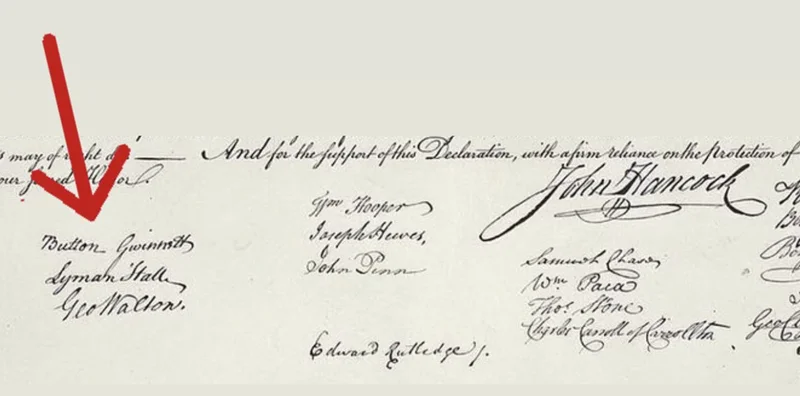
Button Gwinnett’s. He died in 1777, less than a year after signing, and left very few signed documents. His autographs have sold for very large sums at auction.
Were the signers really committing treason?
In British law, yes. Rebellion against the Crown was treason, punishable by death. If the war had been lost, the signers would have been among the first targets. That risk was real even if the essay’s details are not.
Why It Still Matters
The signers don’t need invented torture stories to be remarkable. They put their names on a document that made them traitors to the most powerful empire in the world, at a moment when the war was going badly. Telling what really happened to them — the captures, the losses, and the long, successful lives — honors them better than a myth does.
Sources
- Snopes — “The Price They Paid” (fact check, first published 1999)
- History News Network — “The Myth About the Signers of the Declaration of Independence that Won’t Die” (2002)
- USA Today — “Fact check: Decades-old essay about Declaration of Independence signatories is partly false” (July 12, 2021)
- Connecticut Society of the Sons of the American Revolution — “The Price They Paid” and rebuttal by Prof. E. Brooke Harlowe (1998)
- J. L. Bell, Boston 1775 — “The Mythical ‘Price They Paid'” (2008)
- National Archives — “Declaration of Independence: A Transcription” and signer biographies