Yes — some of the time. The Ghost Army, a secret U.S. Army unit of about 1,100 men, staged more than 20 deceptions in Europe in 1944–45 using inflatable tanks, recorded battle sounds, fake radio traffic and actors posing as other units. Several missions clearly worked, above all Operation Viersen in March 1945, which helped draw German forces away from the real American crossing of the Rhine. Others had little visible effect. The most famous deception of all, the “fake army” that kept Hitler guessing about D-Day, was a larger Allied plan, not the Ghost Army’s work alone.
The story stayed secret for half a century. Many of the men never told their own families what they did in the war.
Key Facts
- Official name: 23rd Headquarters Special Troops (plus the 3133rd Signal Service Company, which operated in Italy)
- Size: about 1,100 men in the 23rd
- Active: June 1944 – March 1945, in France, Luxembourg, Belgium and Germany
- Missions: more than 20 battlefield deceptions
- Declassified: 1996
- Honored: Congressional Gold Medal, March 21, 2024
What Was the Ghost Army?
The 23rd Headquarters Special Troops was a “traveling show” designed to make the enemy see an American unit where there was none — or miss one that was really there. It was made up of four parts, each fooling a different sense:
| Unit | What it faked |
|---|---|
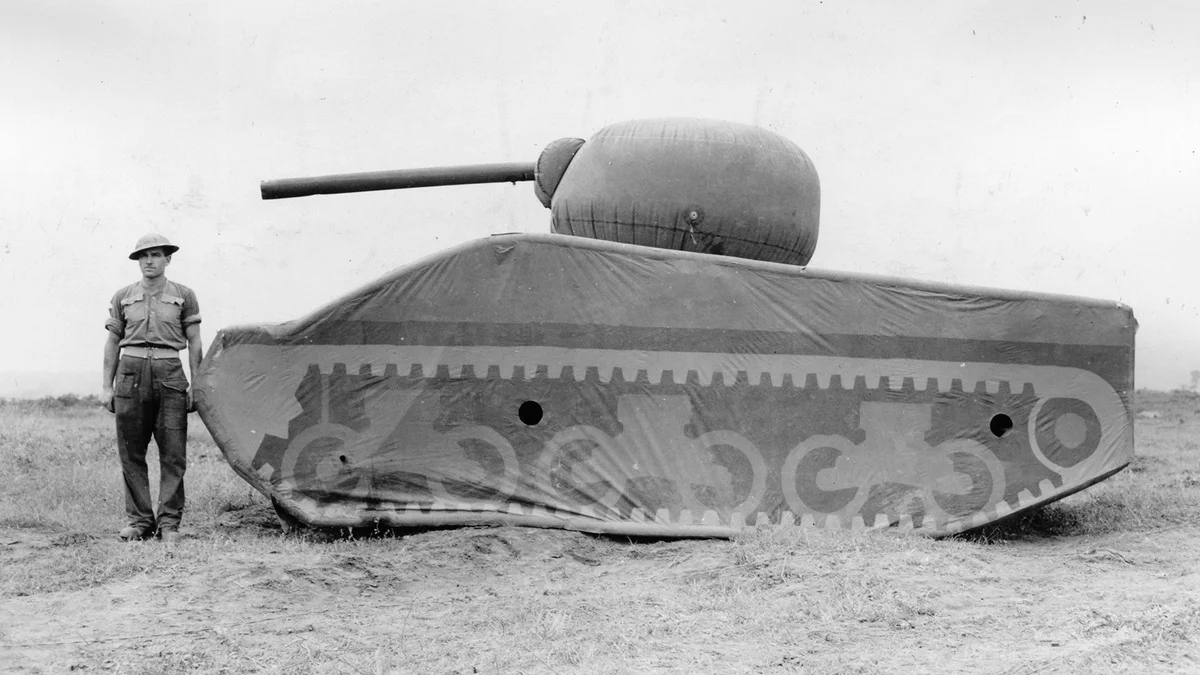
| 603rd Engineer Camouflage Battalion | Sight — inflatable tanks, trucks, artillery and airplanes, plus fake gun flashes |
| Signal Company, Special | Radio — imitating the radio traffic of a real division, operator habits included |
| 3132nd Signal Service Company | Sound — powerful speakers on half-tracks playing recordings of tanks, bridge-building and troop movements |
| 406th Engineer Combat Company | Security and real combat engineering |
Many recruits came from art schools, advertising and design. Among them were future fashion designer Bill Blass and painter Ellsworth Kelly.
How Did the Ghost Army Fool the Germans?
A typical mission worked like a stage play. When a real division moved out of the line, the Ghost Army moved in, at night, and pretended to be it:
- Inflatable tanks were set up with tread marks dug into the ground behind them.
- Radio operators kept sending the “missing” division’s normal traffic.
- Sound trucks played recordings at night that could carry for miles.
- Soldiers sewed on the patches of other divisions, painted fake markings on vehicles, and some officers posed as generals in local cafés, where they knew spies might be listening.
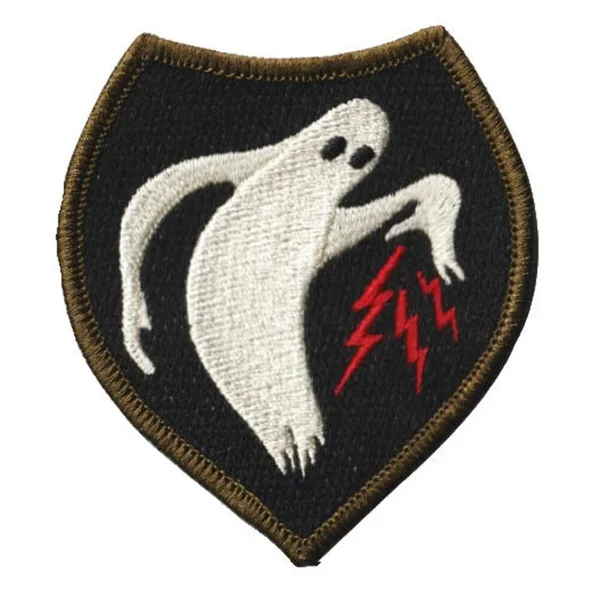
The aim was not to win battles but to buy time and confusion: make the Germans hold troops in the wrong place, or attack where the Americans were strongest.
Did It Actually Work?
Historians judge the missions one by one. Results fall into three groups:
| Result | Examples |
|---|---|
| Clearly successful | Operation Viersen (March 1945) — the unit’s last and largest mission, considered its best |
| Partly successful or unclear | Many missions in France and Luxembourg in 1944. German records rarely show exactly what they believed, and some ruses were spotted or ignored |
| Often credited, but not theirs alone | The pre-D-Day deception about Calais was Operation Fortitude, a much larger Allied plan |
Veterans and supporters argue that the Ghost Army saved thousands of American lives by keeping German units pinned down or in the wrong place. Skeptics note that it is hard to prove what an enemy commander did because of a deception rather than for other reasons.
Operation Viersen: The Ghost Army’s Best Show
In March 1945, the U.S. Ninth Army prepared to cross the Rhine River into Germany. The Ghost Army set up its show some distance away, impersonating two divisions with hundreds of inflatables, fake radio networks and sound trucks running for several nights. German units were drawn toward the fake crossing point. When the Ninth Army crossed for real, resistance was lighter than feared.
Why Did the Allies Land in Normandy Instead of Calais?
The Pas-de-Calais was the shortest route across the English Channel, and the Germans expected the invasion there. The Allies chose Normandy because its beaches were less heavily defended and could be reached from ports across southern England.
To keep the Germans guessing, the Allies ran Operation Fortitude. It invented a whole army group in England — the “First U.S. Army Group,” supposedly led by General George S. Patton — using fake radio traffic, double agents and some decoy equipment. Even after D-Day, Hitler kept strong forces near Calais for weeks, expecting the “real” invasion still to come.
That fake army is often called a “ghost army,” which causes confusion. The 23rd Headquarters Special Troops was a separate unit that went to France after D-Day and worked close to the front lines.
What Happened to the Ghost Army?
The unit returned home in 1945 and was quietly disbanded. Its records stayed classified until 1996, partly because the same deception methods might be used again. After that, filmmaker and author Rick Beyer and the families of veterans spent years telling the story and lobbying Congress.
In 2022, the Ghost Army Congressional Gold Medal Act was signed into law. On March 21, 2024, the medal — Congress’s highest civilian honor — was presented in Washington. Only seven members were still alive; three attended, each around 100 years old.
Keep Reading
- What Happened to Japanese Americans After the Internment Camps?
- What Happened to Easy Company After WWII? The Real “Band of Brothers” After the War
- What Happened to the Nazi Scientists Brought to America? Operation Paperclip Explained
- What Happened to the Doolittle Raiders Captured by Japan? The Fate of the Eight
- Why Did Japanese Soldiers Refuse to Surrender in WWII? From Iwo Jima to Hiroo Onoda
Frequently Asked Questions
Were the Ghost Army’s tanks really inflatable?
Yes. The decoys were made of rubber and inflated with air compressors. A single man could carry a deflated “tank,” and from the air or at a distance they looked real.
Did the Ghost Army see combat?
Not as a fighting unit, but it often worked close to the front and came under fire. A few of its men were killed or wounded during the war.
Where can I learn more about the Ghost Army?
The best-known accounts are Rick Beyer’s PBS documentary The Ghost Army and the book The Ghost Army of World War II by Beyer and Elizabeth Sayles, which includes the soldiers’ own wartime sketches and paintings.
Why It Still Matters
The Ghost Army was not a secret weapon that won the war. It was something more American: a group of artists, sound engineers and young soldiers who used imagination as a tool of war, risked their lives near the front, and then kept quiet for 50 years. Some of their shows failed. At least one, on the Rhine, helped save lives at a critical moment.
Sources
- Rick Beyer and Elizabeth Sayles, The Ghost Army of World War II (Princeton Architectural Press, 2015)
- Ghost Army Legacy Project (ghostarmy.org)
- Associated Press — “Their WWII mission was secret for decades. Now the Ghost Army will get the Congressional Gold Medal” (March 21, 2024)
- Military Times — Ghost Army awarded Congressional Gold Medal (March 21, 2024)
- Ghost Army Congressional Gold Medal Act (H.R. 707 / Public Law, 2022)
- The National WWII Museum — “The Ghost Army”
- Army University Press — articles on WWII tactical deception