Most Japanese soldiers in World War II refused to surrender because they had been trained to see capture as a deep disgrace to themselves and their families, and because they were told the Americans would torture and kill them. A 1941 military code told soldiers never to “live to experience shame as a prisoner.” But it wasn’t only ideology: Allied troops often didn’t take prisoners either, which made surrender genuinely dangerous. The result was battles like Iwo Jima, where only about 216 of roughly 21,000 Japanese defenders were captured — and soldiers like Hiroo Onoda, who kept fighting until 1974.
To American Marines in the Pacific, the enemy’s refusal to quit was one of the most frightening things about the war. Understanding why it happened tells us a lot about both sides.
Key Facts
- The code: the Senjinkun (“Instructions for the Battlefield”), issued January 8, 1941, under War Minister Hideki Tojo
- Iwo Jima (1945): about 21,000 Japanese defenders; 216 taken prisoner
- Okinawa (1945): more than 7,000 surrendered — a sharp rise late in the war
- Last famous holdout: Lt. Hiroo Onoda, Lubang Island, Philippines — surrendered March 1974
Why Did Japanese Soldiers Refuse to Surrender?
Historians point to several causes that reinforced each other:
| Cause | How it worked |
|---|---|
| The Senjinkun code | A pocket booklet given to soldiers in 1941 said, in essence: do not live in shame as a prisoner; die, and leave no dishonor behind. Being captured was treated as worse than death. |
| Shame for the family | Prisoners from earlier wars had been treated as outcasts. Soldiers feared their families would be disgraced at home. |
| Propaganda | Troops were told Americans tortured and murdered prisoners. Even many who did surrender expected to be killed. |
| Allied behavior | In practice, Allied soldiers often did not take prisoners, especially early in the war. Some Japanese also faked surrender to ambush Americans, which made GIs even less willing to accept it. |
| Group pressure and isolation | Officers and comrades watched one another. Units cut off on islands often had no way to surrender safely — or to learn how the war was going. |
Historian John Dower, author of War Without Mercy, argued that the Allied side of this story is often overlooked: thousands of Japanese soldiers might have surrendered if they had believed they would live. A 1944 U.S. campaign to encourage prisoner-taking, with leaflets and better treatment, helped raise the number of prisoners sharply in the last year of the war.
Why Did So Few Japanese Surrender on Iwo Jima?
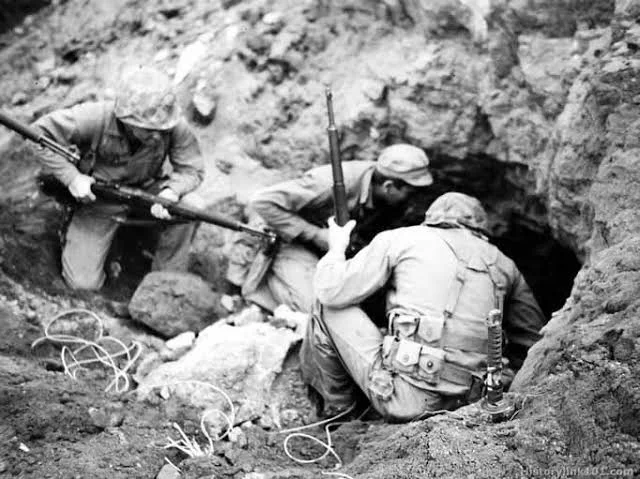
Iwo Jima’s commander, General Tadamichi Kuribayashi, built a defense of tunnels and caves and ordered his men to fight to the end and take ten Americans with them before dying. There was nowhere to retreat on an island of eight square miles, and no hope of rescue.
Of about 21,000 defenders, only 216 were taken prisoner during the battle, and many of those were captured because they were unconscious or too badly wounded to resist. The battle killed about 6,800 Americans. It was the only major Marine battle in the Pacific where total American casualties, killed and wounded, exceeded Japanese casualties.
Did Any Japanese Soldiers Surrender?
Yes — more than many Americans realize. Numbers rose as the war turned against Japan and as American forces made a deliberate effort to take prisoners. On Okinawa in 1945, more than 7,000 Japanese soldiers surrendered, many of them drafted Okinawan conscripts. After Emperor Hirohito’s broadcast in August 1945, millions of Japanese troops across Asia laid down their arms in obedience to his order.
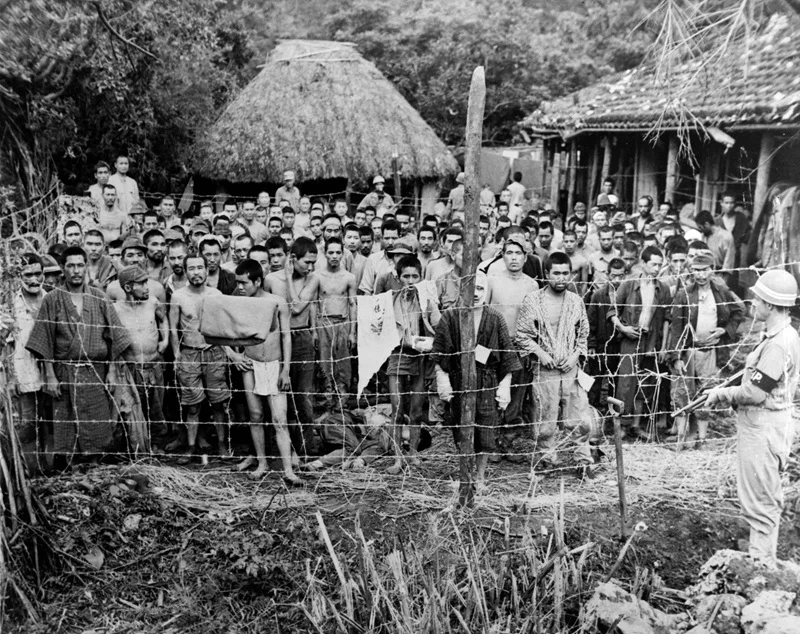
The emperor’s word was decisive: for most soldiers, surrender became acceptable only when it was ordered from the top.
Why Did Hiroo Onoda Keep Fighting for 29 Years?
In December 1944, Lt. Hiroo Onoda, an intelligence officer, was sent to Lubang Island in the Philippines with orders to wage guerrilla war. Unusually, his orders also told him never to surrender and never to take his own life — he was to keep fighting until relieved by a superior officer.
He and a few men stayed in the jungle after Japan surrendered. Leaflets and newspapers announcing the end of the war reached them, but Onoda dismissed them as enemy tricks. One companion surrendered in 1950; the other two were killed in clashes with Filipino police in 1954 and 1972.
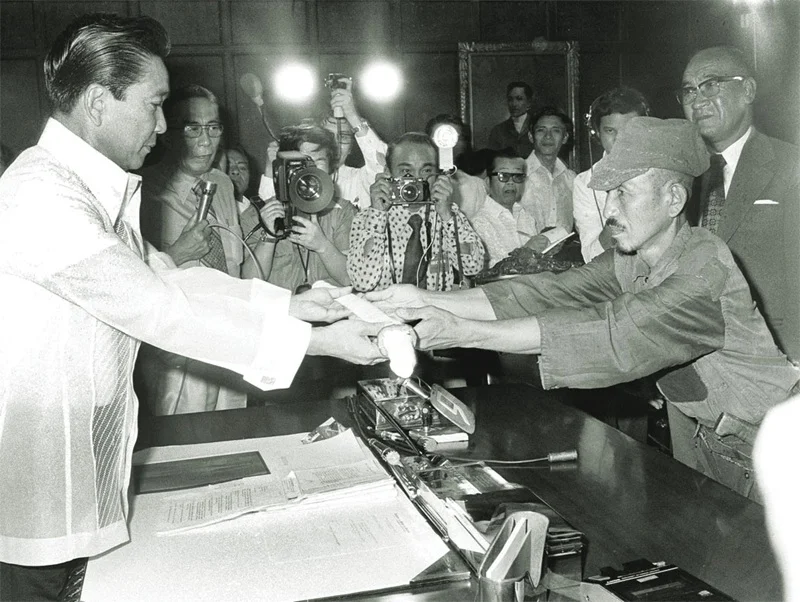
In February 1974, a young Japanese traveler named Norio Suzuki found Onoda. Onoda still refused to give up without orders. Japan’s government tracked down his old commander, Major Yoshimi Taniguchi, by then a bookseller. On March 9, 1974, Taniguchi flew to Lubang and formally relieved him of duty. Onoda surrendered his sword and rifle, and was pardoned by Philippine President Ferdinand Marcos.
The Other Side of Onoda’s Story
In Japan, Onoda returned as a hero of loyalty. On Lubang, he is remembered very differently. Over the decades, he and his men killed about 30 Filipino civilians, mostly farmers, and wounded many more, while stealing food and burning crops. When Onoda revisited the island in 1996, local officials asked him to compensate victims’ families, and relatives protested his visit.
Keep Reading
- What Happened to Japanese Americans After the Internment Camps?
- What Happened to Easy Company After WWII? The Real “Band of Brothers” After the War
- What Happened to the Nazi Scientists Brought to America? Operation Paperclip Explained
- What Happened to the Doolittle Raiders Captured by Japan? The Fate of the Eight
- Why Did It Take So Long to Rescue the USS Indianapolis Survivors?
Frequently Asked Questions
Did Onoda know the war was over?
He saw leaflets and newspapers saying so, but believed they were fake. He later said he only accepted the truth when his commanding officer gave him the order in person.
Was Onoda the last Japanese soldier to surrender?
He was the most famous. Corporal Shoichi Yokoi was found on Guam in 1972. Private Teruo Nakamura, a soldier from Taiwan, was found on the Indonesian island of Morotai in December 1974, after Onoda.
Did Japanese soldiers fear U.S. Marines?
Many did, and propaganda deliberately encouraged that fear. Japanese soldiers were told Marines killed prisoners, and some accounts from the war confirm that prisoners were sometimes shot — which made the propaganda harder to dismiss.
Why It Still Matters
The refusal to surrender shaped how the Pacific War ended. American planners looked at Iwo Jima and Okinawa and expected an invasion of Japan to cost enormous numbers of lives on both sides — one of the reasons given for using the atomic bomb. It also left a lesson both countries took to heart: how soldiers are taught to see surrender, and how their enemies treat those who try, can decide how many people die.
Sources
- John W. Dower, War Without Mercy: Race and Power in the Pacific War (Pantheon, 1986)
- Ulrich Straus, The Anguish of Surrender: Japanese POWs of World War II (University of Washington Press, 2003)
- Hiroo Onoda, No Surrender: My Thirty-Year War (Kodansha International, 1974)
- Grand Valley State University — “Japan: No Surrender in World War Two”
- Asia-Pacific Journal: Japan Focus — “Gyokusai, or ‘Shattering like a Jewel’: Reflection on the Pacific War”
- U.S. Marine Corps History Division — Iwo Jima casualty figures
- History Hit — “Hiroo Onoda: The Japanese Soldier Who Refused to Surrender”