Did Vietnam benefit from French colonization? Some things France built lasted and are still used — railways, bridges, ports, medical institutes and the spread of a Latin-alphabet script for Vietnamese. But most historians conclude that the colony was run mainly for French profit: land was concentrated in few hands, taxes and state monopolies fell hardest on poor farmers, plantation workers died at shocking rates, and Vietnamese had almost no say in how they were governed. Whether the gains outweigh the costs is still argued — and the answer depends on whom you ask.
The question matters because it shaped everything that came after. The Vietnam that fought France from 1946 and then the United States was formed by those 90 years of French rule. Here is the ledger, line by line.
Key Facts
- Conquest: 1858 (attack on Da Nang) to 1885; all of Vietnam under French control by the mid-1880s
- Colony: part of French Indochina (with Cambodia and Laos) from 1887
- Three parts: Cochinchina (south, a direct colony), Annam (center) and Tonkin (north), protectorates under the Nguyen emperors
- Peak investment: under Governor-General Paul Doumer, 1897–1902, and in the 1920s
- End: Japanese takeover in March 1945; French return 1945–1954; defeat at Dien Bien Phu, 1954
How Did France Colonize Vietnam?
Step by step, over almost 30 years. In 1858, a French and Spanish fleet attacked Tourane — today’s Da Nang — partly to protect Catholic missionaries who were being persecuted by the Nguyen court, and partly to gain a foothold for trade with China.
| Year | What happened |
|---|---|
| 1858 | French-Spanish attack on Da Nang |
| 1859 | French capture Saigon |
| 1862 | Treaty of Saigon: Emperor Tu Duc cedes three southern provinces |
| 1867 | France takes the rest of the south, forming the colony of Cochinchina |
| 1883–1884 | Treaties make central Vietnam (Annam) and the north (Tonkin) French protectorates |
| 1885–1896 | The “Can Vuong” (Aid the King) resistance is defeated |
| 1887 | France creates the Indochinese Union (Laos added in 1893) |
The Nguyen emperors stayed on their throne in Hue, but real power passed to French officials. Under one colonial decree, even the name “Vietnam” was not to be used: the country was officially three separate regions.
What France Built
The case that Vietnam benefited rests on things you can still see.
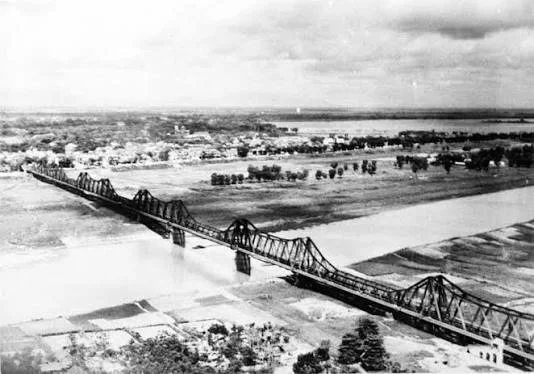
- Railways and bridges. Governor-General Paul Doumer launched a huge public-works program around 1900. The Transindochinois railway, finished on September 2, 1936, ran 1,730 km (about 1,075 miles) from Hanoi to Saigon in about 40 hours. Most of it is still Vietnam’s main north–south line. The Doumer Bridge in Hanoi, opened in 1902, still stands as the Long Bien Bridge.
- New farmland. French engineers dug canals across the Mekong Delta, draining marshland. The area planted with rice roughly quadrupled in the 20 years after 1880, and southern Vietnam became one of the world’s great rice exporters.
- Medicine and science. Albert Calmette founded the Pasteur Institute in Saigon in 1891, the first outside France. By the early 1920s it was producing up to 3.5 million doses of smallpox vaccine a year, according to a colonial journal of the time. Alexandre Yersin, the scientist who identified the plague bacterium, settled in Nha Trang and is still honored there.
- Cities and schools. Hanoi and Saigon gained modern streets, water systems, hospitals, a university (founded 1906–1907) and secondary schools that trained a new Vietnamese middle class.
- The alphabet. The Latin-based script for Vietnamese, chữ Quốc ngữ, was created by European missionaries in the 1600s. French authorities promoted it in schools and government in the early 1900s, and it became the national script — far easier to learn than Chinese characters.
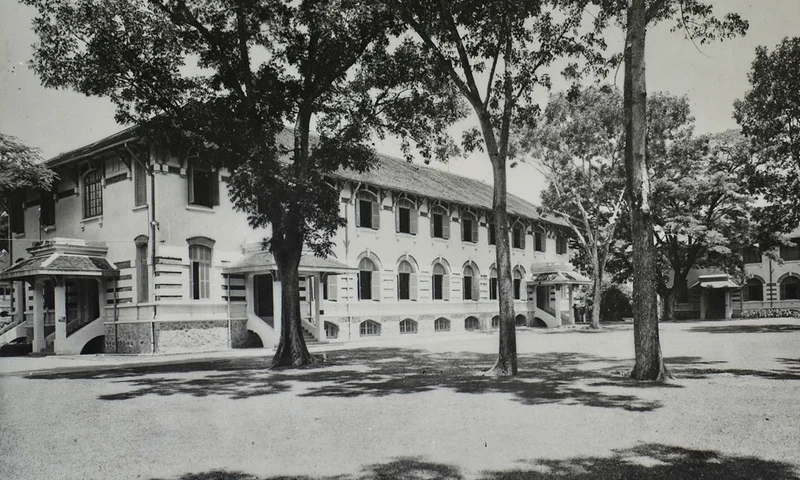
Defenders of colonial rule, then and now, point to these as proof of France’s “civilizing mission.” Some foreign observers of the 1930s called Indochina one of the best-run colonies in Asia.
The Cost: Land, Taxes and Plantations
The case against rests on who those projects served — and who paid for them. Britannica sums up the consensus: French investment in Indochina was aimed above all at exploiting its resources for France.
- Land: much of the new rice land went to French settlers and wealthy Vietnamese landlords. By 1930, according to the Library of Congress country study, more than 80% of the rice land in Cochinchina was owned by 25% of landowners, and 57% of the rural population were landless peasants working other people’s fields.
- Taxes and monopolies: the colonial government held monopolies on salt, alcohol and opium — goods every village used. The same study says these monopolies and excise taxes eventually supplied 70% of the government’s operating revenue (other historians give lower shares for particular years). Villagers who had once made their own rice wine or gathered their own salt now had to buy it from the state. Opium was sold legally by a government agency.
- Forced labor: roads and railways were built partly with corvée labor — unpaid work that villages were required to supply.
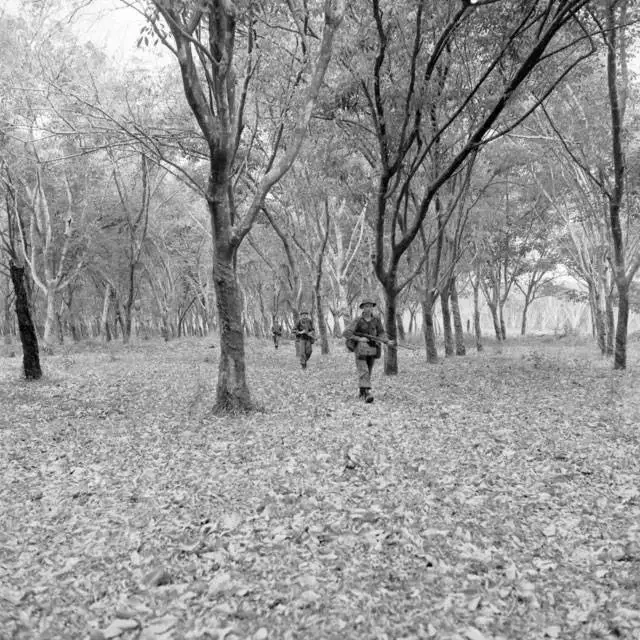
- Rubber plantations: in the 1920s, French companies including Michelin recruited tens of thousands of contract workers from the north to clear and tap rubber estates in the south. Disease and harsh treatment killed many. At Michelin’s Phu Rieng plantation, colonial records show 17% of the workers died in a single year in the late 1920s. Workers called the plantations “hell on earth.”
- Little industry: manufacturing was kept small, partly to protect French factories that sold goods to the colony. The Nguyen dynasty’s own shipyards and arsenals were dismantled.
Did French Schools Raise Literacy?
This is where the two sides disagree most sharply.
Before the French arrived, Vietnam had a long tradition of village schools teaching Chinese characters for the imperial exams. Historian David Marr estimated that up to a quarter of Vietnamese adults could read at least several hundred characters. France abolished the old exam system — in 1915 in the north and 1919 in the center — and replaced it with Franco-Vietnamese schools.
The new schools reached far fewer children than the old village system had. The Library of Congress country study concludes that Vietnam’s literacy “declined precipitously” under French rule. Vietnam’s own official history goes further: it says 95% of the population was illiterate in 1945, a figure the new government used to launch a national literacy campaign.
Yet the same period spread the Quoc ngu alphabet, which made reading far easier to learn — and anti-colonial groups used it too. In 1938, Vietnamese intellectuals founded an Association for the Spread of Quoc Ngu to teach adults to read. The tool France promoted ended up carrying nationalist newspapers, poems and pamphlets.
How Do Vietnamese and French Historians See It?
Views have changed over time and still differ by country.
| Perspective | Main argument |
|---|---|
| French colonial officials (1880s–1940s) | France brought order, science, health and modern infrastructure — a “civilizing mission” |
| Vietnamese official history and school textbooks | Describe two “colonial exploitation programs” (roughly 1897–1914 and 1919–1929) designed to extract wealth; stress land loss, taxes, forced labor and repression |
| Most Western historians today | Real infrastructure was built, but mostly to serve the colonial economy; ordinary Vietnamese gained little, and many lost land and freedom |
| Some economic historians | Point to long-term effects — rail links, the Mekong Delta’s rice economy, an alphabet and public health systems — that independent Vietnam later built on |
What nearly all agree on: Vietnamese had little political voice. Elected councils were small and advisory; protests were crushed, as in the 1930 Yen Bai mutiny and the Nghe-Tinh uprisings of 1930–1931; and thousands of political prisoners were held on the island of Con Dao.
The Hardest Year: The Famine of 1945
The colonial era ended in disaster. During World War II, Japan occupied Indochina but left the French administration in place until March 1945. Rice was requisitioned, fields were turned over to industrial crops, and transport collapsed. In the winter and spring of 1944–1945, famine struck northern Vietnam.
The death toll is disputed. Vietnam’s government says about 2 million people died; many foreign historians estimate between roughly 400,000 and 1 million. Blame is shared between Japanese and French authorities, but for millions of Vietnamese the famine became the final verdict on colonial rule — and it helped the Viet Minh win support in August 1945.
Did Educated Vietnamese Turn French Ideas Against France?
Many did. Reformers such as Phan Chau Trinh admired Western schools, science and law — and used those very ideas to demand rights for Vietnamese. Ho Chi Minh spent years in France and appealed to the Versailles peace conference in 1919 for Vietnamese rights. The language of liberty that France taught in its classrooms became the language of Vietnam’s independence movement.
So, Did Vietnam Benefit?
Here is what can be said with confidence:
- Widely agreed: France built lasting infrastructure, expanded rice production, founded modern medical institutes and helped make Quoc ngu the national script.
- Also widely agreed: the benefits flowed mainly to France, French settlers and a small Vietnamese elite; most peasants lost land, paid heavy taxes and had no political rights; plantation and forced labor cost many lives.
- Still debated: whether Vietnam would have modernized as fast, or faster, on its own; how much of the infrastructure helped ordinary people; and how to weigh lasting gains against human costs.
Most historians would put it this way: Vietnam today uses things France built, but it did not choose them, did not control them, and paid a high price for them.
Keep Reading
- Why Are Americans Still Missing in Vietnam 50 Years Later?
- What Happened to the Vietnamese Boat People? Where They Went, How Many Died, and Why the Camps Closed
- What Happened to Amerasian Children After the Vietnam War?
- How Did the Cu Chi Tunnels Work? Inside the Underground War — and the Tunnel Rats Sent to Fight It
- Why the 17th Parallel? How Vietnam’s Dividing Line Was Chosen in 1954
Frequently Asked Questions
Why did France colonize Vietnam?
For trade (especially a route toward China), national prestige in competition with Britain, and to protect Catholic missionaries. Once in control, France developed Vietnam mainly as a source of rice, rubber, coal and tax revenue.
How long did France rule Vietnam?
About 90 years in the south (from 1862) and about 60 years in the north and center (from 1883–1884), until the Japanese takeover in 1945. France then fought to return until its defeat in 1954.
Is French still spoken in Vietnam?
Only by a small number of older people. Vietnam is a member of the international Francophonie organization, but English is now far more widely learned.
Why It Still Matters
For Americans, this history explains a puzzle: why so many Vietnamese saw France’s return after 1945 — and later America’s support for France — as a fight to restore the old colonial order. The railways and bridges France left behind were real. So were the lost fields, the monopolies and the plantations. Both memories fed the long wars that followed.
Sources
- Library of Congress, Federal Research Division — Vietnam: A Country Study, “Colonial Administration” (countrystudies.us)
- Britannica — “Vietnam: The conquest of Vietnam by France” and “Colonial Vietnam”
- Alpha History — “French colonialism in Vietnam”
- Tim Doling, Historic Vietnam — “80 Years of Viet Nam’s North-South Railway Line” and “The 90th Anniversary of the Transindochinois” (2026)
- L’Éveil économique de l’Indochine, April 8, 1923 — “L’Institut Pasteur de Saïgon” (via entreprises-coloniales.fr)
- HAL archives — study of medical care on Michelin’s Indochina rubber plantations, 1925–1939 (Phu Rieng mortality)
- Tran Tu Binh, The Red Earth: A Vietnamese Memoir of Life on a Colonial Rubber Plantation (Ohio University, 1985)
- Inquiries Journal — “Examining the Social Impacts of French Education Reforms in Tonkin, 1906–1938” (citing David Marr)
- Journal of Cold War Studies / viet-studies.com — “Education and Politics in Wartime” (Quoc ngu and literacy campaigns)