The Cu Chi tunnels worked as an underground village and military base: roughly 150 miles (about 250 km) of hand-dug passages on up to three levels, linking hidden trapdoors, firing points, kitchens, hospitals and storerooms beneath the farmland northwest of Saigon. Built in hard laterite clay that set almost like brick, they let Viet Cong fighters and villagers hide from bombing, strike, and vanish — until the U.S. Army began sending volunteers known as “tunnel rats” down after them.
From the surface, Cu Chi looked like rice fields, rubber trees and scrub. Below it was one of the most remarkable military works of the 20th century. This is how it was built, how people lived in it, and how both sides fought inside it.
Key Facts
- Where: Cu Chi district, about 40 miles (70 km) northwest of central Saigon (now Ho Chi Minh City)
- Begun: 1948, during the war against France; expanded heavily from 1961
- Length: about 250 km (155 miles) at its peak, according to Vietnamese official sources; about 120 km preserved today
- Depth: up to three levels, roughly 10 ft, 20 ft and 30 ft or more below ground
- Major U.S. operations against it: Crimp (January 1966), Cedar Falls (January 1967)
- Today: a historic site with two visitor areas, Ben Dinh and Ben Duoc
Who Built the Cu Chi Tunnels, and When?
The tunnels were built by local villagers and guerrillas over almost 30 years. According to Vietnamese accounts, the first short tunnels appeared in 1948 in two villages, Tan Phu Trung and Phuoc Vinh An, during the war against the French. They were simple hiding holes for documents, weapons and fighters.
The real expansion came after 1960, when the Communist-led National Liberation Front — the Viet Cong — made Cu Chi a base for operations around Saigon. Between 1961 and 1965, six villages in northern Cu Chi completed a main “backbone” tunnel. Branch tunnels were then dug off it, village by village, until the system linked hamlets, ran down to the Saigon River, and reached about 250 km by 1968.
How Did They Dig So Fast?
They didn’t dig fast — they dug constantly. The work was done by hand, by thousands of people, for years.
- Tools: short hoes, small shovels and woven bamboo baskets. One person dug while others passed the soil back in baskets.
- Hiding the dirt: fresh soil is a giveaway from the air, so it was scattered in rice paddies, dumped in streams or used to build field dikes.
- Timing: digging was easiest in the rainy season, when the clay was soft. In the dry season it hardened again.
- Slogan: Vietnamese sources record a local motto for holding ground — “not an inch abandoned, not a millimeter left” — and say every family in the frontline hamlets dug a shelter that connected to the network.
Why Didn’t the Tunnels Collapse?
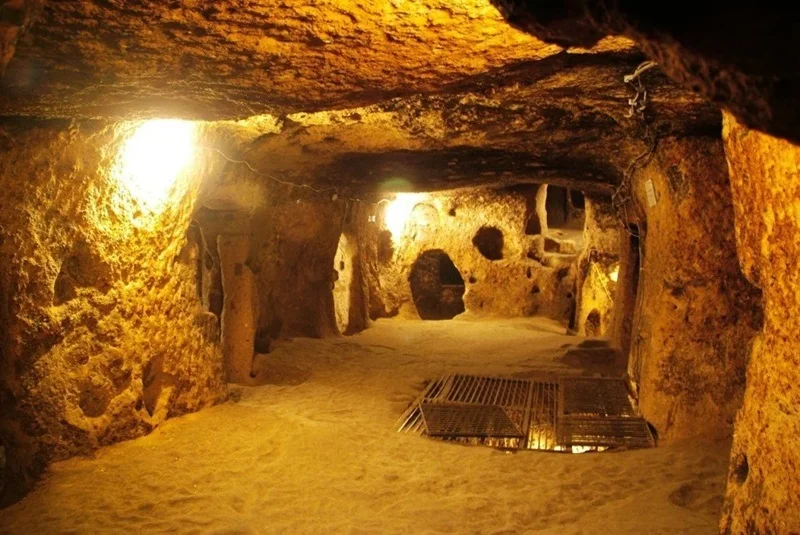
The secret was the soil. Cu Chi sits on laterite, a red clay rich in iron oxide. When it dries, it hardens almost like fired brick. Tunnels dug in it needed no wooden supports, and the roof could survive tanks rolling overhead and most bombs that didn’t land directly on top.
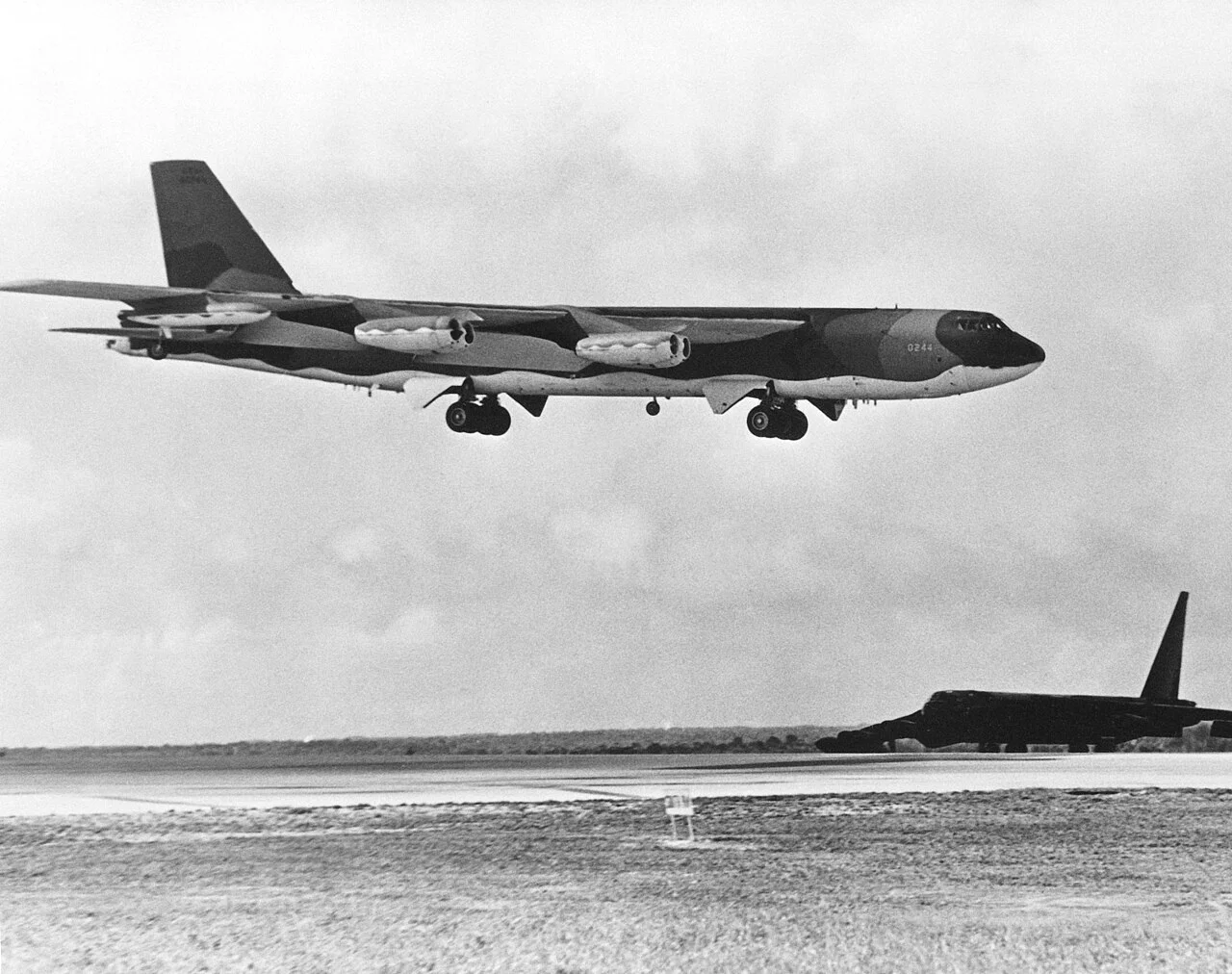
Design helped too. Passages were narrow — often only about 2 to 3 feet wide and high enough to crawl or stoop — and they zigzagged. A sharp bend stopped a blast, a bullet or a flashlight beam from traveling far. Where collapses did happen, it was usually from heavy B-52 bombing directly overhead, or in sections dug in softer soil.
What Was Inside: The Three Levels
The tunnels were not just corridors. They were a hidden village, with rooms at different depths:
| Level | Approximate depth | Used for |
|---|---|---|
| Top | about 10 ft (3 m) | Firing points, fast movement, shelter during raids |
| Middle | about 20 ft (6 m) | Living space, meeting rooms, storerooms, kitchens |
| Bottom | 30 ft (10 m) or more | Shelter from heavy bombing; command rooms, field hospitals, weapons storage |
Some sections were deeper still; U.S. troops in 1966 reported one tunnel with six levels. Inside there were operating rooms where surgeons worked by lamplight, small workshops that turned dud American bombs into mines, and rooms for meetings and even performances.
How did people breathe, cook and live underground?
Air came through narrow bamboo shafts. On the surface, the openings were disguised as termite mounds, tree roots or piles of brush, and they surfaced away from the living rooms.
Cooking was the biggest danger: smoke could give away a hideout. The answer was the Hoang Cam stove, named after the Viet Minh cook credited with designing it in the war against the French. Its smoke ran through a long side channel and seeped out slowly at ground level, often near dawn when morning mist hid it.
Life below was grim. Air was thin and hot. Malaria, skin infections and intestinal parasites were common, and scorpions, ants and snakes shared the space. During heavy bombing, people sometimes stayed underground for days.
How Were the Entrances Hidden?
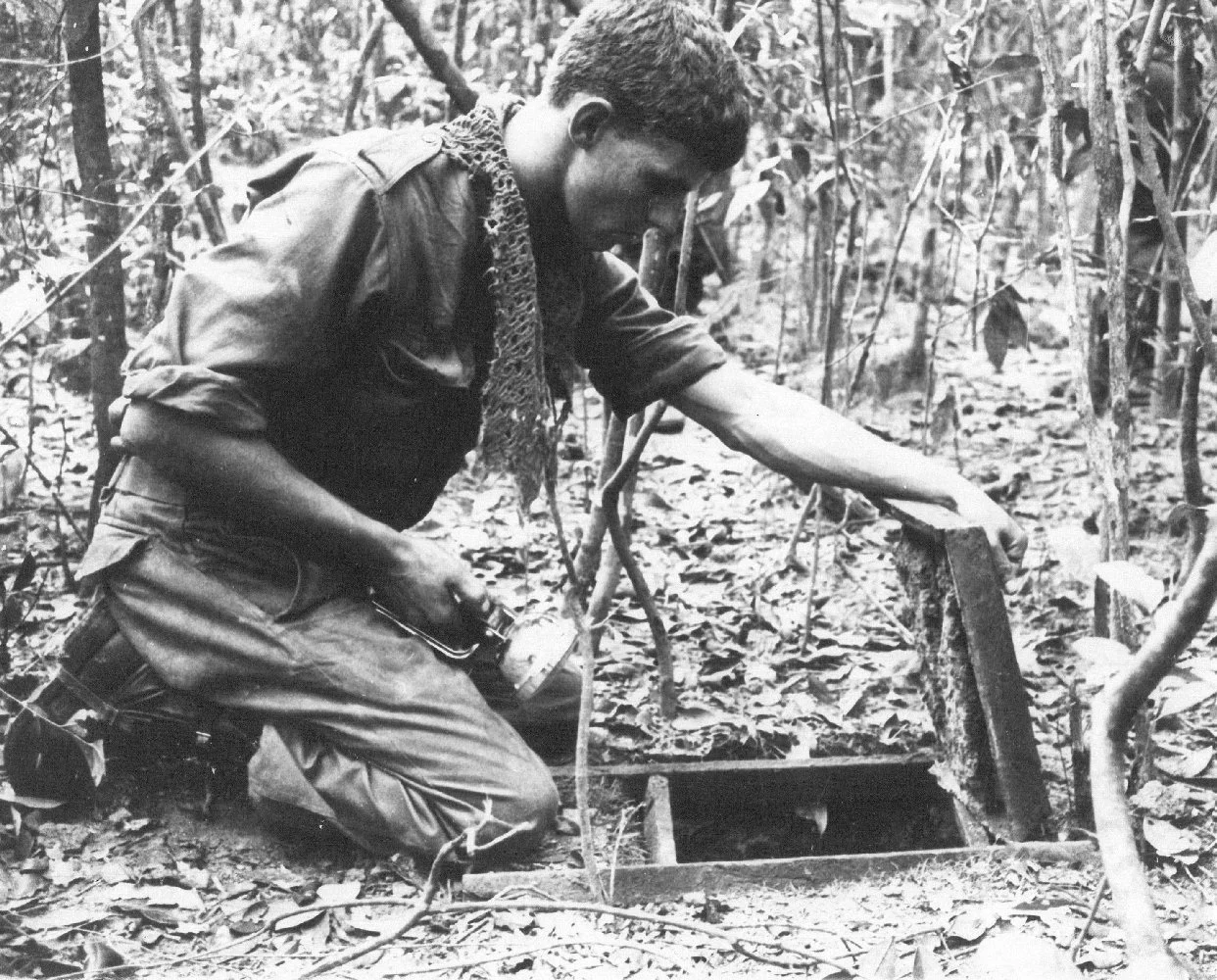
Trapdoors were small — often just wide enough for a slim person’s shoulders — and covered with a wooden lid topped with soil and leaves. Visitors today regularly walk past entrances a few feet away without seeing them.
Some entrances opened underwater, from a riverbank or a stream, so they could not be seen at all. Inside, defenders added more protection: false passages that led nowhere, trapdoors between levels that could be sealed against gas or water, and booby traps such as pits lined with sharpened bamboo or grenades on tripwires.
How Did the U.S. Discover the Tunnels?
American commanders knew there were tunnels around Cu Chi, but not how big they were — until January 1966. In Operation Crimp, about 8,000 U.S. and Australian troops swept the Ho Bo Woods north of Cu Chi after heavy bombing. The enemy seemed to disappear.
The Australians found out why. An engineer troop led by Capt. Alexander “Sandy” MacGregor went into the tunnels and searched them for four days. They found weapons, ammunition, radios, medical supplies and thousands of pages of documents — evidence that a Viet Cong headquarters lay right under the allied position. One of the Australians, Cpl. Bob Bowtell, died in a tunnel that turned out to be a dead end.
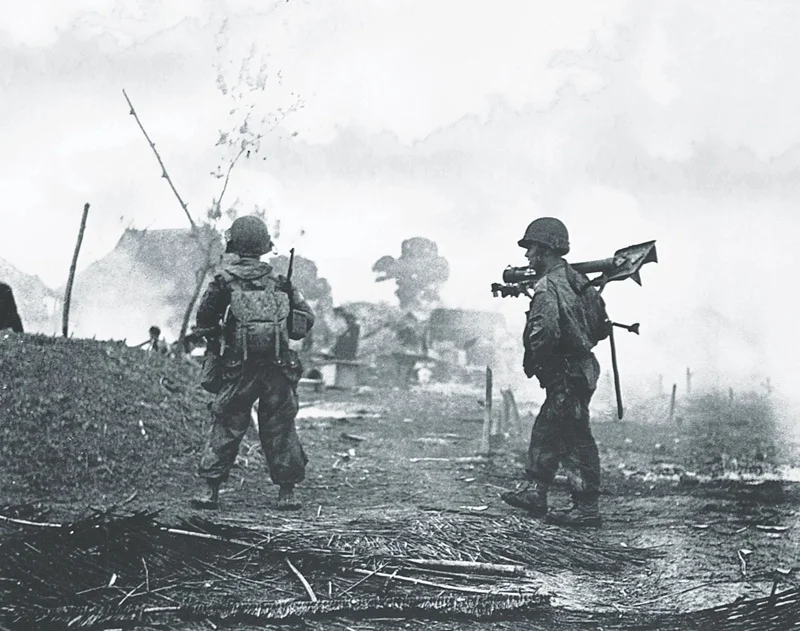
A year later, in January 1967, Operation Cedar Falls sent about 30,000 U.S. and South Vietnamese troops into the nearby Iron Triangle. Bulldozers flattened villages and forests, and engineers blew up every tunnel they could find. Still, the network survived. A year after that, fighters who had staged from tunnels in this area took part in the Tet Offensive attacks on Saigon.
Who Were the Tunnel Rats in Vietnam?
Tunnel rats were American, Australian and New Zealand soldiers who volunteered to go into enemy tunnels, usually alone, to search them, map them and clear them. The name came from the Australians: MacGregor called his men “tunnel ferrets,” and an American reporter who had never heard of ferrets wrote “tunnel rats.” It stuck.
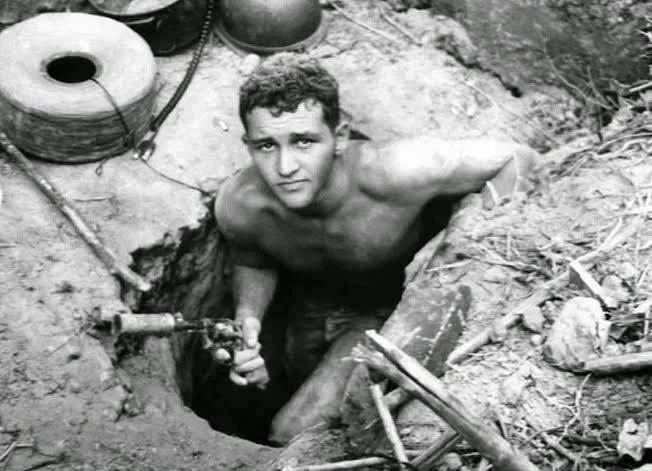
The U.S. Army’s 1st and 25th Infantry Divisions later formed small, trained tunnel teams. Most tunnel rats, though, were ordinary infantrymen who volunteered. According to the National Museum of the U.S. Army, there were only around 100 Army tunnel rats in Vietnam at any one time.
- Who was chosen: small, wiry men who could fit through narrow trapdoors — and who stayed calm in total darkness.
- What they carried: a flashlight, a knife and a pistol. Many preferred a .38 revolver to the standard .45, because the .45 was deafening in a tunnel. Some left their gas masks and radios behind as useless.
- What they faced: booby traps, snakes and scorpions, bad air, dead ends — and enemy fighters waiting in the dark.
- Their unofficial motto: a mock-Latin phrase, Non gratum anus rodentum — “not worth a rat’s ass.”
How dangerous was it? There is no official casualty count for tunnel rats as a group. One frequently cited veteran account from the 25th Infantry Division’s tunnel teams describes about 36 men killed and around 200 wounded during one period — roughly one in three becoming a casualty. Other veterans said most of their losses actually came above ground. Treat any single figure with caution.
Two Sides in the Same Tunnel
Most accounts tell this story from only one side. Seen together, the two experiences mirror each other:
| Guerrillas and villagers in the tunnels | U.S. and Australian tunnel rats | |
|---|---|---|
| Who | Local farmers, guerrillas, nurses, cadres — men and women | Small-framed volunteers, mostly infantry and engineers |
| Equipment | Hoes, baskets, oil lamps, captured weapons | Flashlight, pistol, knife, sometimes string to mark the way |
| Greatest fear | Bombing, gas, flooding, being found | Traps, bad air, an enemy waiting at the next bend |
| Time underground | Days or weeks at a time during heavy fighting | Minutes to hours per tunnel |
| How it ended | Many killed; the network survived the war | Teams disbanded as large tunnel systems were destroyed or abandoned |
The human cost was high on both sides, but the numbers are very uneven in quality. Vietnam’s official accounts describe Cu Chi as the “land of steel” and honor its dead at the Ben Duoc memorial temple, where the names of more than 45,000 fighters who died in the Saigon–Gia Dinh region are engraved. American and Australian losses in the tunnels themselves were counted in dozens, not thousands, and are not separated in official records.
Can You Visit the Cu Chi Tunnels Today?
Yes. About 120 km of the network has been preserved as a national historic site, with two areas open to visitors. Ben Dinh, closer to Ho Chi Minh City, has sections widened and lit for tourists. Ben Duoc, about 70 km from the city center, keeps more of the original tunnels and includes the memorial temple. Visitors can crawl through short stretches, see a Hoang Cam kitchen and examine traps and trapdoors. Many American veterans have made the trip.
Keep Reading
- Why Are Americans Still Missing in Vietnam 50 Years Later?
- What Happened to the Vietnamese Boat People? Where They Went, How Many Died, and Why the Camps Closed
- What Happened to Amerasian Children After the Vietnam War?
- Why the 17th Parallel? How Vietnam’s Dividing Line Was Chosen in 1954
- Why Didn’t the U.S. Save the French at Dien Bien Phu? Inside Operation Vulture
Frequently Asked Questions
How long were the Cu Chi tunnels?
About 250 km (155 miles) at their peak, according to Vietnamese official sources; some state sources give “more than 200 km.” Around 120 km survive today.
How deep were the Cu Chi tunnels?
Usually on three levels, from about 10 feet down to 30 feet or more. U.S. troops in 1966 reported at least one section with six levels.
Did the Americans ever destroy the Cu Chi tunnels?
No. Operations Crimp (1966) and Cedar Falls (1967), plus years of bombing, destroyed many sections, but the network as a whole survived until the war ended in 1975.
Why It Still Matters
The Cu Chi tunnels showed how a lightly armed force could survive against overwhelming firepower by going underground — a lesson armies still study. They also left a shared memory: for Vietnamese, of villages that dug in and refused to leave; for American and Australian veterans, of crawling into the dark with a flashlight and a pistol. Today, tourists from both countries crawl through the same passages, one short stretch at a time.
Sources
- National Museum of the United States Army — “Tunnel Rats of the Vietnam War” (thenmusa.org)
- Vietnam War Commemoration — “Week of August 13” (1st Infantry Division tunnel team, 1968) (vietnamwar50th.com)
- HistoryNet — “Found and Lost: Buried Secrets of Victory in Vietnam” (Operation Crimp) and “Tunnel Rats in Vietnam”
- Australian War Memorial — 3 Field Troop and Operation Crimp collections
- Sandy MacGregor and Jimmy Thomson, No Need for Heroes (2006) and Tunnel Rats (Allen & Unwin, 2011)
- VnExpress — “‘Mạng nhện’ dưới lòng đất thép Củ Chi” (history of the tunnels, 1948–1968); “48 giờ ở ‘đất thép’ Củ Chi”
- Nhân Dân — “Địa đạo Củ Chi: kỳ tích anh hùng” (special report)
- Báo Quân khu 7 — “Kỳ quan đất thép Củ Chi” (Ben Duoc memorial temple)
- Wikipedia — “Củ Chi tunnels” and “Operation Crimp” (overview)