Last updated:
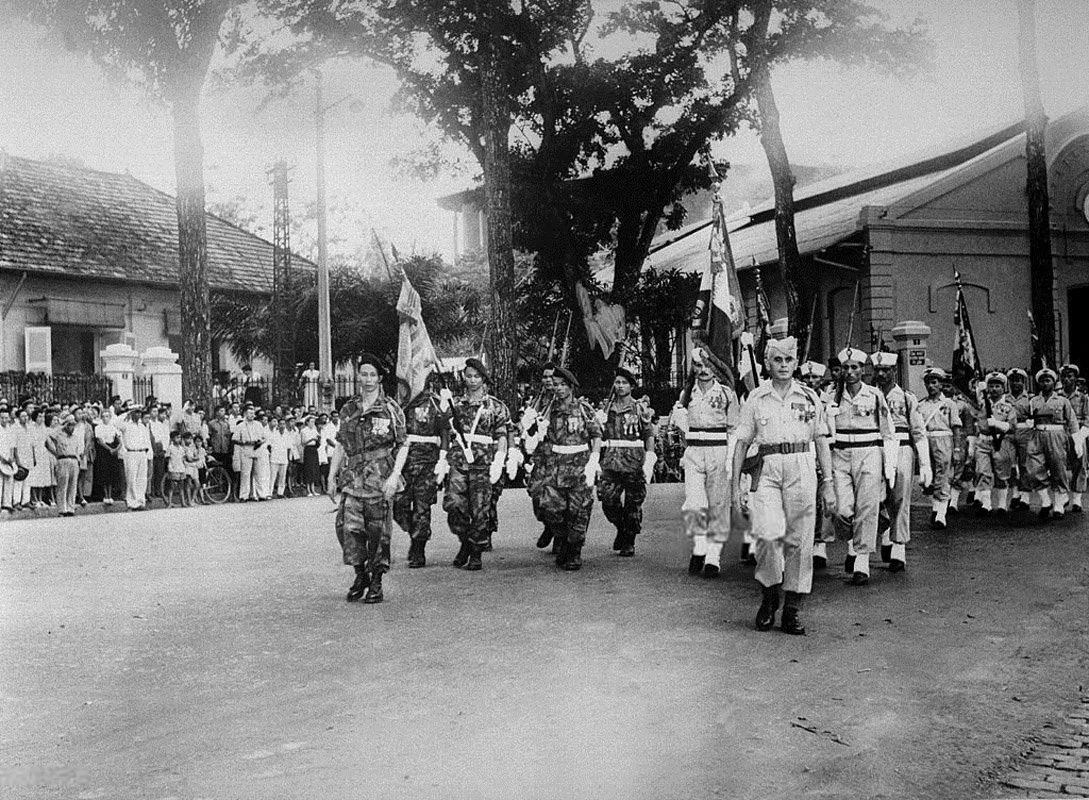
France wanted Vietnam back after World War II mainly to restore its pride and power after the humiliation of 1940, to keep the wealth Indochina produced — especially rubber and rice — and to stop the rest of its empire from breaking away. French leaders believed that without its colonies, France would never again be a great power. So when Ho Chi Minh declared Vietnam’s independence in September 1945, France sent troops to retake it, starting a war that lasted until 1954.
Key Facts
- French rule: Vietnam conquered in stages, 1858–1885; part of French Indochina until 1945
- World War II: Japan occupied Indochina from 1940; ousted the French administration on March 9, 1945
- Independence declared: September 2, 1945, by Ho Chi Minh in Hanoi
- French return: Saigon, September–October 1945, with British help
- Main reasons: national pride, economic value, holding the empire together, French settlers and allies
- Last attempt at a deal: March 6, 1946 accords and the Fontainebleau conference (summer 1946)
- War begins: December 19, 1946
September 2, 1945: Vietnam Declares Independence
On September 2, 1945, in Ba Dinh Square in Hanoi, Ho Chi Minh read a declaration of independence to a huge crowd. Its opening words were borrowed from the American Declaration of Independence: all men are created equal, with rights to life, liberty and the pursuit of happiness.
The moment seemed perfect. France had been defeated by Germany in 1940. Japan had occupied Indochina during the war and, on March 9, 1945, had thrown out the French administration altogether. Now Japan had surrendered. For a few weeks, Vietnam had no foreign master.
France had other plans.
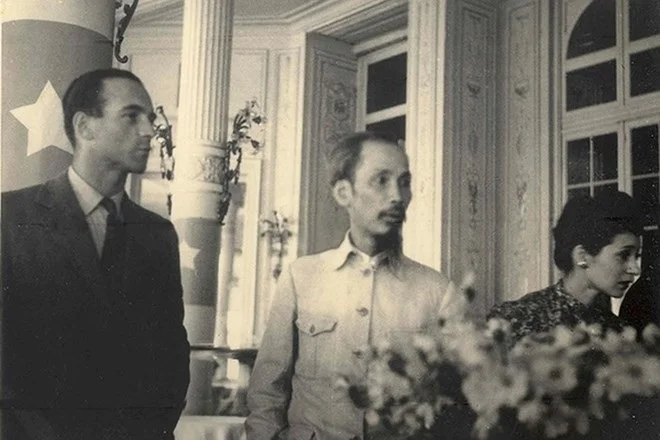
How France Came Back
At the Potsdam Conference, the Allies decided that Chinese Nationalist troops would accept the Japanese surrender in northern Vietnam, and British troops in the south. In Saigon, the British commander, General Douglas Gracey, released and rearmed French soldiers who had been held by the Japanese. On September 23, 1945, they took back control of the city.
Within weeks, French reinforcements arrived under General Philippe Leclerc, a hero of the liberation of Paris. By early 1946, France controlled most of the south. In the north, it negotiated with Ho Chi Minh’s government while Chinese troops withdrew.
Reason 1: France’s Pride After 1940
To understand France’s choice, start with 1940. In six weeks, Germany had crushed the French army. For four years, France was occupied or ruled by the collaborating Vichy regime.
For leaders such as Charles de Gaulle, the empire was proof that France was still a great power. During the war, de Gaulle’s Free French had rallied colonies in Africa to fight on. After liberation, he insisted that every part of the empire be restored. Losing Indochina to a local independence movement — just after losing to Germany — was unthinkable.
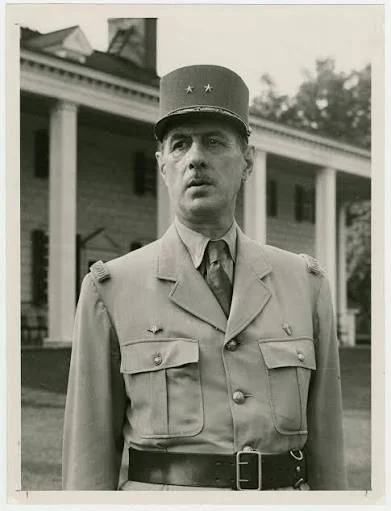
In 1946, France reorganized its empire as the French Union, promising more rights to colonial peoples but keeping France firmly in charge.
Reason 2: Rubber, Rice and Money
Indochina was valuable. Its plantations, many owned by French companies such as Michelin, produced large amounts of rubber, one of the most important raw materials of the 20th century. Southern Vietnam’s Mekong Delta exported rice across Asia. There were coal mines in the north, and banks, trading houses and investors in France with money tied up in the colony.
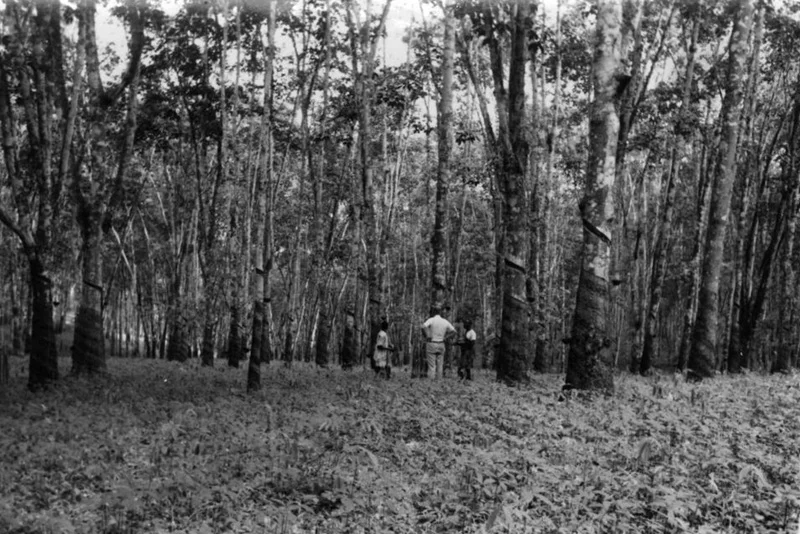
That wealth came at a heavy cost to the Vietnamese. Workers on the rubber plantations faced brutal conditions, and many died. Heavy taxes and French monopolies on salt, alcohol and opium fell on Vietnamese peasants. In 1944–45, a famine in northern Vietnam, worsened by Japanese and French wartime policies, killed an estimated 1 to 2 million people.
Reason 3: Holding the Empire Together
French leaders feared a chain reaction. If Vietnam won independence, other colonies — Algeria, Morocco, Tunisia, Madagascar — might demand the same. In 1947, an uprising did break out in Madagascar, and France crushed it.
Keeping Indochina was seen as a test of whether the whole empire could survive.
Reason 4: Settlers and Allies
Tens of thousands of French civilians lived in Indochina, many for generations. There were also Vietnamese who had worked with France, Catholic communities and political groups who opposed the communist-led Viet Minh. French governments argued that they had a duty to protect them.
The Last Chance for Peace
For a moment, a deal seemed possible. On March 6, 1946, Ho Chi Minh and French envoy Jean Sainteny signed an agreement. France recognized Vietnam as a “free state” with its own government and army, inside the French Union. In return, French troops could return to northern Vietnam. A vote was promised on whether the south would join the rest of the country.
The agreement soon collapsed. In June 1946, the French high commissioner, Admiral Thierry d’Argenlieu, set up a separate republic in the south. That summer, Ho Chi Minh spent months in France at the Fontainebleau conference, but the talks failed.
In November 1946, a dispute over customs control in the port of Haiphong turned into fighting. A French cruiser shelled the city, killing thousands of civilians; estimates range widely, and the exact toll is disputed. On December 19, 1946, Viet Minh forces attacked French positions in Hanoi. The First Indochina War had begun.
| Date | What happened |
|---|---|
| 1940 | Germany defeats France; Japan moves into Indochina |
| March 9, 1945 | Japan ousts the French administration |
| September 2, 1945 | Ho Chi Minh declares independence |
| September 23, 1945 | French troops retake Saigon with British help |
| March 6, 1946 | Ho–Sainteny agreement: Vietnam a “free state” in the French Union |
| Summer 1946 | Fontainebleau talks in France fail |
| November 1946 | French shelling of Haiphong |
| December 19, 1946 | War begins in Hanoi |
Why It Mattered — Including for America
France’s decision to take Vietnam back led to nine years of war and its defeat at Dien Bien Phu in 1954. It also drew in the United States. Roosevelt had opposed a French return, but as the Cold War began, Washington came to see France’s war as a fight against communism. By 1954, the U.S. was paying most of its cost. When France left, America took its place. For the full story, see our summary of the First Indochina War.
Keep Reading
- Why Are Americans Still Missing in Vietnam 50 Years Later?
- What Happened to the Vietnamese Boat People? Where They Went, How Many Died, and Why the Camps Closed
- What Happened to Amerasian Children After the Vietnam War?
- How Did the Cu Chi Tunnels Work? Inside the Underground War — and the Tunnel Rats Sent to Fight It
- Why the 17th Parallel? How Vietnam’s Dividing Line Was Chosen in 1954
Frequently Asked Questions
Why did France want Indochina back after World War II?
To restore its status as a great power after defeat in 1940, to keep the colony’s economic value, to prevent the rest of the French empire from breaking away, and to protect French settlers and Vietnamese allies.
Why did France colonize Vietnam in the first place?
In the 1800s, France wanted trade routes to China, markets and raw materials, and influence in Asia to rival Britain. It also cited the protection of Catholic missionaries. France conquered Vietnam in stages between 1858 and 1885.
Did the United States support France’s return to Vietnam?
At first, no. President Roosevelt opposed it. But after his death, President Truman accepted France’s return, and from 1950 the U.S. funded a growing share of France’s war.
Could war have been avoided?
Possibly. The March 6, 1946 agreement offered a compromise, but both sides distrusted each other, and French officials in Indochina undermined the deal. Historians still debate who bears the most responsibility.
Sources
- Fredrik Logevall, Embers of War: The Fall of an Empire and the Making of America’s Vietnam (2012)
- Office of the Historian, U.S. Department of State — “Milestones: 1945–1952”
- Encyclopaedia Britannica — “Indochina wars”
- History.com — “Ho Chi Minh”
- EBSCO Research Starters — “First Indochina War”
- Christopher Goscha, Vietnam: A New History (2016)