Last updated:
America’s war in Europe ran from December 1941, when Germany declared war on the United States, to May 8, 1945, when Germany surrendered. Following a “Europe First” strategy agreed with Britain, U.S. ground forces fought their first battles against Germany in North Africa in November 1942, then invaded Sicily and Italy in 1943, landed in Normandy on D-Day in June 1944, held off Hitler’s last offensive in the Battle of the Bulge, and crossed the Rhine into Germany in 1945. They fought alongside Britain and its Commonwealth, while the Soviet Union fought the bulk of the German army in the East.
For many American families, this is the war their fathers and grandfathers fought — a road that ran from the beaches of Morocco to the banks of the Elbe.
Key Facts
- U.S. at war with Germany: December 11, 1941 – May 8, 1945
- First major U.S. ground campaign: Operation Torch, North Africa, November 8, 1942
- Supreme Allied Commander: General Dwight D. Eisenhower
- D-Day: June 6, 1944 — about 156,000 Allied troops landed in Normandy
- Largest U.S. battle: the Battle of the Bulge, December 1944 – January 1945
- V-E Day: May 8, 1945
Why Did America Fight Germany First?
Japan attacked the United States at Pearl Harbor, but American and British leaders had already agreed, months earlier, that Germany was the more dangerous enemy. That plan became known as “Europe First” (or “Germany First”). Hitler removed any doubt when he declared war on the United States on December 11, 1941.
| Reason | Explanation |
|---|---|
| Germany was stronger | It had the larger economy, the more advanced weapons programs and control of most of Europe. |
| Allies at risk | Britain and the Soviet Union could collapse without help; China and Australia were less immediately threatened. |
| Geography | Britain was an “unsinkable aircraft carrier” close to Germany; Japan was thousands of miles away. |
| Defeat Germany, and Japan stands alone | Planners believed Japan could not hold out once Germany fell — but not the reverse. |
In practice, “Europe First” did not mean “Pacific never.” The U.S. fought major campaigns in both theaters at the same time.
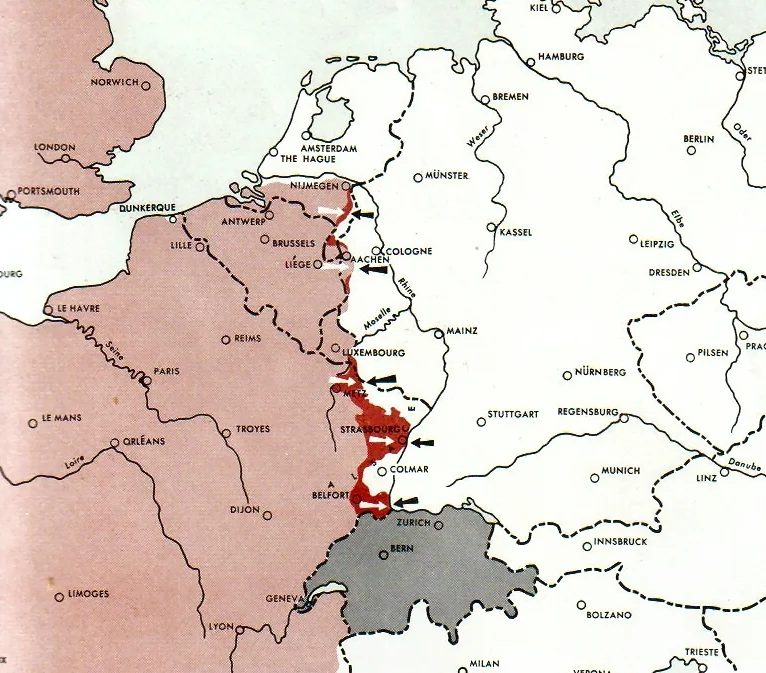
1942–1943: North Africa and the Mediterranean
Soviet leader Joseph Stalin wanted the Western Allies to open a second front in France in 1942. American generals wanted to try too. British leaders argued they were not ready, and Roosevelt agreed to land in North Africa instead.
On November 8, 1942, in Operation Torch, American and British troops landed in Morocco and Algeria. In February 1943, inexperienced U.S. troops were badly beaten by German forces at Kasserine Pass in Tunisia. The defeat led to sweeping changes, including putting General George S. Patton in command of the battered II Corps. By May 1943, Axis forces in North Africa surrendered, with more than 200,000 prisoners taken.
The Allies then invaded Sicily on July 10, 1943, and mainland Italy in September. Italy’s government surrendered, but German troops occupied the country and fought a slow, brutal defense through the mountains. The Americans and British landed at Anzio in January 1944 and finally entered Rome on June 4, 1944 — two days before D-Day.
The Air War Over Europe
From 1942, the U.S. Eighth Air Force flew from bases in England, bombing German factories, railroads and cities in daylight while the British bombed at night. Losses were staggering: the Eighth Air Force alone lost about 26,000 men killed. The bombing badly damaged Germany’s fuel supply and air force before D-Day, though it also killed hundreds of thousands of German civilians — a toll historians still debate.
1944: D-Day and the Liberation of France
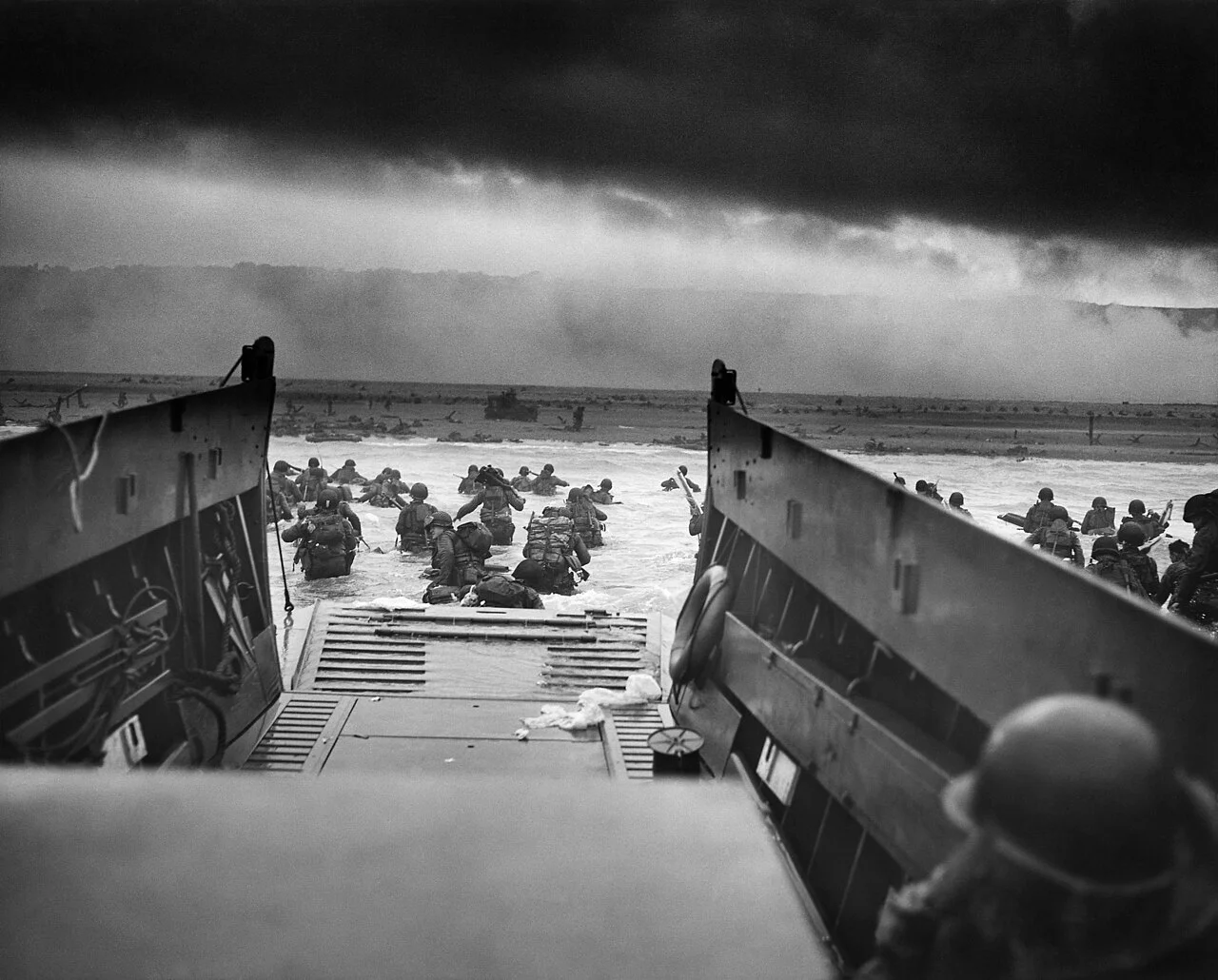
On June 6, 1944, about 156,000 American, British and Canadian troops landed on five beaches in Normandy, France, supported by thousands of ships and aircraft and by paratroopers dropped overnight. The Americans landed at Utah and Omaha beaches. At Omaha, heavy German fire pinned down the first waves, and the beach became the bloodiest of the day. By nightfall, the Allies held a foothold in France.
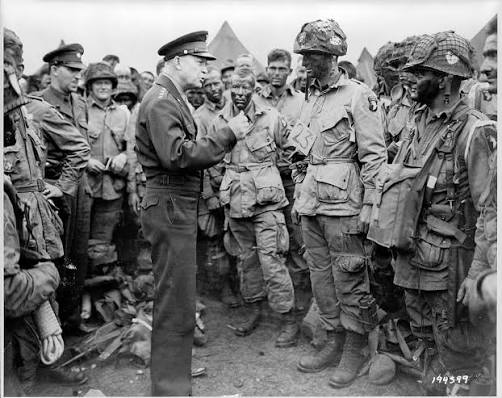
Weeks of hard fighting in the Normandy hedgerows followed. In late July, Operation Cobra broke through German lines, and Patton’s Third Army raced across France. A second Allied landing in southern France came on August 15, and Paris was liberated on August 25, 1944.
To keep the armies moving, the U.S. Army ran the “Red Ball Express,” a nonstop truck convoy route from the Normandy beaches toward the front from late August to mid-November 1944. Most of its drivers were Black soldiers serving in a still-segregated Army.
By September, supply lines were stretched to breaking point. The Allied airborne attempt to cross the Rhine in the Netherlands, Operation Market Garden, failed, and American troops became stuck in costly fighting in the Hürtgen Forest along the German border.
The Battle of the Bulge
On December 16, 1944, Hitler launched a surprise offensive through the Ardennes forest of Belgium and Luxembourg, hoping to split the Allies. It became the largest battle the U.S. Army fought in the war, involving about 610,000 Americans. The town of Bastogne, held by the 101st Airborne and attached armor, was surrounded until Patton’s Third Army broke through on December 26. By late January 1945, the “bulge” in the line had been pushed back.
1945: Into Germany
On March 7, 1945, troops of the U.S. 9th Armored Division found the Ludendorff railroad bridge at Remagen still standing and captured it, giving the Allies their first crossing of the Rhine. Further crossings followed, and Allied armies pushed deep into Germany. As they advanced, American soldiers liberated concentration camps including Buchenwald and Dachau, revealing the scale of Nazi crimes to the world.
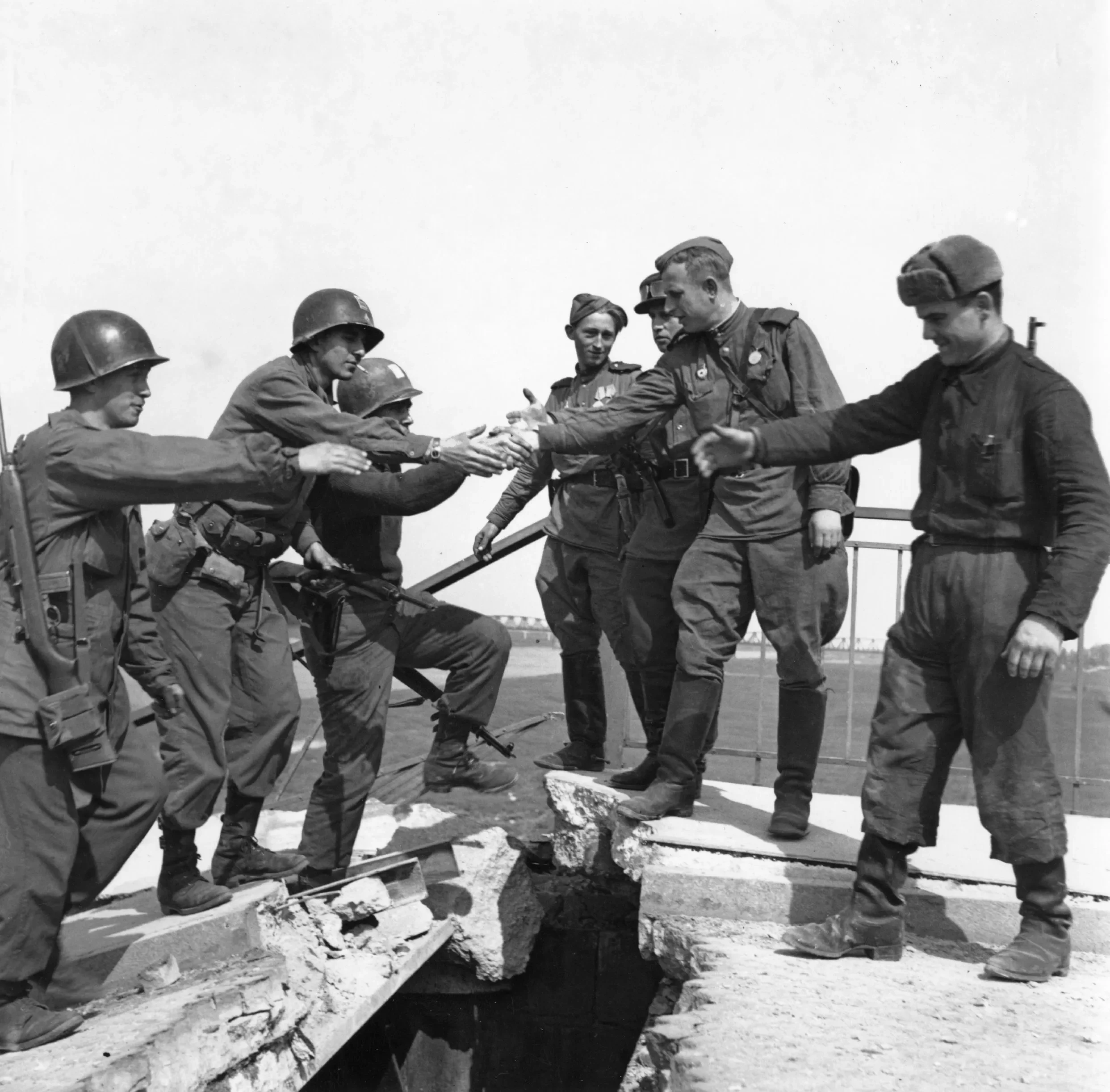
On April 25, 1945, American and Soviet soldiers met at the Elbe River near Torgau, cutting Germany in two. Hitler killed himself in Berlin on April 30. Germany surrendered unconditionally, and May 8, 1945, became V-E Day — Victory in Europe.
America Did Not Win It Alone
The U.S. contributed enormous armies, air power and, through Lend-Lease, the trucks, fuel and food that kept its allies fighting. But it fought as part of a coalition. Britain and its Commonwealth had been at war since 1939. And the Soviet Union, at a terrible cost of about 27 million dead, soldiers and civilians, fought the great majority of the German army: most German military losses came on the Eastern Front.
Historians generally agree that neither the Western Allies nor the Soviet Union could have defeated Germany as quickly without the other.
What Did the War in Europe Cost America?
Roughly 405,000 Americans died in all of World War II. More of them died fighting Germany and Italy than fighting Japan. The Battle of the Bulge alone cost about 19,000 American lives. Millions of Europeans, including six million Jews murdered in the Holocaust, died in the war in Europe.
Keep Reading
- What Happened to Japanese Americans After the Internment Camps?
- What Happened to Easy Company After WWII? The Real “Band of Brothers” After the War
- What Happened to the Nazi Scientists Brought to America? Operation Paperclip Explained
- What Happened to the Doolittle Raiders Captured by Japan? The Fate of the Eight
- Why Did Japanese Soldiers Refuse to Surrender in WWII? From Iwo Jima to Hiroo Onoda
Frequently Asked Questions
When did the U.S. enter the war in Europe?
Officially on December 11, 1941, when Germany declared war on the U.S. and Congress responded. American ground troops first fought German forces in North Africa in November 1942.
What was the first U.S. battle against Germany?
The first large-scale U.S. ground fighting against German forces came in Tunisia in late 1942. At sea, the U.S. Navy had already clashed with German U-boats in the Atlantic during 1941.
When did the war in Europe end?
Germany signed an unconditional surrender on May 7, 1945, which took effect on May 8 — celebrated as V-E Day. The Soviet Union marks Victory Day on May 9 because of the time difference and a second signing in Berlin.
Why It Still Matters
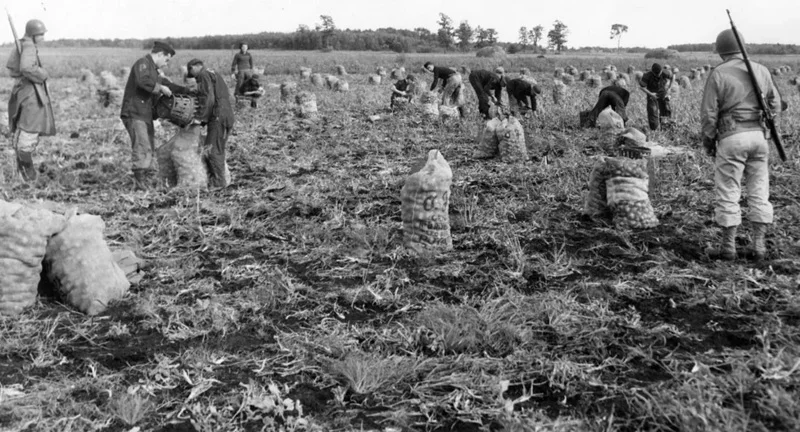
America’s war in Europe turned the United States into a global power, created the alliance that became NATO and left millions of American families with stories of North Africa, Normandy and the Ardennes. Behind the famous battles are stories that still surprise people: the fake army that fooled Hitler, the German prisoners held on American farms, the German scientists brought to the U.S. after the war — and the question of who really saved Bastogne.
Sources
- Rick Atkinson, The Liberation Trilogy: An Army at Dawn, The Day of Battle, The Guns at Last Light (Henry Holt, 2002–2013)
- U.S. Army Center of Military History — campaign brochures for Algeria–French Morocco, Tunisia, Sicily, Normandy, Ardennes–Alsace and Central Europe
- The National WWII Museum — “The Battle of the Bulge” and “Research Starters: Worldwide Deaths in World War II”
- National Park Service — “Eisenhower and the Battle of the Bulge”
- The D-Day Story / National D-Day Memorial Foundation — D-Day troop numbers
- U.S. Department of Veterans Affairs — “America’s Wars” fact sheet
- United States Holocaust Memorial Museum — liberation of the camps