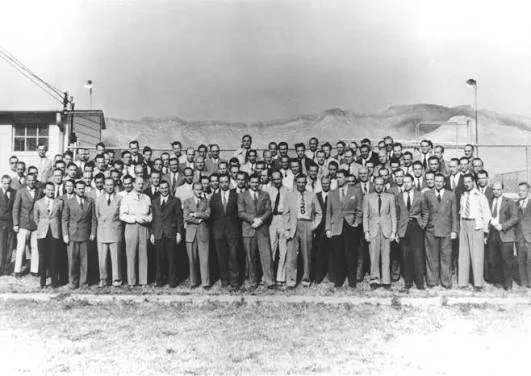
About 1,600 German scientists, engineers and technicians were brought to the United States after World War II under a secret program called Operation Paperclip. Most went to work for the Army, Air Force and later NASA, and some became famous: Wernher von Braun’s team built the Saturn V rocket that carried Apollo astronauts to the Moon. Many had been Nazi Party members, and a few were tied to forced labor and human experiments. Their pasts were played down for decades. When investigators finally looked closer in the 1980s, one senior NASA engineer, Arthur Rudolph, gave up his U.S. citizenship and left the country rather than face charges.
Paperclip is one of the most uncomfortable bargains in American history — and one of the most consequential.
Key Facts
- Program: Operation Paperclip (first called Operation Overcast)
- When: 1945 to 1959
- How many: about 1,600 German specialists, plus many family members
- Run by: the Joint Intelligence Objectives Agency (JIOA) and the armed services
- Best-known recruit: Wernher von Braun, later director of NASA’s Marshall Space Flight Center
- Prosecutions in the U.S.: none; Arthur Rudolph left the country in 1984
Why Did America Bring Nazi Scientists to the U.S.?
In 1945, Germany led the world in several technologies, especially rockets and jet engines. Its V-2 was the first long-range ballistic missile. American, British and Soviet teams raced across Germany to find its scientists, blueprints and hardware.
U.S. officials had three goals:
- Use their knowledge to speed up American weapons and aviation programs, including for the war still going on against Japan.
- Deny them to the Soviet Union, which was recruiting German specialists too.
- Keep them from rebuilding German military power.
The Soviet side was not idle. In October 1946, in an operation called Osoaviakhim, Soviet forces moved more than 2,000 German specialists and their families to the USSR in a single night.
How Did They Get Past the Rules?
President Harry Truman approved the program in 1946 with an important condition: no one who had been an active Nazi or a supporter of Nazi militarism could be admitted. On paper, that should have excluded many of the most valuable recruits.
In practice, the JIOA reworked security files. Investigations and reports that described men as committed Nazis were softened or rewritten so they could be approved for immigration. This was not widely known until the 1980s, when journalist Linda Hunt used Freedom of Information Act requests to uncover thousands of pages of records.
What Happened to the Paperclip Scientists?
| Group or person | What happened in America |
|---|---|
| Wernher von Braun’s rocket team | Started at Fort Bliss, Texas, testing captured V-2s; moved to Huntsville, Alabama, in 1950; built the Redstone and Jupiter rockets; joined NASA in 1960 and built the Saturn V |
| Kurt Debus | Became the first director of NASA’s Kennedy Space Center |
| Aviation and space medicine experts, including Hubertus Strughold | Worked for the Air Force on high-altitude and space medicine; Strughold’s wartime links to human experiments came under scrutiny later |
| Engineers in jets, chemistry and electronics | Worked at military labs and later in private industry across the country |
| Georg Rickhey, Mittelwerk general manager | Sent back to Germany in 1947 to stand trial; acquitted, never returned to the U.S. |
| Arthur Rudolph, Mittelwerk production manager | Became Saturn V project manager at NASA; renounced citizenship and left the U.S. in 1984 |
Most Paperclip recruits became U.S. citizens, raised families and lived quiet lives. Huntsville, Alabama, grew from a small cotton town into “Rocket City” largely around von Braun’s team.
What Did von Braun Do at NASA?
Von Braun was the public face of America’s space program in the 1950s and 1960s, appearing on television and in magazines. His team’s Jupiter-C rocket launched Explorer 1, America’s first satellite, in 1958. As the first director of NASA’s Marshall Space Flight Center, he led development of the Saturn V. On July 16, 1969, a Saturn V launched Apollo 11 toward the Moon.
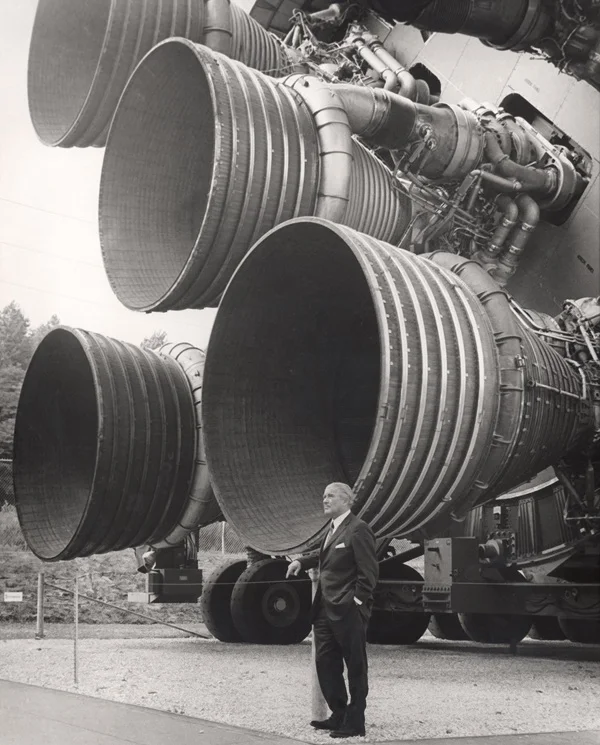
His past was more complicated than his public image. He joined the Nazi Party in 1937 and held an honorary SS officer rank. As technical director of the V-2 program, he visited the Mittelwerk factory, where concentration camp prisoners built his rockets. He always said he had no power to change conditions there. Historians still debate how much he knew and could have done.
The Dark Side: Mittelbau-Dora
From 1943, V-2 rockets were built in tunnels dug into a mountain near Nordhausen, Germany. The workforce came largely from the Mittelbau-Dora concentration camp. Prisoners worked in brutal conditions underground, and an estimated 20,000 died from exhaustion, starvation, disease and executions. By most estimates, more people died building the V-2 than were killed by it.
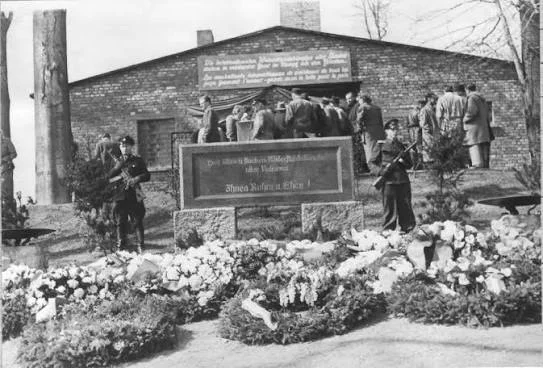
Arthur Rudolph managed V-2 production there. In 1984, the Justice Department’s Office of Special Investigations confronted him with evidence of his role. He agreed to renounce his U.S. citizenship and leave for West Germany rather than face deportation proceedings. He always denied wrongdoing, and West German prosecutors later declined to charge him.
Was Operation Paperclip Wrong?
This is the heart of the debate, and reasonable people still disagree.
- The case for it: supporters argue the U.S. gained knowledge worth years of work and billions of dollars, helped win the Cold War and the Space Race, and kept these experts away from the Soviet Union. Most recruits were engineers, not killers, and Germany’s scientific establishment was tied to the Nazi state almost by default.
- The case against it: critics argue the government knowingly broke its own rules, rewarded men linked to slave labor and human experiments, hid their pasts from the public for decades, and treated the suffering of their victims as less important than rockets. None of the Paperclip recruits were ever prosecuted for war crimes in the United States.
Many historians land on a middle view: Paperclip delivered real benefits to the United States, and it also involved serious moral compromises that should have been made openly, not hidden.
Keep Reading
- What Happened to Japanese Americans After the Internment Camps?
- What Happened to Easy Company After WWII? The Real “Band of Brothers” After the War
- What Happened to the Doolittle Raiders Captured by Japan? The Fate of the Eight
- Why Did Japanese Soldiers Refuse to Surrender in WWII? From Iwo Jima to Hiroo Onoda
- Why Did It Take So Long to Rescue the USS Indianapolis Survivors?
Frequently Asked Questions
Is Operation Paperclip still going on?
No. The program formally ended in the late 1950s, though related recruitment of German specialists continued in smaller forms for some years. Its records have been largely declassified.
Were all Paperclip scientists Nazis?
Not all, but many had been Nazi Party members, and some had belonged to the SS. Party membership was common among German scientists who wanted to advance their careers. A smaller number were linked to forced labor or human experiments.
Did von Braun ever face charges?
No. He died in 1977, before the investigations of the 1980s. His reputation has been debated more openly since then.
Why It Still Matters
America’s path to the Moon ran partly through a tunnel in Germany where thousands of prisoners died. Operation Paperclip shows how a democracy can make hard bargains in a dangerous world — and what happens when those bargains are kept secret from its own citizens. Both the rockets and the questions are part of the story.
Sources
- Annie Jacobsen, Operation Paperclip: The Secret Intelligence Program That Brought Nazi Scientists to America (Little, Brown, 2014)
- Linda Hunt, Secret Agenda: The United States Government, Nazi Scientists, and Project Paperclip, 1945 to 1990 (St. Martin’s, 1991)
- Michael J. Neufeld, Von Braun: Dreamer of Space, Engineer of War (Knopf, 2007)
- National Geographic — “How Operation Paperclip brought Nazi scientists to the U.S.”
- Jewish Virtual Library — “Operation Paperclip”
- United States Holocaust Memorial Museum — Mittelbau-Dora
- NASA History Office — Marshall Space Flight Center and Saturn V histories