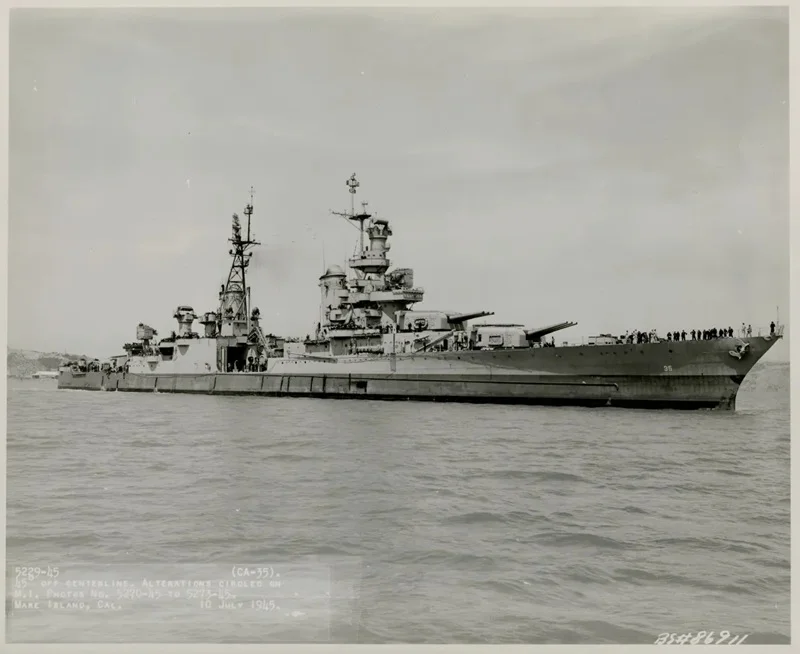
The USS Indianapolis survivors waited about four days for rescue because nobody knew the ship was missing. A chain of Navy mistakes left the cruiser alone: intelligence about a Japanese submarine on its route never reached the captain, no escort was provided, its arrival was not tracked, and when it failed to show up at Leyte, no one reported it. The men were found only by chance, when a patrol plane spotted them on August 2, 1945. Of about 1,195 men aboard, 316 survived.
It remains the worst loss of life at sea from a single ship in U.S. Navy history — and the story of what went wrong is still debated.
Key Facts
- Sunk: just after midnight, July 30, 1945, in the Philippine Sea between Guam and Leyte
- Attacker: Japanese submarine I-58, Commander Mochitsura Hashimoto; two torpedoes hit
- Time to sink: about 12 minutes; roughly 300 men went down with the ship
- In the water: about 880–900 men, many without life jackets or rafts
- Spotted: by chance, about 10:25 a.m. on August 2
- Survivors: 316
What Was the Indianapolis Doing There?
In July 1945, the Indianapolis carried a top-secret cargo from San Francisco to the island of Tinian: parts and uranium for the atomic bomb that would be dropped on Hiroshima. The crew did not know what was in the crates. After delivering it on July 26, the ship sailed to Guam, then was ordered on to Leyte Gulf in the Philippines for training.
It left Guam alone on July 28. Two days later, I-58 found it in the dark.
Why Did No One Come? The Chain of Mistakes
| When | What went wrong |
|---|---|
| Before sailing | Navy codebreakers had evidence that Japanese submarines, including I-58, were operating on or near the ship’s route. A destroyer escort, USS Underhill, had been sunk in the area days earlier. McVay was not told. |
| At Guam | McVay asked about an escort and was told none was available or needed. The Indianapolis had no equipment to detect submarines. |
| Before arrival | A message to the battleship USS Idaho, which the Indianapolis was to train with, arrived garbled. Nobody asked for it to be resent, so the Idaho didn’t know the cruiser was coming. |
| July 30 (sinking) | Survivors said distress calls were sent. The Navy long maintained none was received; later accounts claimed some stations heard a call and ignored it or thought it was a Japanese trick. It is still disputed. |
| July 31 (expected arrival) | The ship did not arrive at Leyte, but no one reported it overdue. The officer tracking it noticed and did not investigate. |
The last mistake was the deadliest. To cut radio traffic, Admiral Ernest King had ordered that the arrival of combat ships in port not be reported. Officers in the Philippines understood this to mean that non-arrivals did not need to be reported either. A cruiser with nearly 1,200 men simply dropped off the board.
Four Days in the Water
About 900 men made it off the ship. There were few rafts, and many had no life jackets — some took them from the dead. Groups drifted apart across miles of ocean.
- Exposure: burning sun by day, cold by night
- Thirst: men who drank seawater became delirious; some attacked each other or swam off and disappeared
- Injuries and oil: burns and fuel oil in eyes and lungs
- Sharks: attacks began on the first day and went on throughout
Estimates of how many men died from shark attacks range from a few dozen to more than 150. Most deaths came from exposure, dehydration, saltwater poisoning and injuries.
How Were They Finally Found?
On the morning of August 2, Lt. Wilbur “Chuck” Gwinn was flying a routine anti-submarine patrol when he noticed an oil slick, then men in the water. He radioed for help.
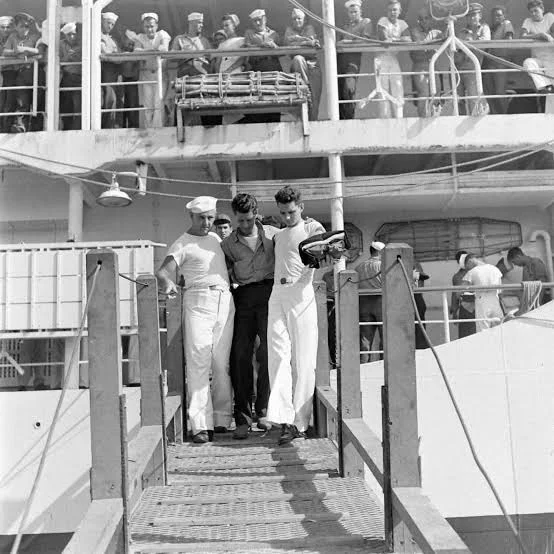
Lt. Adrian Marks flew to the scene in a PBY Catalina seaplane. Seeing men being attacked by sharks, he landed on the open sea against standing orders and pulled survivors aboard until the plane was packed, even tying men to its wings. Ships arrived through the night, led by USS Cecil J. Doyle, and the rescue took about a day. Some men had been in the water nearly five days.
Who Took the Blame?
Captain Charles B. McVay III was court-martialed in December 1945 and convicted of “hazarding his ship by failing to zigzag.” He was the only U.S. Navy captain court-martialed for losing a ship to enemy action in the war, though hundreds of American ships were lost.
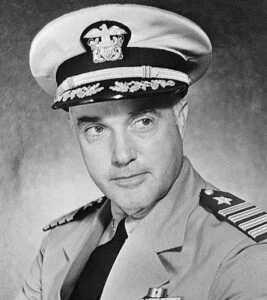
In an unusual move, the Navy brought I-58’s commander, Mochitsura Hashimoto, to testify. He said that zigzagging would have made no difference — he would have hit the ship anyway. McVay was still convicted, though his sentence was later remitted and he returned to duty.
Some families of the dead blamed McVay for years and sent him hateful letters. He died by suicide in 1968.
How McVay Was Cleared
Survivors spent decades arguing that their captain had been made a scapegoat for the Navy’s own failures. In the 1990s, a Florida schoolboy named Hunter Scott researched the case for a history project, interviewed survivors and helped bring it to Congress. Hashimoto, by then a Shinto priest, also supported clearing McVay’s name. In October 2000, Congress passed and President Bill Clinton signed a resolution stating that McVay’s record should show he was exonerated for the loss of the Indianapolis.
Keep Reading
- What Happened to Japanese Americans After the Internment Camps?
- What Happened to Easy Company After WWII? The Real “Band of Brothers” After the War
- What Happened to the Nazi Scientists Brought to America? Operation Paperclip Explained
- What Happened to the Doolittle Raiders Captured by Japan? The Fate of the Eight
- Why Did Japanese Soldiers Refuse to Surrender in WWII? From Iwo Jima to Hiroo Onoda
Frequently Asked Questions
How long were the USS Indianapolis survivors in the water?
About four days before they were spotted on August 2, and nearly five days for the last men pulled out on August 3.
Was the wreck of the Indianapolis ever found?
Yes. A team funded by Microsoft co-founder Paul Allen located it in August 2017, more than three miles deep in the Philippine Sea.
Why didn’t the Indianapolis have an escort?
Escorts were in short supply, and officers at Guam judged the route safe enough. They did not know — or did not pass on — what Navy codebreakers knew about submarines in the area.
Why It Still Matters
The men of the Indianapolis were not lost in battle. They were lost in paperwork — in routines that assumed someone else was watching. Their story changed how the Navy tracks ships and handles search and rescue, and it gave America one of the most haunting survival stories of World War II.
Sources
- Doug Stanton, In Harm’s Way: The Sinking of the USS Indianapolis and the Extraordinary Story of Its Survivors (Henry Holt, 2001)
- Lynn J. Vincent and Sara Vladic, Indianapolis: The True Story of the Worst Sea Disaster in U.S. Naval History (Simon & Schuster, 2018)
- U.S. Naval History and Heritage Command — “Navy Lessons Learned from the Sinking of Indianapolis”
- U.S. Naval Institute, Naval History — “Timeline of Justice” (August 1998)
- Atomic Heritage Foundation — “USS Indianapolis”
- Smithsonian Magazine — “The Sinking of the USS Indianapolis Triggered the Worst Shark Attack in History”
- Stars and Stripes — “How a WWII Japanese sub commander helped exonerate a US Navy captain” (2021)
- USS Indianapolis Survivors Organization / ussindianapolis.com — “Captain McVay”