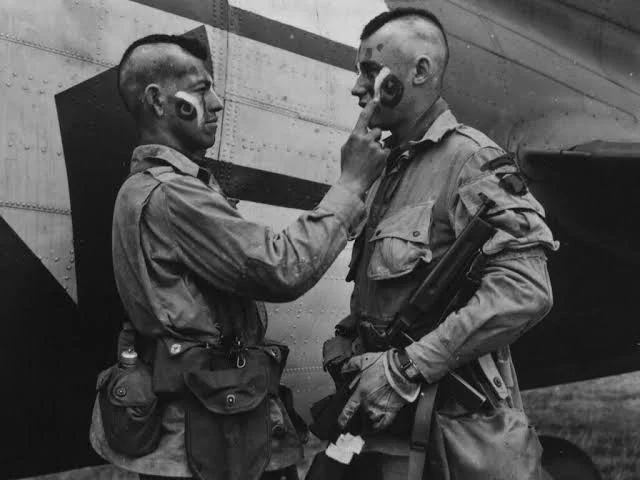
After World War II, the men of Easy Company went home and mostly lived ordinary lives: they became farmers, salesmen, teachers, factory managers, a judge and a postal worker. Many rarely spoke about the war until historian Stephen Ambrose’s 1992 book Band of Brothers and the 2001 HBO miniseries made them famous in their seventies and eighties. Their commander, Dick Winters, ran a small business in Pennsylvania and died in 2011. The last surviving member of the company, Bradford Freeman, died in July 2022 at age 97 — so no one from Easy Company is alive today.
The fame came late, and many of the men never quite got used to it.
Key Facts
- Unit: E (“Easy”) Company, 2nd Battalion, 506th Parachute Infantry Regiment, 101st Airborne Division
- Fought at: Normandy (D-Day), the Netherlands (Market Garden), Bastogne, and into Germany and Austria
- Made famous by: Stephen Ambrose’s book (1992) and the HBO miniseries (2001)
- Last surviving officer: Edward Shames, died December 2021
- Last surviving member: Bradford Freeman, died July 3, 2022, age 97
What Did the Men Do After the War?
Like millions of veterans, most Easy Company men came home in late 1945, took off the uniform and went to work. Many used the G.I. Bill to go to college or learn a trade. Few talked about combat, even with their families.
| Man | Life after the war | Died |
|---|---|---|
| Richard “Dick” Winters | Worked at Lewis Nixon’s family company in New Jersey; recalled during the Korean War to train troops; later sold animal feed and farm products in Pennsylvania | 2011, age 92 |
| Lewis Nixon | Ran his family’s chemical business; struggled with alcohol for years | 1995 |
| C. Carwood Lipton | Finished his engineering degree and became a manager in the glass industry, including overseas | 2001 |
| Donald Malarkey | Returned to Oregon and built a career there; co-wrote a memoir | 2017, age 96 |
| William “Wild Bill” Guarnere | Lost a leg at Bastogne; lived in Philadelphia; co-wrote a book with Babe Heffron | 2014 |
| Edward “Babe” Heffron | Went home to South Philadelphia and worked there for decades | 2013, age 90 |
| Lynn “Buck” Compton | Became a Los Angeles prosecutor — he helped convict Robert F. Kennedy’s assassin — and later a California appeals court judge | 2012 |
| Ronald Speirs | Stayed in the Army, served in Korea and later in Berlin | 2007 |
| Bradford Freeman | Returned to Mississippi; worked for the postal service | 2022, age 97 |
Not every story ended well. Several men battled alcohol, nightmares or what we now call post-traumatic stress. Others lost touch with the company for decades and only found each other again at reunions.
What Happened to Dick Winters?
Winters became the face of Easy Company, and he never seemed comfortable with it. After the war he took a job with his friend Lewis Nixon’s family company, then was recalled to the Army during the Korean War to train soldiers. Afterward he settled on a farm in Pennsylvania and ran a business selling animal feed and farm products.
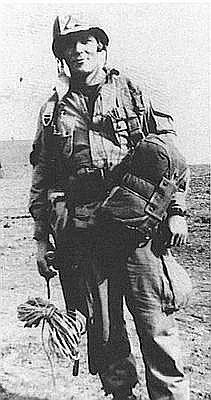
Once the book and series came out, letters, visitors and interview requests poured in. Winters answered thousands of letters by hand and spoke to cadets at West Point. He died on January 2, 2011, at 92, after several years with Parkinson’s disease. At his own request, his death was announced only after a private funeral. When asked if he was a hero, he usually quoted an Easy Company comrade: no, but he served in a company of heroes.
How Did a Book and a TV Series Change Their Lives?
In the late 1980s, historian Stephen Ambrose began interviewing Easy Company veterans at reunions. His book Band of Brothers came out in 1992. In 2001, HBO released a ten-part miniseries produced by Steven Spielberg and Tom Hanks, which opened each episode with interviews of the real men.
Almost overnight, men in their late seventies became famous. They were invited to premieres, asked for autographs and visited by fans from around the world. Several wrote their own memoirs. Some enjoyed it; others, like Winters, found it tiring and worried that the attention was unfair to the many units whose stories were never told.
Where Did the Series Differ From the Real Story?
The series is widely praised for accuracy, but like any drama it simplified things. A few examples:
- Some scenes combine several real events or give one man’s actions to another to keep the story clear.
- The real Winters was not Amish, as some characters in the series suggest.
- Some veterans felt certain men, such as Lt. Norman Dike or Lt. Herbert Sobel, were portrayed more harshly than they deserved, while others defended those portrayals.
Above all, the series succeeded in one thing: it let the veterans speak for themselves.
Keep Reading
- What Happened to Japanese Americans After the Internment Camps?
- What Happened to the Nazi Scientists Brought to America? Operation Paperclip Explained
- What Happened to the Doolittle Raiders Captured by Japan? The Fate of the Eight
- Why Did Japanese Soldiers Refuse to Surrender in WWII? From Iwo Jima to Hiroo Onoda
- Why Did It Take So Long to Rescue the USS Indianapolis Survivors?
Frequently Asked Questions
Is anyone from Easy Company still alive?
No. The last surviving officer, Edward Shames, died in December 2021, and the last surviving member, Pfc. Bradford Freeman, died on July 3, 2022, at age 97.
What happened to Malarkey after the war?
Donald Malarkey returned to Oregon, built a career there, and spoke often about his friends who were killed at Bastogne. He co-wrote Easy Company Soldier and died on September 30, 2017, at 96 — at the time the oldest surviving member of Easy Company.
Where is Dick Winters buried?
In a private grave at a Lutheran church cemetery in Ephrata, Pennsylvania, near where he grew up.
Why It Still Matters
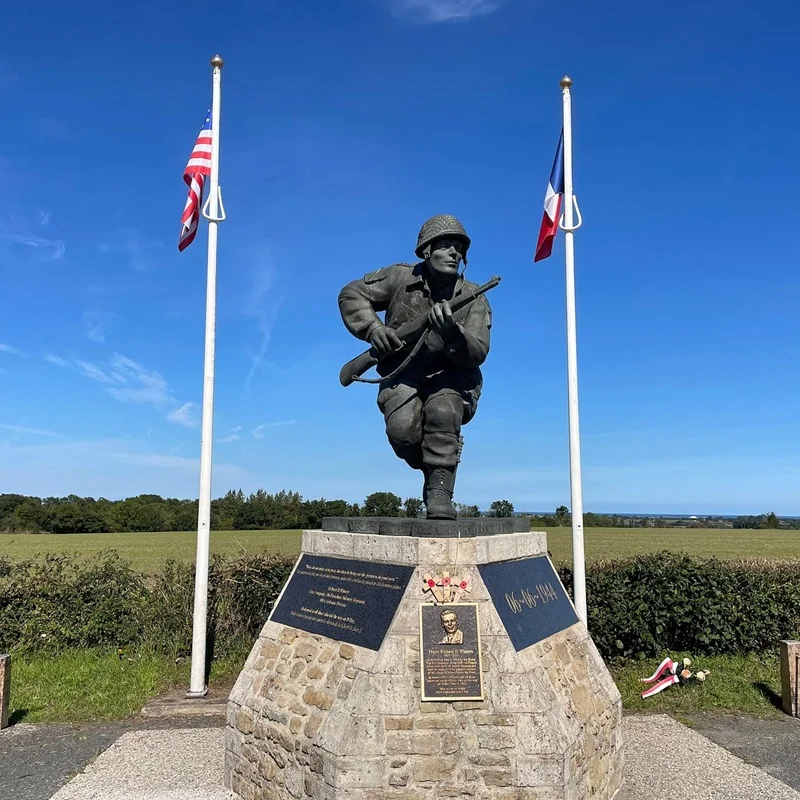
Easy Company was not unique — hundreds of American companies fought just as hard. That is exactly why its story matters. The men who came home and built quiet lives as salesmen, mail carriers and judges stand for a whole generation that did extraordinary things, then went back to ordinary ones without asking for credit. When Americans watch the series today, they are also watching their own fathers and grandfathers.
Sources
- Stephen E. Ambrose, Band of Brothers: E Company, 506th Regiment, 101st Airborne from Normandy to Hitler’s Eagle’s Nest (Simon & Schuster, 1992)
- Richard D. Winters with Cole C. Kingseed, Beyond Band of Brothers (Berkley, 2006)
- William Guarnere and Edward Heffron, Brothers in Battle, Best of Friends (Berkley, 2007)
- Don Malarkey with Bob Welch, Easy Company Soldier (St. Martin’s, 2008)
- War History Online — “What Happened to the Members of Easy Company After World War II?”
- Task & Purpose — “The real-life soldiers of Band of Brothers”
- NBC Philadelphia / Associated Press — obituary of Richard Winters (January 2011)
- We Are The Mighty — “Pfc. Bradford Freeman, the last ‘Band of Brothers’ soldier, dies at 97” (2022)