Last updated:
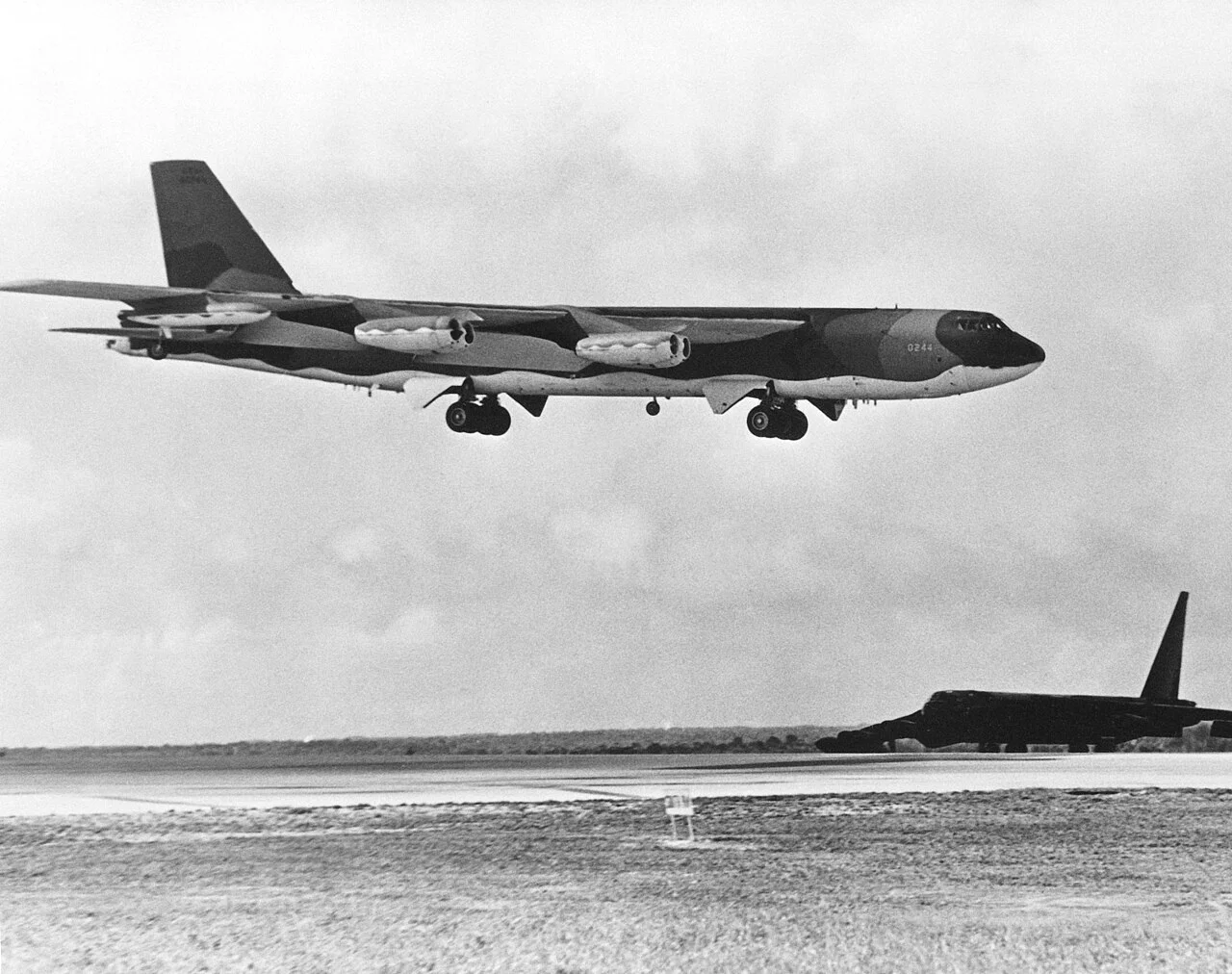
The Christmas bombing of December 1972 — officially Operation Linebacker II — was ordered by President Richard Nixon after peace talks with North Vietnam broke down in Paris. For 11 days, from December 18 to 29, B-52 bombers struck Hanoi and Haiphong to force Hanoi back to the table and to reassure South Vietnam. Fifteen B-52s were shot down, and Vietnamese figures say at least 1,624 civilians were killed. Talks resumed in January, and the Paris Peace Accords were signed on January 27, 1973.
Key Facts
- Official name: Operation Linebacker II
- Dates: December 18–29, 1972, with a pause on Christmas Day
- Ordered by: President Richard Nixon
- Targets: rail yards, airfields, power plants, depots and military sites around Hanoi and Haiphong
- B-52 sorties: about 740
- Bombs dropped: more than 20,000 tons
- U.S. losses: 15 B-52s and about a dozen other aircraft; dozens of airmen killed, captured or missing
- Civilian deaths: at least 1,624 (North Vietnamese figures)
- Result: talks resumed January 8, 1973; peace accords signed January 27
The Background: A Peace Deal That Fell Apart
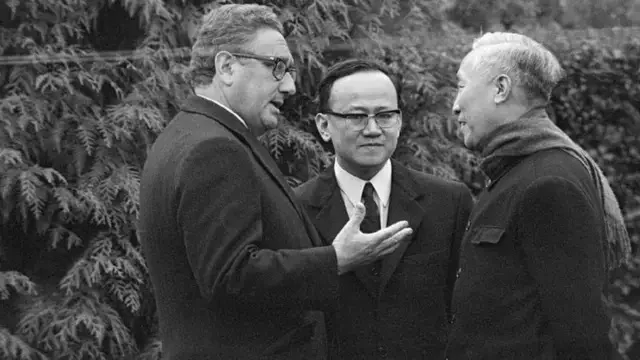
By 1972, the United States wanted out of Vietnam. Most American troops had already gone home. In Paris, President Nixon’s national security adviser, Henry Kissinger, had been negotiating in secret for years with North Vietnam’s Le Duc Tho.
In October 1972, they finally reached a draft agreement. The U.S. would withdraw its remaining forces, American prisoners of war would come home, and a ceasefire would take effect. On October 26, Kissinger told reporters, “Peace is at hand.” Two weeks later, Nixon won re-election in a landslide.
But the deal had a problem: South Vietnam’s president, Nguyen Van Thieu, rejected it. It allowed North Vietnamese troops to stay in the South, and Thieu saw it as a betrayal. Washington asked for dozens of changes. Hanoi pushed back with demands of its own.
Why the Talks Broke Down
Through November and early December, talks in Paris went in circles. On December 13, Le Duc Tho left Paris to return to Hanoi, and the negotiations broke off with no date to resume. Nixon and Kissinger accused Hanoi of stalling. North Vietnam accused Washington of trying to rewrite a deal that had already been agreed.
Nixon sent Hanoi an ultimatum: return to serious negotiations within 72 hours or face grave consequences. He then made a decision he had held back for years. For the first time, B-52 heavy bombers would be sent in large numbers against Hanoi itself.
Nixon had two goals. The first was to force North Vietnam back to the table on terms the U.S. could accept. The second was to convince Thieu that, if he signed the agreement, America would punish any North Vietnamese violation with overwhelming force.
Eleven Nights Over Hanoi
On the evening of December 18, 1972, the first wave of B-52s took off from Andersen Air Force Base in Guam and U-Tapao in Thailand. Over the next 11 nights, with a 36-hour pause for Christmas, they flew about 740 sorties, supported by hundreds of Air Force and Navy fighter-bombers, radar jammers and missile-hunting “Wild Weasel” aircraft.
The targets were rail yards, airfields, power plants, radio stations and supply depots around Hanoi and the port of Haiphong. Together, U.S. aircraft dropped more than 20,000 tons of bombs.
North Vietnam’s defenders were ready. They fired hundreds of Soviet-made SA-2 surface-to-air missiles. In the first nights, the B-52s flew the same routes and made the same sharp turn after dropping their bombs — a pattern the missile crews quickly learned. On the night of December 20 alone, six B-52s were shot down. Commanders changed tactics, varying routes and times, and losses fell. By the last nights, North Vietnam had nearly run out of missiles.
The Cost in the Air
For American airmen, the Christmas bombing was one of the most dangerous missions of the war. Fifteen B-52s were lost, along with about a dozen other U.S. aircraft. Of the B-52 crewmen shot down, dozens were captured and joined the prisoners in Hanoi’s prisons; others were killed or listed as missing.

Many American POWs held in Hanoi later said the bombing lifted their spirits. Hearing the B-52s, they believed, meant the war — and their captivity — was about to end. Within three months, they were right.
The Cost on the Ground
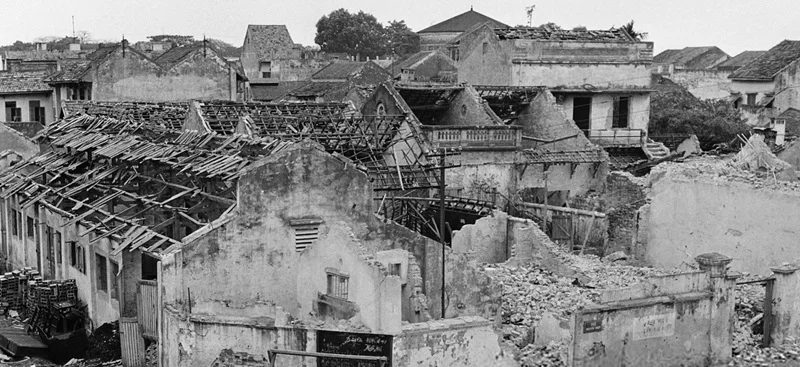
Although the bombing targeted military and industrial sites, many bombs fell in or near crowded neighborhoods. According to official North Vietnamese figures, at least 1,624 civilians were killed in Hanoi and Haiphong.
On December 22, bombs largely destroyed Bach Mai Hospital, Hanoi’s largest hospital, which stood near a military airfield. On the night of December 26, B-52 bombs fell across Kham Thien street, a densely populated residential area; Vietnamese records say about 280 people died there in a single night. Much of the city’s population had been evacuated beforehand, which kept the toll from being far higher.
Around the world, the bombing caused outrage. Newspapers, foreign governments and religious leaders condemned it, and some members of Congress threatened to cut off funding for the war. In Vietnam, the campaign is remembered as “Dien Bien Phu in the air” — a symbol of resistance.
| Date | What happened |
|---|---|
| October 26, 1972 | Kissinger announces “Peace is at hand” |
| November 7, 1972 | Nixon re-elected in a landslide |
| December 13, 1972 | Paris talks break down |
| December 18, 1972 | Linebacker II begins |
| December 20, 1972 | Six B-52s shot down in one night |
| December 22, 1972 | Bach Mai Hospital hit |
| December 25, 1972 | Christmas pause |
| December 26, 1972 | Kham Thien street bombed |
| December 29, 1972 | Bombing ends after Hanoi agrees to resume talks |
| January 8, 1973 | Kissinger and Le Duc Tho meet again in Paris |
| January 27, 1973 | Paris Peace Accords signed |
Did the Christmas Bombing Work?
Historians still disagree.
The case that it worked: Hanoi agreed to resume talks while the bombing was under way, and a final agreement was signed within a month. Within 60 days of the signing, 591 American POWs came home. Many Air Force officers believed the campaign showed what airpower could have achieved earlier in the war.
The case that it changed little: The final Paris agreement was very close to the October draft. North Vietnamese troops were still allowed to stay in the South. Critics argue that the bombing mainly pressured Thieu into signing and gave Nixon a way to claim “peace with honor,” at a heavy human cost. Two years later, South Vietnam fell anyway.
Why It Still Matters
The Christmas bombing was the last major U.S. military operation of the Vietnam War. For the airmen who flew it, it was an ordeal remembered for the rest of their lives. For the people of Hanoi, it is still marked every December. And for historians, it remains a case study in the limits of force: a campaign that brought prisoners home and ended America’s war, but could not decide who would win the war in Vietnam. For the full story of the war, read our clear Vietnam War summary.
Keep Reading
- Why Are Americans Still Missing in Vietnam 50 Years Later?
- What Happened to the Vietnamese Boat People? Where They Went, How Many Died, and Why the Camps Closed
- What Happened to Amerasian Children After the Vietnam War?
- How Did the Cu Chi Tunnels Work? Inside the Underground War — and the Tunnel Rats Sent to Fight It
- Why the 17th Parallel? How Vietnam’s Dividing Line Was Chosen in 1954
Frequently Asked Questions
Why did Nixon bomb Vietnam in December 1972?
Nixon ordered the bombing after peace talks broke down in mid-December 1972. He wanted to force North Vietnam back to negotiations and to convince South Vietnam’s president that the U.S. would back him if he signed the agreement.
Did the U.S. ever bomb Hanoi?
Yes. U.S. aircraft struck targets in and around Hanoi at several points in the war, but the heaviest attack was the Christmas bombing of December 18–29, 1972, the first time B-52s were used against the city in large numbers.
How many B-52s were lost over Hanoi?
Fifteen B-52s were lost during Linebacker II, all to surface-to-air missiles. Most fell over North Vietnam; a few crashed in Laos or Thailand after being hit.
How many civilians died in the Christmas bombing?
According to official North Vietnamese figures, at least 1,624 civilians were killed in Hanoi and Haiphong.
Why is it called the Christmas bombing?
Because it took place over the Christmas season, from December 18 to 29, 1972, pausing only on Christmas Day.
Sources
- Office of the Historian, U.S. Department of State — “Ending the Vietnam War, 1969–1973”
- Air & Space Forces Magazine — Walter J. Boyne, “Linebacker II”
- National Museum of the U.S. Air Force — “Linebacker II” fact sheet
- Wikipedia — “Operation Linebacker II”
- Voice of Vietnam (VOV) — “The Christmas bombings of Hanoi in retrospect”
- Marshall L. Michel III, The Eleven Days of Christmas: America’s Last Vietnam Battle (2002)