Last updated:
The Vietnam War (1955–1975) was a fight over whether Vietnam would be united under a communist government. Communist North Vietnam and its southern guerrillas, the Viet Cong, fought to take over South Vietnam, which was backed by the United States. America sent more than 2.5 million troops; 58,220 never came home. U.S. forces left in 1973, and the war ended on April 30, 1975, when North Vietnamese tanks rolled into Saigon.
Key Facts
- Dates: November 1, 1955 – April 30, 1975 (major U.S. combat role 1965–1973)
- Where: South and North Vietnam, plus Laos and Cambodia
- Sides: North Vietnam and the Viet Cong (National Liberation Front), backed by China and the Soviet Union · South Vietnam, backed by the United States, South Korea, Australia, New Zealand, Thailand and the Philippines
- U.S. presidents involved: Eisenhower, Kennedy, Johnson, Nixon, Ford
- Peak U.S. troops: about 543,000 (April 1969)
- Turning point: the Tet Offensive, January–February 1968
- Result: North Vietnamese victory; Vietnam reunified under communist rule in 1976
- Deaths: 58,220 Americans; 200,000–250,000 South Vietnamese soldiers (U.S. estimate); about 1.1 million North Vietnamese and Viet Cong fighters and up to 2 million civilians (Hanoi’s 1995 figures)
What Was the Vietnam War About? (In Simple Terms)
Picture a country split in two by a line on a map. In the North, a communist government led by Ho Chi Minh. In the South, an anti-communist government backed by the United States. Both claimed to be the real Vietnam. The Vietnam War was the 20-year fight over which one would win.
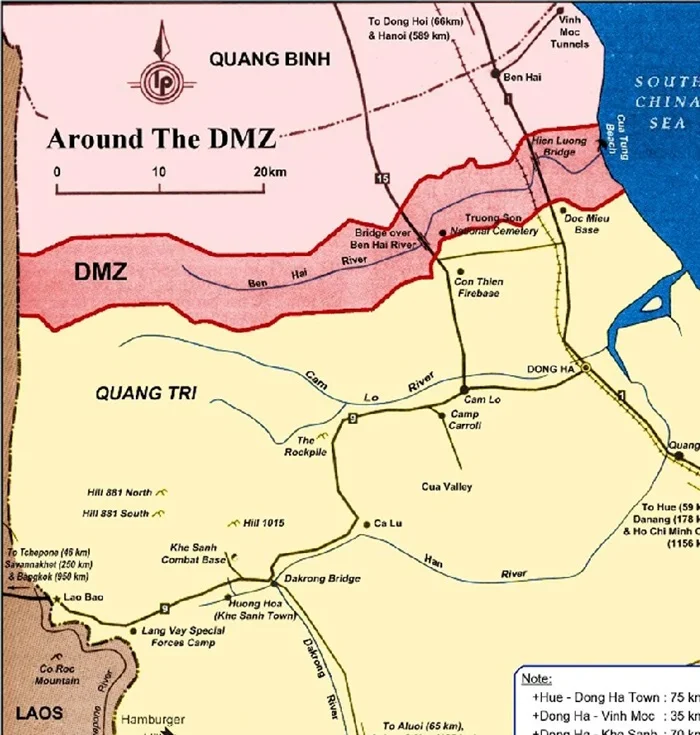
For the Vietnamese communists, it was the last stage of a long war for independence and unification that had begun against France. For many South Vietnamese, it was a fight to avoid living under communism. For Washington, it was a test of the Cold War policy called containment: stopping communism from spreading, country by country, across Asia.
That is why the war is so hard to sum up in one sentence. It was a civil war between Vietnamese, a war of national independence, and a Cold War battle between superpowers — all at the same time.
How It Started: A Country Split in Two (1954–1960)
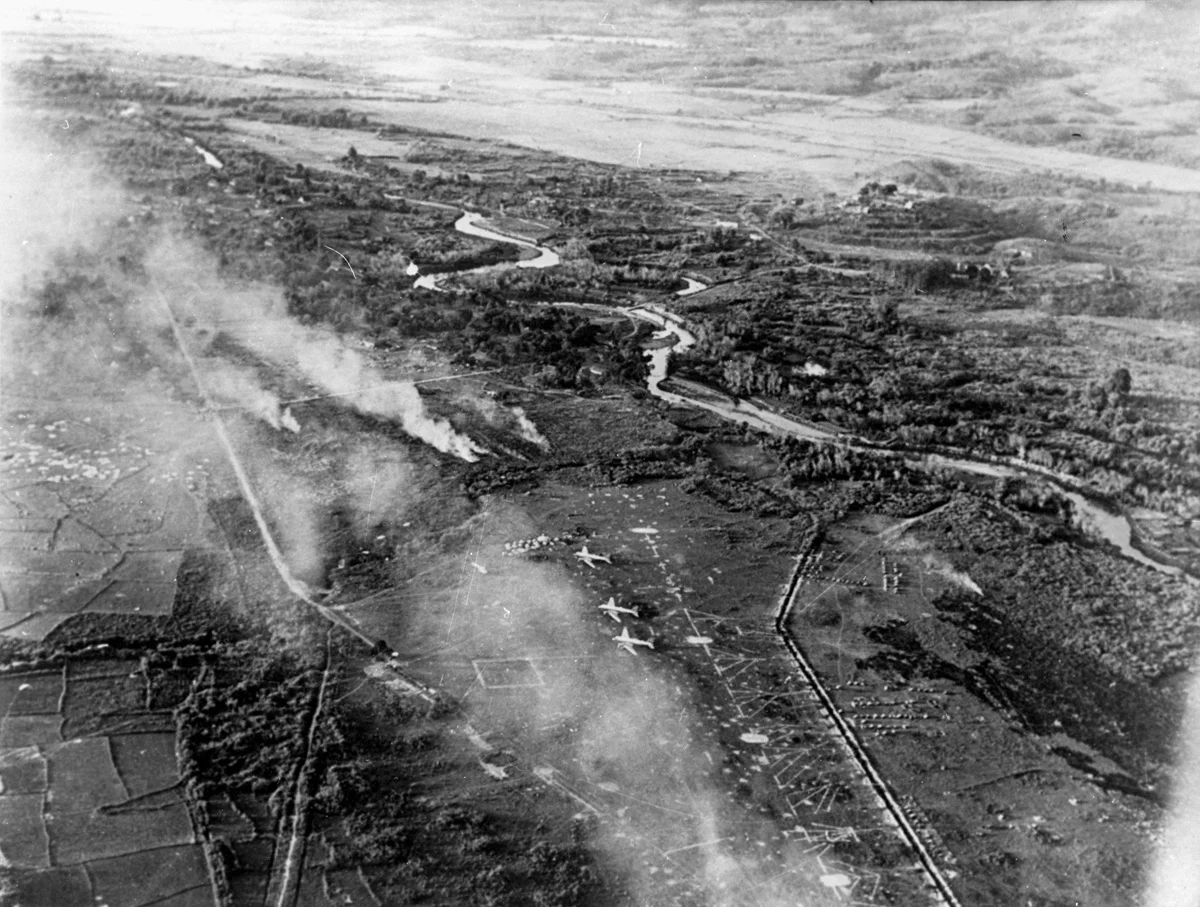
The Vietnam War grew directly out of an earlier conflict. From 1946 to 1954, France fought Ho Chi Minh’s Viet Minh to keep its colony — and lost, at the Battle of Dien Bien Phu. (For that story, see our clear summary of the First Indochina War.)
The 1954 Geneva Accords divided Vietnam at the 17th parallel. The line was supposed to be temporary: nationwide elections would reunite the country in 1956. Up to a million people, many of them Catholics, moved south; tens of thousands of communist fighters and supporters went north.
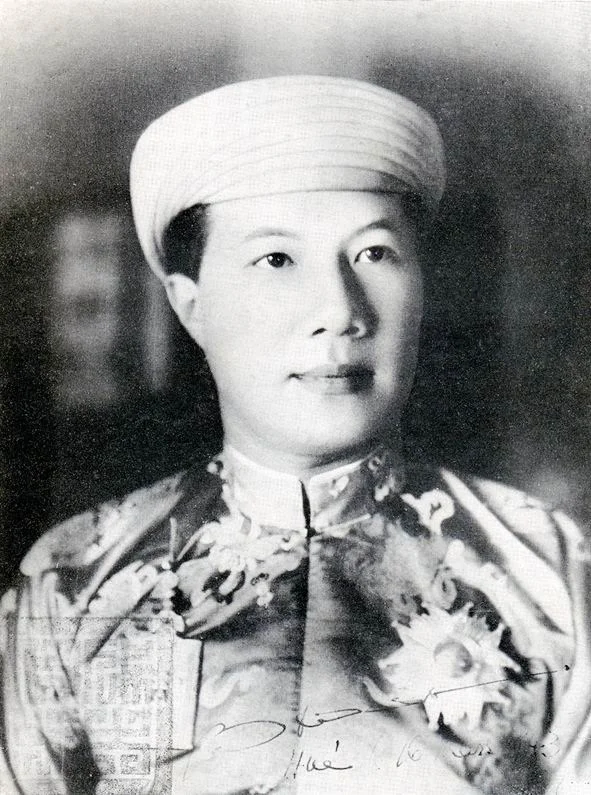
In the South, a fiercely anti-communist Catholic nationalist named Ngo Dinh Diem took charge. In October 1955 he pushed aside the former emperor, Bao Dai, in a referendum widely seen as rigged, and declared the Republic of Vietnam. Backed by Washington, Diem refused to hold the 1956 elections. U.S. officials privately believed Ho Chi Minh would have won them.
Both Vietnams turned harsh. In the North, a land reform campaign led to the execution of thousands of people labeled “landlords.” In the South, Diem’s campaign against suspected communists jailed and killed thousands and alienated many villagers.
In 1959, Hanoi’s leaders decided to back armed revolt in the South. Soldiers began opening a supply route through the jungles of Laos and Cambodia that Americans would call the Ho Chi Minh Trail. In December 1960, the communists formed the National Liberation Front in the South. Its fighters became known to Americans as the Viet Cong.
The first U.S. military advisers had arrived in the 1950s. On July 8, 1959, two of them, Major Dale Buis and Master Sergeant Chester Ovnand, were killed in an attack at Bien Hoa — the first American servicemen whose names appear on the Vietnam Veterans Memorial for this war.
Why Did the U.S. Get Involved in Vietnam?
Four American presidents in a row chose to defend South Vietnam. Their reasons came down to three ideas:
- The domino theory. In 1954, President Eisenhower compared Southeast Asia to a row of dominoes: if Vietnam fell to communism, Laos, Cambodia, Thailand and beyond might follow.
- The lessons of the 1940s and 1950s. American leaders had watched China turn communist in 1949 and fought communist North Korea from 1950 to 1953. Many believed that giving ground only invited more aggression.
- Credibility. The U.S. had promised to protect its allies. Walking away from South Vietnam, officials feared, would make every American promise look weak. In a 1965 memo, Assistant Secretary of Defense John McNaughton estimated that 70% of America’s aim in Vietnam was simply “to avoid a humiliating U.S. defeat.”
Critics, then and now, argue that Washington misread the war — treating a nationalist struggle as a simple case of Soviet or Chinese expansion, and backing South Vietnamese governments that never won broad popular support.
1961–1963: Kennedy’s Advisers and the Fall of Diem
When John F. Kennedy took office in 1961, there were fewer than 1,000 American military advisers in South Vietnam. By the end of 1963 there were about 16,000. They trained the South Vietnamese army (ARVN), flew helicopters and, more and more often, took part in combat.
The results were worrying. In January 1963, at the village of Ap Bac, a small Viet Cong force beat a much larger South Vietnamese army unit backed by American helicopters and advisers.
Meanwhile, Diem’s government was in crisis. Diem favored fellow Catholics in a mostly Buddhist country. In June 1963, a Buddhist monk named Thich Quang Duc burned himself to death at a Saigon intersection in protest. The photograph went around the world.
Washington signaled that it would not stand in the way of a coup. On November 1, 1963, South Vietnamese generals overthrew Diem; he and his brother were killed the next day. Three weeks later, Kennedy himself was assassinated in Dallas. South Vietnam then went through a long string of short-lived military governments.
1964–1965: The Gulf of Tonkin and the Decision to Fight
On August 2, 1964, North Vietnamese patrol boats attacked the destroyer USS Maddox in the Gulf of Tonkin, off North Vietnam’s coast. Two nights later, the Maddox and the Turner Joy reported a second attack.
President Lyndon Johnson ordered air strikes and asked Congress for broad war powers. The Gulf of Tonkin Resolution passed on August 7 by 416–0 in the House and 88–2 in the Senate. It would serve as the legal basis for the war; Congress never declared war on North Vietnam.
There was a problem. The second attack almost certainly never happened. A study released by the National Security Agency in 2005 concluded that there had been no North Vietnamese attack on August 4 — the ships’ crews had likely reacted to bad weather and faulty radar and sonar readings.
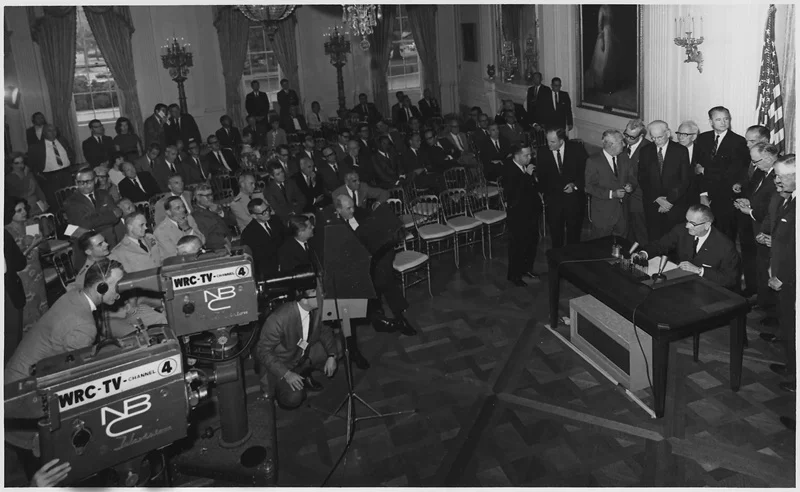
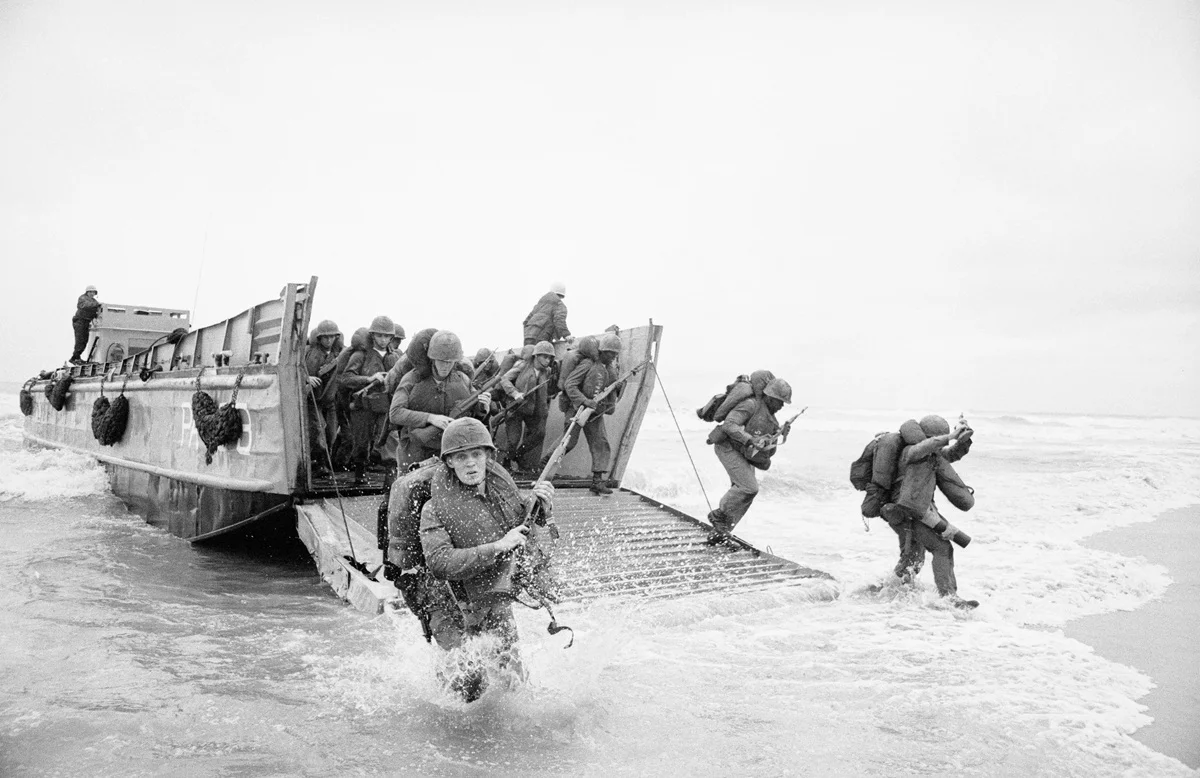
In early 1965, after a Viet Cong attack on a U.S. base at Pleiku, Johnson escalated. On March 2 he launched Operation Rolling Thunder, a bombing campaign against North Vietnam that would last more than three and a half years. On March 8, about 3,500 U.S. Marines waded ashore at Da Nang. America’s ground war had begun.
1965–1967: Search and Destroy
American troop numbers climbed fast: about 184,000 by the end of 1965, 385,000 by the end of 1966, and 485,000 by the end of 1967. To fill the ranks, draft calls doubled.
The U.S. commander, General William Westmoreland, fought a war of attrition. The idea was simple: find the enemy, kill more of them than they could replace, and eventually force Hanoi to give up. Success was measured by the “body count” — a number that soon became infamous because it was often inflated, and because it could not show who was really winning.
The first big test came in November 1965 in the Ia Drang Valley, where helicopter-borne U.S. troops fought North Vietnamese regulars for the first time. Both sides claimed to have learned a lesson. The Americans believed their firepower could win; the North Vietnamese learned to “grab the enemy by the belt” — fighting so close that U.S. artillery and air strikes could not be used.
The war took many forms at once. Patrols in jungles and rice paddies. Booby traps and ambushes. Underground tunnel networks such as those at Cu Chi, near Saigon. Massive bombing in the North and along the Ho Chi Minh Trail. And a struggle for the loyalty of villagers caught between both sides.
North Vietnam had powerful backers. China and the Soviet Union supplied weapons, food, fuel and advanced air defenses, and Chinese support troops served in the North. On the other side, South Korea sent tens of thousands of troops, joined by smaller forces from Australia, New Zealand, Thailand and the Philippines.
| Year (end) | U.S. troops in Vietnam | U.S. deaths that year |
|---|---|---|
| 1963 | about 16,000 | 122 |
| 1965 | about 184,000 | about 1,900 |
| 1966 | about 385,000 | about 6,300 |
| 1967 | about 485,000 | about 11,400 |
| 1968 | about 536,000 | about 16,900 (deadliest year) |
| 1969 | about 475,000 | about 11,800 |
| 1970 | about 335,000 | about 6,200 |
| 1971 | about 157,000 | about 2,400 |
| 1972 | about 24,000 | about 760 |
Figures rounded; troop levels from the U.S. Department of Defense, deaths from the National Archives’ Defense Casualty Analysis System.
1968: The Year Everything Changed
By late 1967, Westmoreland told Americans he could see “light at the end of the tunnel.” Weeks later, the war exploded.
In January 1968, North Vietnamese troops surrounded the U.S. Marine base at Khe Sanh, near the border with Laos. For 77 days, the siege drew American attention — and reinforcements — to the remote northwest corner of South Vietnam.
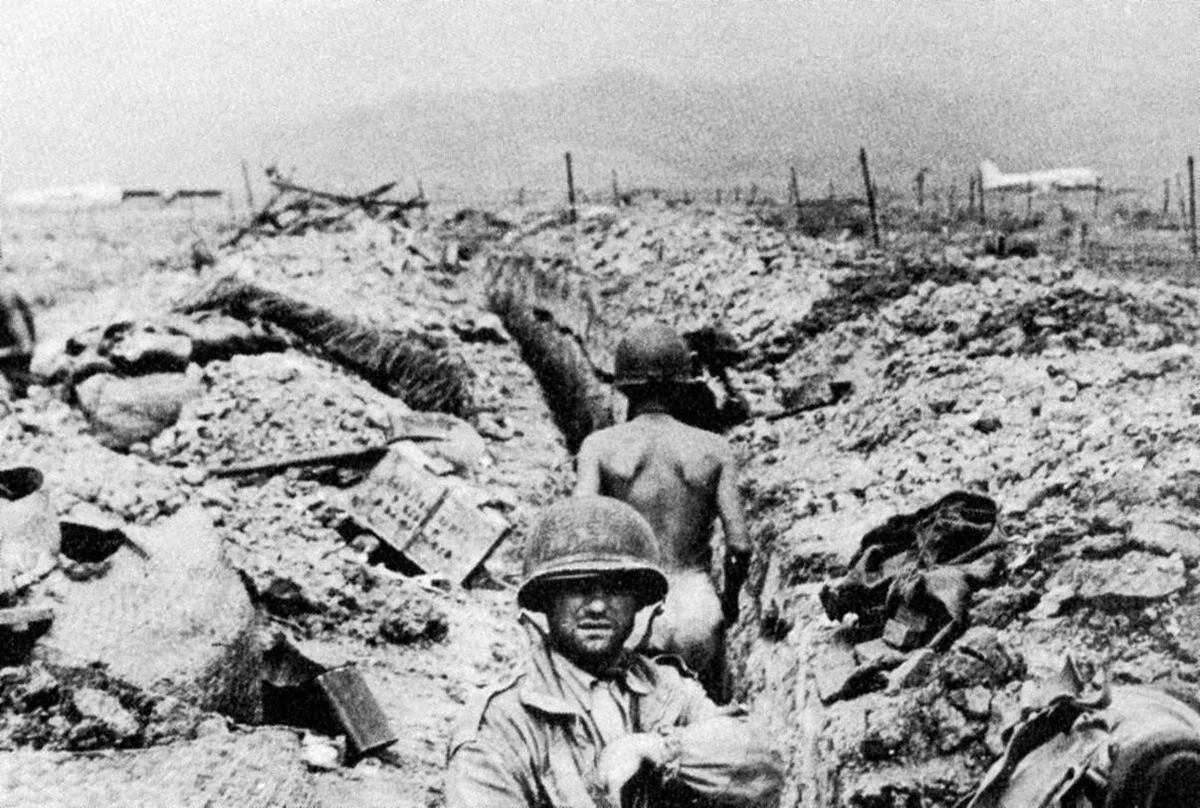
Then, on the night of January 30–31, during the Tet lunar new year holiday, communist forces attacked more than 100 cities and towns across South Vietnam at once. In Saigon, a Viet Cong squad broke into the U.S. Embassy compound. In Hue, the old imperial capital, U.S. Marines and South Vietnamese troops fought street by street for about a month to retake the city.
Militarily, the Tet Offensive was a heavy defeat for the communists. The South Vietnamese people did not rise up as Hanoi had hoped, and the Viet Cong lost tens of thousands of fighters. In Hue, investigators later found mass graves of more than 2,800 civilians killed during the communist occupation of the city.
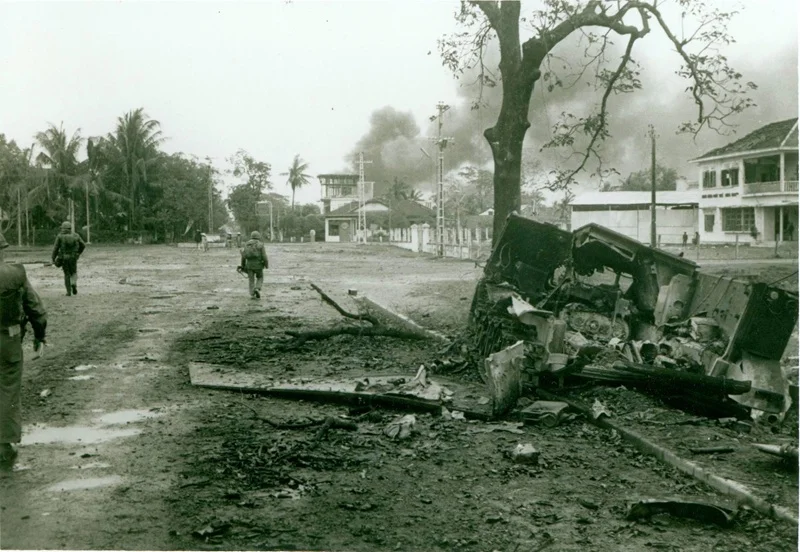
Politically, Tet was a turning point for America. After years of upbeat reports, millions of Americans watched fighting in the streets of Saigon on the evening news. In February, CBS anchor Walter Cronkite told viewers that the war seemed “mired in stalemate.” On March 31, Lyndon Johnson stunned the nation: he announced a partial halt to the bombing and said he would not run for re-election.
Two weeks before that speech, on March 16, U.S. soldiers had killed hundreds of unarmed villagers — women, children and old men — at the hamlet of My Lai. The Army’s count was 347; Vietnamese memorials list 504. The massacre was covered up and only became public in late 1969.
1968 became the deadliest year of the war for Americans, with almost 17,000 killed. At home, it was also the year Martin Luther King Jr. and Robert F. Kennedy were assassinated, and protesters clashed with police at the Democratic convention in Chicago. In November, Richard Nixon won the presidency promising “peace with honor.”
1969–1972: Nixon, Vietnamization and the Long Way Out
Nixon’s plan was called Vietnamization: train and equip the South Vietnamese army to do the fighting, while bringing American troops home. U.S. troop numbers peaked at about 543,000 in April 1969. That June, Nixon announced the first withdrawal of 25,000 men.
At home, the war divided the country. In October 1969, millions of Americans took part in the nationwide Moratorium protests. On December 1, 1969, the government held its first draft lottery since World War II, drawing birthdays from a glass jar on live television to decide who would be called first.
The war also spread. In April 1970, Nixon sent U.S. and South Vietnamese troops into Cambodia to destroy communist bases. Campus protests erupted. On May 4, Ohio National Guardsmen opened fire on students at Kent State University, killing four. Eleven days later, police killed two students at Jackson State College in Mississippi.
In June 1971, The New York Times began publishing the Pentagon Papers, a secret government history leaked by former defense analyst Daniel Ellsberg. It showed that administrations from Truman to Johnson had misled the public about the war.
In March 1972, with few U.S. ground troops left, North Vietnam launched its biggest attack yet, the Easter Offensive. South Vietnamese troops, backed by massive American air power, held on. In December, when peace talks stalled, Nixon ordered Linebacker II — the “Christmas bombing” of Hanoi and Haiphong, using B-52 bombers, from December 18 to 29.
1973: The Paris Peace Accords and Operation Homecoming
On January 27, 1973, the United States, North Vietnam, South Vietnam and the Viet Cong’s provisional government signed the Paris Peace Accords. The U.S. would withdraw all its troops; North Vietnam would release American prisoners of war. Crucially, about 150,000 North Vietnamese troops were allowed to remain in the South.
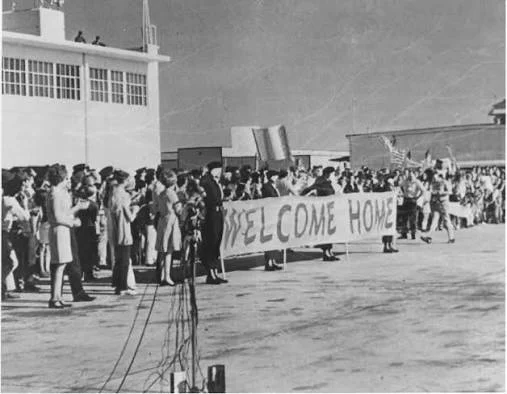
Between February and April, 591 American POWs came home in Operation Homecoming. Some had been held for more than eight years, many in the Hanoi prison Americans called the “Hanoi Hilton.” On March 29, 1973, the last U.S. combat troops left South Vietnam. The draft ended that same year.
For Henry Kissinger and North Vietnam’s Le Duc Tho, who negotiated the deal, the accords brought a Nobel Peace Prize. Le Duc Tho refused to accept it, saying there was still no peace in Vietnam. He was right: fighting between the two Vietnams resumed almost at once.
1975: The Fall of Saigon
After 1973, America’s support for South Vietnam shrank fast. Congress banned new U.S. military action in Indochina and cut aid. In August 1974, Nixon resigned over the Watergate scandal.
In January 1975, North Vietnam tested Washington by capturing the province of Phuoc Long. There was no American response. In March, its army launched a major offensive in the Central Highlands. After the fall of Ban Me Thuot, South Vietnam’s president, Nguyen Van Thieu, ordered a retreat from the highlands that turned into a chaotic rout. Hue and Da Nang fell within weeks.
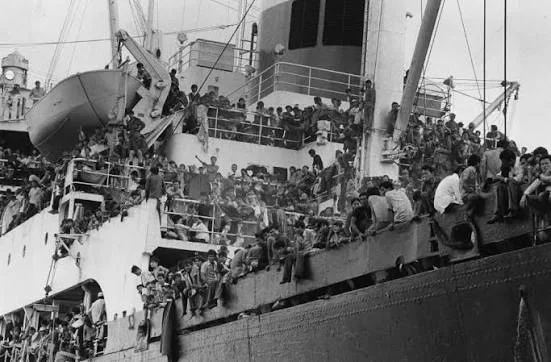
On April 29, as North Vietnamese forces closed in on Saigon, the United States launched Operation Frequent Wind, the largest helicopter evacuation in history. In about 19 hours, helicopters carried 1,373 Americans and 5,595 Vietnamese and other nationals from Saigon to Navy ships offshore. That morning, two Marines, Corporal Charles McMahon and Lance Corporal Darwin Judge, were killed by a rocket at Tan Son Nhut airport — the last American servicemen to die in Vietnam.
At 7:53 a.m. on April 30, the last Marines lifted off the roof of the U.S. Embassy. A few hours later, North Vietnamese tanks crashed through the gates of the Presidential Palace, and South Vietnam’s last president, Duong Van Minh, surrendered. Saigon was soon renamed Ho Chi Minh City. Vietnam was formally reunified on July 2, 1976.
Who Finally Ended the Vietnam War?
The answer depends on whose war you mean. For America, the war ended through the Paris Peace Accords of January 1973, negotiated under President Nixon, followed by Congress’s decision to cut off further military involvement. For Vietnam, the war ended on April 30, 1975, when North Vietnamese forces captured Saigon and South Vietnam surrendered. Gerald Ford was the U.S. president when Saigon fell; in April 1975 he told an audience at Tulane University that the war was “finished as far as America is concerned.”
Why Did the U.S. Lose the Vietnam War?
Historians still argue about this, but most point to a mix of reasons:
- A war of attrition that didn’t work. North Vietnam was willing to absorb enormous losses and kept replacing them.
- A weak partner. South Vietnam’s governments struggled with corruption, coups and limited popular support.
- Sanctuaries and supply lines. The Ho Chi Minh Trail and bases in Laos and Cambodia, plus aid from China and the Soviet Union, kept the North’s army supplied.
- Limits on the war. Fearing a wider war with China, as in Korea, Washington never invaded North Vietnam.
- Support at home ran out. After Tet, a growing share of Americans no longer believed the war could be won at an acceptable cost.
Some historians and veterans argue that the war could have been won with a different strategy or continued U.S. support after 1973. Others believe the outcome was decided long before the first Marines landed. We look at both sides in detail in why the U.S. lost the Vietnam War.
The Cost of the Vietnam War
The war killed 58,220 American service members and wounded more than 150,000 seriously enough to need hospital care. About 2.6 to 2.7 million Americans served in Vietnam itself, and about 1.8 million men were drafted during the war years. Thousands of veterans later suffered from post-traumatic stress and illnesses linked to Agent Orange, one of the herbicides the U.S. sprayed over Vietnam’s forests and crops.
For the Vietnamese, the toll was far larger. The U.S. military estimated that 200,000 to 250,000 South Vietnamese soldiers died. In 1995, Hanoi’s government said about 1.1 million North Vietnamese and Viet Cong fighters had been killed, along with up to 2 million civilians on both sides. Western researchers’ estimates are generally lower, but all agree the civilian toll was enormous. Laos and Cambodia, both heavily bombed, suffered hundreds of thousands more deaths.
By most estimates, the United States dropped more than twice the tonnage of bombs on Indochina that it dropped in all of World War II. Unexploded bombs and mines still kill and injure people in Vietnam and Laos today.
What Happened After the War?
The end of the fighting did not end the suffering. Hundreds of thousands of former South Vietnamese soldiers, officials and others were sent to re-education camps, some for more than a decade. From the late 1970s, hundreds of thousands of Vietnamese fled by sea; these boat people faced storms, pirates and overcrowded refugee camps, and many died at sea.
The war also left people behind who had fought alongside Americans: the Hmong of Laos, who had fought a secret war for the CIA, and the Montagnards of the Central Highlands, who had served with U.S. Special Forces. Thousands of children fathered by American servicemen — known as Amerasians — grew up facing discrimination in Vietnam. Over the following decades, more than a million Vietnamese, Lao, Hmong and Cambodian refugees resettled in the United States.
The search for missing Americans continues. Today, about 1,560 U.S. service members from the Vietnam War are still listed as unaccounted for.
In 1995, President Bill Clinton restored diplomatic relations with Vietnam. Today the two former enemies are major trading partners.
Why the Vietnam War Still Matters to Americans
For many Americans, the war never fully ended. Veterans came home not to parades but, too often, to indifference or hostility — a wound the country tried to heal with the Vietnam Veterans Memorial, dedicated in Washington in 1982. Its black granite wall now carries 58,281 names.
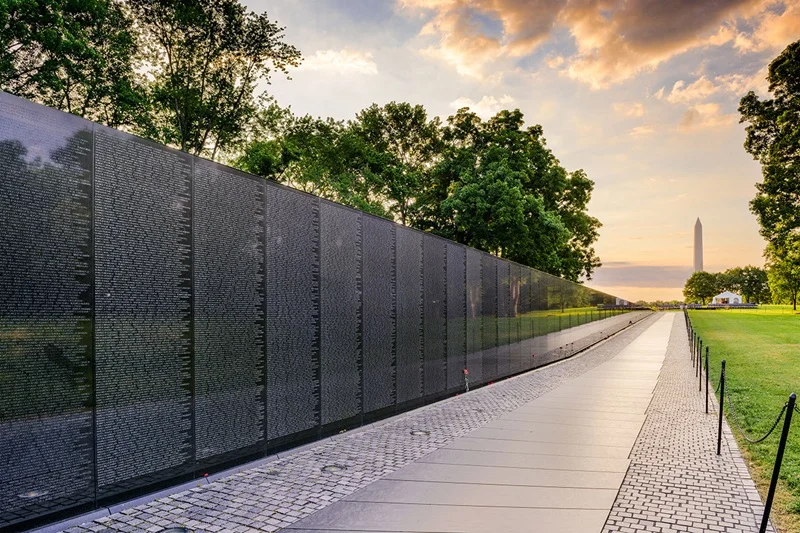
The war changed how Americans see their government and their military. It led to the end of the draft and the creation of today’s all-volunteer force. It produced the 1973 War Powers Resolution, an attempt by Congress to limit a president’s power to send troops into combat without its approval. And for decades afterward, the phrase “another Vietnam” became shorthand for a war that is easy to enter and hard to leave.
Vietnam began, in 1945, with Ho Chi Minh quoting America’s Declaration of Independence. It ended, in 1975, with Americans leaving from a rooftop. What happened in between is a story every generation of Americans keeps returning to.
Vietnam War Timeline
| Date | Key event |
|---|---|
| July 21, 1954 | Geneva Accords divide Vietnam at the 17th parallel |
| October 26, 1955 | Ngo Dinh Diem proclaims the Republic of Vietnam |
| July 1956 | Reunification elections are not held |
| July 8, 1959 | First U.S. advisers killed at Bien Hoa |
| December 20, 1960 | National Liberation Front (Viet Cong) founded |
| November 1–2, 1963 | Coup overthrows Diem, who is killed |
| August 2–7, 1964 | Gulf of Tonkin incidents and resolution |
| March 2 & 8, 1965 | Rolling Thunder begins; Marines land at Da Nang |
| November 1965 | Battle of Ia Drang |
| January 30–31, 1968 | Tet Offensive begins |
| March 16, 1968 | My Lai massacre |
| March 31, 1968 | Johnson announces he won’t seek re-election |
| April 1969 | U.S. troop strength peaks at about 543,000 |
| December 1, 1969 | First draft lottery since World War II |
| May 4, 1970 | Kent State shootings |
| June 13, 1971 | Pentagon Papers published |
| March 30, 1972 | Easter Offensive begins |
| December 18–29, 1972 | Christmas bombing (Linebacker II) |
| January 27, 1973 | Paris Peace Accords signed |
| March 29, 1973 | Last U.S. combat troops leave |
| April 29–30, 1975 | Operation Frequent Wind; fall of Saigon |
| July 2, 1976 | Vietnam officially reunified |
Keep Reading
- The First Indochina War: A Clear Summary of How France Lost Vietnam (1946–1954)
- What Happened to the French Prisoners After Dien Bien Phu?
- Who Was the First American Killed in Vietnam? The Answer Is Older Than You Think
- What Happened to South Vietnamese Soldiers After the Fall of Saigon?
- How Did the Vietnam Draft Lottery Work? The Night America Drew Birthdays From a Jar
- Inside Ho Thuy Tien, Vietnam’s Abandoned Water Park
Frequently Asked Questions
What was the Vietnam War about in simple terms?
It was a war over whether Vietnam would be united under a communist government. Communist North Vietnam fought to take over U.S.-backed South Vietnam, and the United States fought to stop the spread of communism in Southeast Asia.
Who finally ended the Vietnam War?
America’s part ended with the Paris Peace Accords, signed under President Nixon in January 1973. The war itself ended on April 30, 1975, when North Vietnamese forces captured Saigon and South Vietnam surrendered.
What was the real reason the Vietnam War was fought?
For the United States, the main reason was containing communism: leaders feared that if South Vietnam fell, other countries would follow, and that abandoning an ally would damage America’s credibility. For North Vietnam, the goal was to unify the country under its rule and finish the struggle for independence it had begun against France.
How many Americans died in the Vietnam War?
58,220 U.S. military personnel died, according to the Defense Department’s casualty records. The Vietnam Veterans Memorial lists 58,281 names; the two counts differ slightly because they use different rules about who is included.
Did the Gulf of Tonkin incident actually happen?
Partly. North Vietnamese boats did attack the USS Maddox on August 2, 1964. But the reported second attack on August 4 almost certainly never happened, according to a study released by the National Security Agency in 2005.
How long did the Vietnam War last?
About 20 years, from 1955 to 1975, making it one of America’s longest wars. Large-scale U.S. combat lasted from 1965 to 1973.
Sources
- Office of the Historian, U.S. Department of State — Milestones: “The Gulf of Tonkin Resolution, 1964,” “Ending the Vietnam War, 1969–1973,” “The Fall of Saigon”
- National Archives — Vietnam War U.S. Military Fatal Casualty Statistics (Defense Casualty Analysis System)
- National Security Agency — Robert J. Hanyok, “Skunks, Bogies, Silent Hounds, and the Flying Fish: The Gulf of Tonkin Mystery” (released 2005)
- Encyclopaedia Britannica — “Vietnam War“
- Naval History and Heritage Command — “Operation Frequent Wind“
- Vietnam Veterans Memorial Fund — names on The Wall and MIA figures (2025–2026)
- The United States of America Vietnam War Commemoration (vietnamwar50th.com) — timeline
- Fredrik Logevall, Embers of War (2012) · Stanley Karnow, Vietnam: A History (1983) · Mark Moyar, Triumph Forsaken (2006)