Last updated:
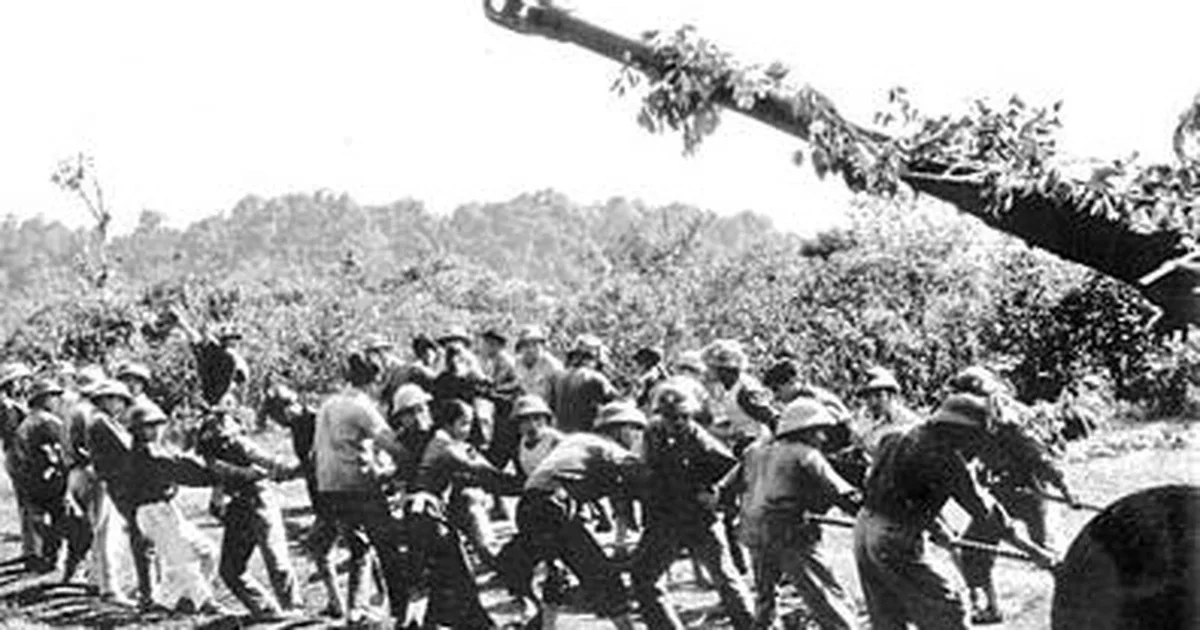
The Viet Minh got their artillery to Dien Bien Phu mostly by muscle. Trucks carried guns supplied by China as far as the roads allowed; then soldiers and porters hauled them the rest of the way with ropes, over mountain tracks, often at night. They dug the guns into shelters on the hillsides facing the French base and hid them so well that French counter-fire could not find them. When the barrage began on March 13, 1954, the French were stunned.
Key Facts
- Battle: Dien Bien Phu, March 13 – May 7, 1954
- Viet Minh guns: about two dozen 105mm howitzers, plus 75mm guns, heavy 120mm mortars and dozens of anti-aircraft guns
- Where they came from: mostly China — including American-made howitzers captured in Korea
- How they were moved: by truck where possible, then by hand with ropes and pulleys
- Supply effort: more than 260,000 civilian porters and about 20,000 bicycles (Vietnamese figures)
- Key decision: in late January 1954, Gen. Giap called off a quick attack and had the guns pulled back and re-emplaced
- French artillery chief: Col. Charles Piroth, who had promised to silence the Viet Minh guns
Why the French Thought They Were Safe
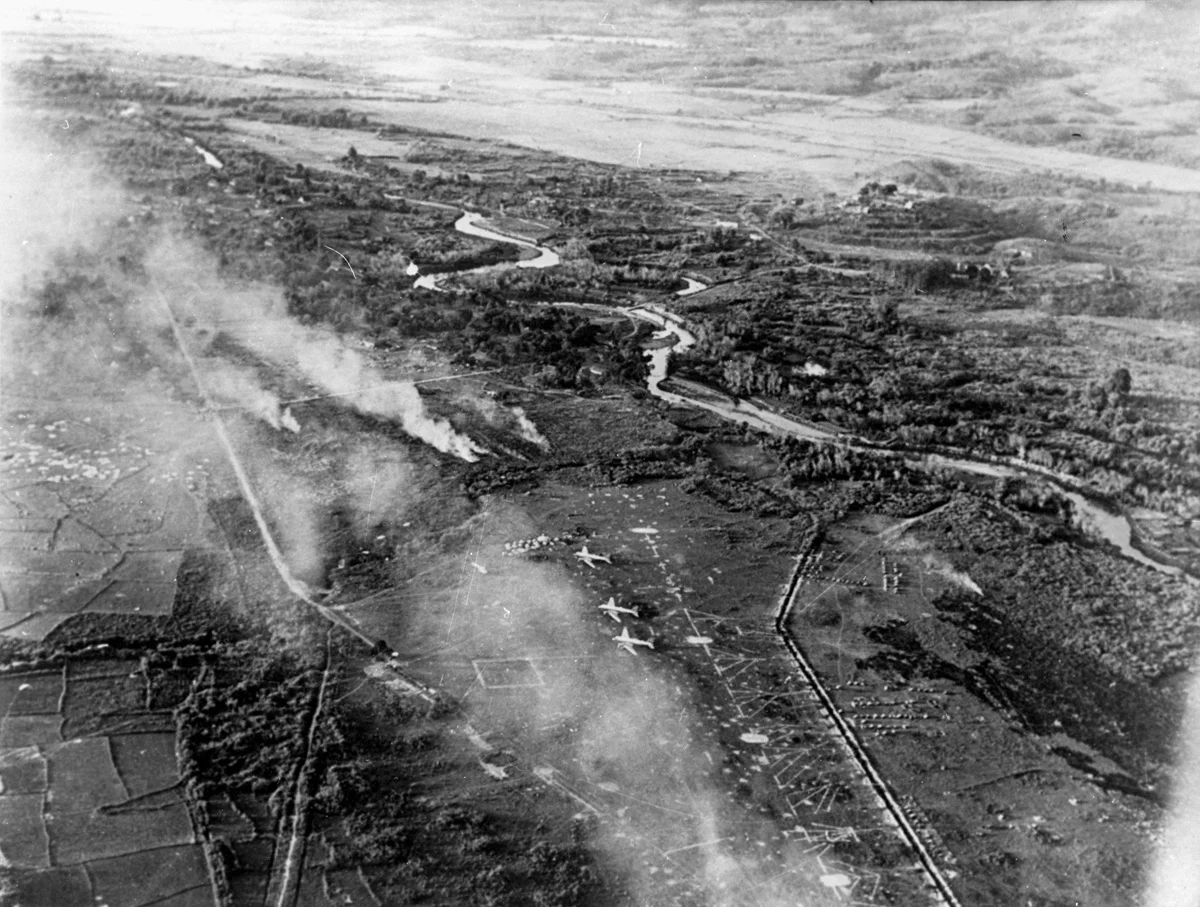
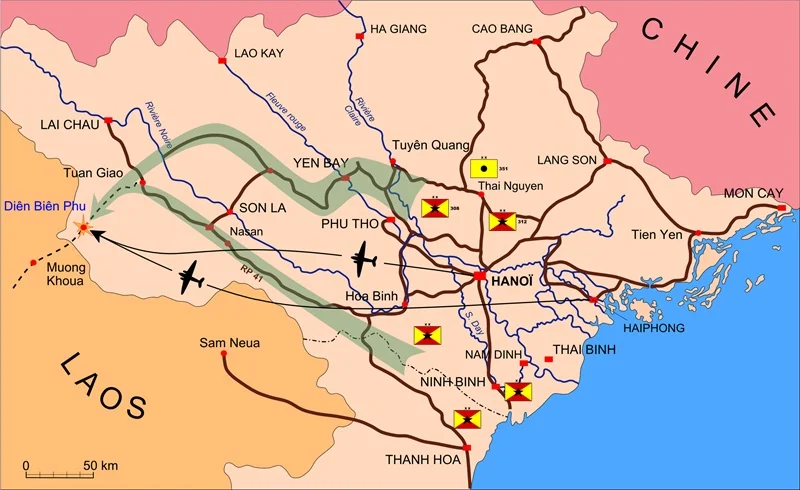
In November 1953, French paratroopers dropped into the valley of Dien Bien Phu, in the mountains of northwest Vietnam near the border with Laos. They built a fortified camp around an airstrip, supplied by air.
The French commanders knew the valley was surrounded by hills. That was the point. They believed the Viet Minh could not bring heavy artillery through roughly 300 miles of jungle and mountains, and that even if they did, French guns and aircraft would destroy any gun that opened fire.
The French artillery commander, Colonel Charles Piroth, a one-armed veteran, was confident. He reportedly assured visitors that no Viet Minh gun would be able to fire more than a few rounds before his own howitzers knocked it out.
Where Did the Viet Minh Get Their Artillery?
Until 1950, the Viet Minh had almost no heavy guns. That changed when the communists won China’s civil war. China began supplying weapons, training and advisers across the border.
By 1954, the Viet Minh had a full artillery division. Its heaviest guns were 105mm howitzers — some of them American-made, captured by the Chinese from U.S. forces in Korea or taken from Chinese Nationalist stocks. They also had lighter 75mm guns, heavy 120mm mortars, and 37mm anti-aircraft guns. Chinese advisers helped plan how the guns would be used.
Bicycles, Porters and a New Road
Moving an army across the mountains of northern Vietnam was a huge task. The Viet Minh widened old tracks and built new road sections so Soviet-made trucks could bring guns and ammunition from the Chinese border toward the battlefield. Work crews repaired the roads every night after French aircraft bombed them.
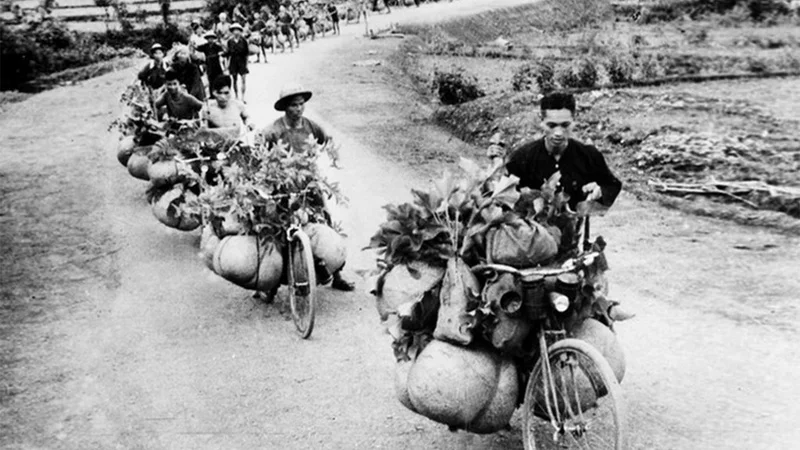
Behind the army came an enormous human supply line. According to Vietnamese figures, more than 260,000 civilian porters carried food and ammunition on their backs and shoulders, and about 20,000 bicycles were reinforced with bamboo frames to carry loads of 200 pounds or more, pushed along by hand. Others used horses, boats and ox carts.
The French could see the roads from the air but badly underestimated how much this system could carry.
The Last Miles: Hauling the Guns by Hand
Where the trucks stopped, the hardest part began. The final stretch to the hills around Dien Bien Phu ran up steep, muddy slopes covered in jungle.
Teams of soldiers pulled each gun — some weighing more than two tons — up the slopes with long ropes, sometimes using winches anchored to trees. Others pushed from behind and placed wooden wedges under the wheels to stop the guns sliding back. On a good night, a team might move a gun only a few hundred yards. Work was done mostly in darkness to avoid French aircraft, and trees were tied together overhead as camouflage.
Vietnamese accounts tell the story of a soldier named To Vinh Dien, who, according to the story, threw himself under the wheel of a runaway gun to stop it from rolling down a slope, and was killed. He was later named a national hero in Vietnam.
Giap Changes His Plan
By late January 1954, the guns were in place for a fast, all-out attack. Then General Vo Nguyen Giap made what he later called the most difficult decision of his career. He concluded that his army was not ready to win quickly and called off the attack, just hours before it was due to begin.
Instead, he chose a slower, step-by-step siege. That meant the guns had to be pulled back out — down the same slopes — and moved to new, better-protected positions. It took weeks of extra work. But it gave the Viet Minh time to build the system that would decide the battle.
Guns Dug Into the Hillsides
Traditional artillery hides behind hills and fires over them. At Dien Bien Phu, the Viet Minh did something different. They dug many of their guns into small, deep shelters on the slopes facing the valley, often connected to tunnels. Each gun could be pushed out to fire directly at targets it could see, then pulled back under cover.
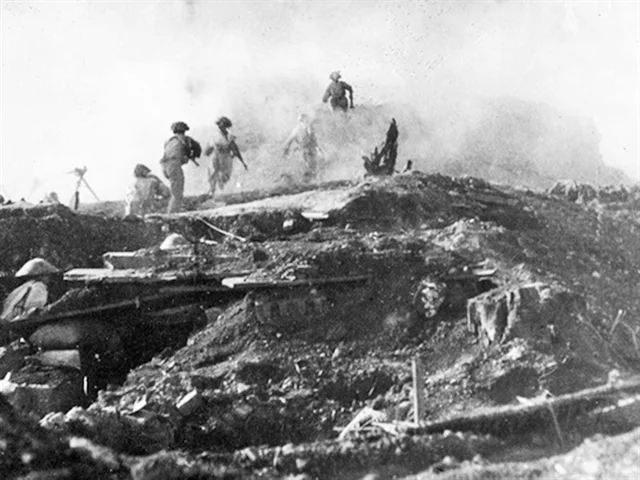
They also built dummy positions and lit fires to draw French counter-fire. From the air, the hillsides looked like unbroken jungle.
On the evening of March 13, 1954, the guns opened fire. Within two days, the northern strongpoints Béatrice and Gabrielle had fallen. The French artillery could not find most of the guns firing at them. On March 15, Colonel Piroth, blaming himself, took his own life with a grenade in his dugout.
Viet Minh anti-aircraft guns, also dragged into the hills, made the airstrip increasingly dangerous. By late March, planes could no longer land, and the camp had to be supplied by parachute. Much of what was dropped fell into Viet Minh hands.
| What the French expected | What actually happened |
|---|---|
| No heavy guns could cross the mountains | About two dozen 105mm howitzers and many lighter guns arrived |
| Guns would fire from behind the hills | Many were dug into the slopes facing the valley and fired directly |
| French counter-fire would silence them | Most Viet Minh guns were never located |
| The airstrip would keep the base supplied | Anti-aircraft fire closed it by late March |
The Cost
The effort came at a heavy price. Porters and soldiers died from exhaustion, disease, accidents and French bombing along the supply routes. In the battle itself, Viet Minh losses were far greater than French losses — Vietnamese figures give about 4,000 dead, while French estimates put Viet Minh dead at around 8,000 and wounded at 15,000.
Why It Matters
The guns in the hills turned Dien Bien Phu from a French trap into a French defeat. The fall of the base on May 7, 1954, ended France’s war in Indochina. (For the full story, see our summary of the First Indochina War.) It also left a lesson that American commanders later studied closely — and that came back to haunt them at places like Khe Sanh in 1968: never assume an enemy cannot do something just because it seems impossible. For the soldiers who were captured when the base fell, a new ordeal was just beginning.
Keep Reading
- Why Are Americans Still Missing in Vietnam 50 Years Later?
- What Happened to the Vietnamese Boat People? Where They Went, How Many Died, and Why the Camps Closed
- What Happened to Amerasian Children After the Vietnam War?
- How Did the Cu Chi Tunnels Work? Inside the Underground War — and the Tunnel Rats Sent to Fight It
- Why the 17th Parallel? How Vietnam’s Dividing Line Was Chosen in 1954
Frequently Asked Questions
How did the Viet Minh get artillery to Dien Bien Phu?
Trucks carried the guns as far as the roads allowed, then soldiers and porters hauled them by hand up mountain slopes with ropes, mostly at night. The guns were then dug into camouflaged shelters on the hillsides overlooking the French base.
Where did the Viet Minh get their artillery?
Mostly from China, starting in 1950. The guns included 105mm howitzers, some of them American-made weapons captured in the Korean War.
Why didn’t French artillery destroy the Viet Minh guns?
The Viet Minh hid their guns in deep, camouflaged shelters on the slopes, moved them in and out to fire, and used dummy positions. The French could not locate most of them.
Who was Colonel Piroth?
Charles Piroth was the French artillery commander at Dien Bien Phu. He had promised to silence the Viet Minh guns; when he could not, he took his own life on March 15, 1954, two days after the battle began.
How many porters supported the Viet Minh at Dien Bien Phu?
Vietnamese figures count more than 260,000 civilian porters and about 20,000 bicycles used to carry supplies for the campaign.
Sources
- Bernard B. Fall, Hell in a Very Small Place: The Siege of Dien Bien Phu (1966)
- Martin Windrow, The Last Valley: Dien Bien Phu and the French Defeat in Vietnam (2004)
- Vo Nguyen Giap, Dien Bien Phu (memoir; English editions)
- History Today — Richard Cavendish, “The Fall of Dien Bien Phu”
- Ministère des Armées (France), Chemins de mémoire — “The Battle of Dien Bien Phu”
- Wikipedia — “Battle of Dien Bien Phu”