About 1,565 Americans from the Vietnam War are still unaccounted for, according to the Defense POW/MIA Accounting Agency — roughly 1,300 of them in Vietnam and more than 280 in Laos. They are still missing 50 years later because most were lost in high-speed aircraft crashes, at sea or in remote jungle, because Vietnam’s acidic soil destroys bone, and because time has erased witnesses and sites. A joint U.S.–Vietnamese search continues, and Vietnam is now looking for its own missing soldiers too — about 200,000 of them.
The search began in 1973 and has outlasted the war itself by half a century. It has also turned former enemies into partners. Here is why it is so hard — and why it still matters.
Key Facts
- On the official list (from 1973): 2,633 Americans missing in North and South Vietnam, Laos and Cambodia
- Accounted for since 1973: about 1,067
- Still unaccounted for (2026): about 1,565 — around 1,316 in Vietnam, more than 280 in Laos
- Considered “non-recoverable”: several hundred, per DPAA
- Vietnamese still missing: about 180,000–200,000 soldiers, plus 300,000 unidentified remains (Vietnamese government)
- Remembered: National POW/MIA Recognition Day, third Friday of September
How Many Americans Were Missing When the War Ended?
In early 1973, under the Paris Peace Accords, North Vietnam released 591 American prisoners of war in what the U.S. called Operation Homecoming. Many families hoped their own missing men would be on those planes. Most were not.
According to the later Senate investigation, Pentagon officials were surprised: they had expected roughly 100 more prisoners to come home. The gap between who came back and who was missing became one of the most painful and political issues of the postwar era.
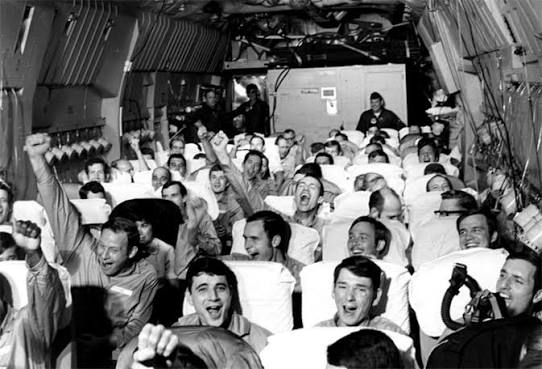
The Pentagon’s accounting agency tracks a list of 2,633 Americans missing from the war in Southeast Asia. Since 1973, about 1,067 of them have been identified and returned to their families. That leaves roughly 1,565 — a number that moves only a handful each year.
Why Are They So Hard to Find?
Most of the missing were not lost in a known place on a known day. The reasons are physical, historical and practical:
- Many were airmen. A large share of the missing were pilots and aircrew shot down over North Vietnam or Laos. A jet hitting the ground at hundreds of miles an hour leaves very little — fragments scattered across a hillside, sometimes buried deep in a crater.
- Losses at sea. Some aircraft went down in the Gulf of Tonkin or the South China Sea. Underwater sites are extremely hard to locate and excavate.
- Acidic soil and jungle. Vietnam’s warm, wet, acidic soil breaks down bone quickly. After 50 years, teams often recover only small fragments or a tooth.
- Terrain. Crash sites lie in steep karst mountains, thick jungle and remote valleys. Some can only be reached on foot or by helicopter, and many are still littered with unexploded bombs.
- Changed landscapes. Rice paddies, fish ponds, roads and new towns now cover old battlefields. After the war, villagers also collected aircraft wreckage for scrap metal, removing the clues searchers need.
- Fading memory. The Vietnamese villagers and soldiers who saw a plane fall or buried an American in 1968 are now in their 70s and 80s, or gone.
For hundreds of cases, the DPAA has concluded that the person died but the remains can never be recovered — for example, a pilot lost at sea with no wreckage found. These are “non-recoverable,” though the agency says new leads occasionally reopen a case.
Why Is the Search Getting Slower?
Time is only part of it. Vietnam War cases are now among the hardest the agency handles. In 2025, the DPAA identified a record 231 missing Americans from all wars — but only 8 of them were from the Vietnam War, according to American public radio reporting.
Money matters too. Public radio stations reported in July 2026 that federal budget cuts would reduce the number of recovery missions in Vietnam, Laos and Cambodia by more than two-thirds. DPAA leaders have told families that Vietnam remains the agency’s top priority. Families answer that every year of delay means fewer living witnesses.
How Do the U.S. and Vietnam Search Together?
For years after 1975, there was little cooperation. The issue was tied up in politics: Washington made progress on the missing a condition for better relations, and Hanoi saw the issue as a bargaining chip. Joint work began in the mid-1980s and grew steadily.
| Year | Milestone |
|---|---|
| 1973 | Operation Homecoming returns 591 American POWs |
| 1985 | The U.S. and Vietnam begin cooperating on searches |
| 1991 | A U.S. search office opens in Hanoi — the first U.S. government agency based there since the war |
| 1993 | Senate committee issues its final report on POWs and MIAs |
| 1995 | The U.S. and Vietnam restore diplomatic relations |
| 2021 | The U.S. begins helping Vietnam search for its own missing soldiers |
| 2025 | The two countries hold their 169th repatriation ceremony |
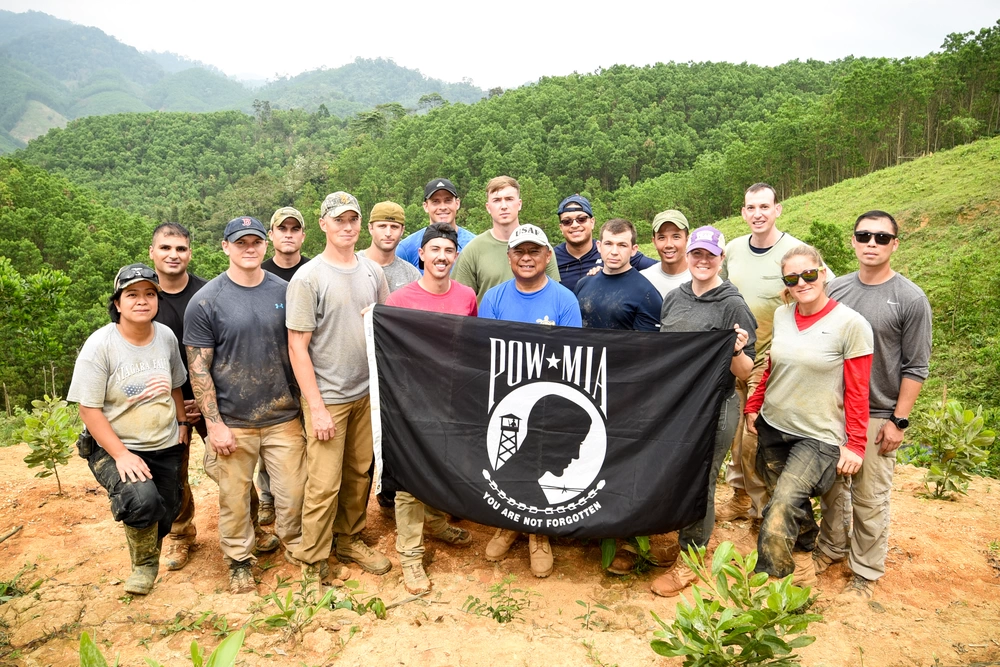
A typical recovery looks like an archaeological dig. Researchers study wartime records and interview witnesses. A joint team surveys the site, then hires dozens of local workers to dig in a grid and wash every bucket of soil through screens. Anything found goes to the DPAA laboratory in Hawaii for DNA and dental identification.
Vietnamese teams increasingly work on their own. In 2021, when COVID-19 had closed borders, a Vietnamese team recovered the remains of Navy Cmdr. Paul Charvet, lost in 1967 near Hon Me Island in Thanh Hoa province. He was returned to his family in the United States.
Are There Any American POWs Still in Vietnam?
There is no credible evidence that any are alive today. This was the most bitter question of the postwar decades, kept alive by reported “live sightings,” photos that turned out to be fakes, and popular films.
The most thorough investigation, the U.S. Senate Select Committee on POW/MIA Affairs (1991–1993), was chaired by Sen. John Kerry and included former POW Sen. John McCain. Its final report concluded that there was “no compelling evidence” that any American remained alive in captivity in Southeast Asia.
The same report also said there was evidence that a small number of Americans might have survived in captivity after Operation Homecoming in 1973 — and two senators dissented from the main conclusion. Some POW/MIA activists still argue that men were left behind. Most historians and the U.S. government conclude that, whatever happened in the 1970s, no American POWs survive in Vietnam today.
Vietnam’s Missing: The Other Side of the Search
Americans are not the only ones still looking. Vietnam’s government says the remains of about 180,000 to 200,000 of its soldiers from the war have never been found, and about 300,000 remains in war cemeteries have never been identified. The number of missing South Vietnamese soldiers is unknown.
| Americans | Vietnamese (North Vietnamese army and Viet Cong) | |
|---|---|---|
| Still missing | About 1,565 | About 180,000–200,000 (Vietnamese government) |
| Found but not identified | Small number awaiting lab work | About 300,000 graves marked “unknown” |
| Searching since | 1973 (joint with Vietnam since the mid-1980s) | Since the war; U.S. help since 2021 |
| Main tools | Archives, witness interviews, excavation, DNA lab in Hawaii | Village records, veterans’ memories, new DNA labs, U.S. wartime documents |
In 2021, the United States began returning the favor. Through the Vietnam Wartime Accounting Initiative, the U.S. government, the U.S. Institute of Peace and researchers at Harvard have helped Vietnam search captured wartime documents, build databases and set up DNA testing. American veterans’ groups have also handed over thousands of files on Vietnamese soldiers. In December 2025, Vietnam’s government set goals of recovering 7,000 more fallen soldiers and DNA-testing 18,000 unidentified remains by July 27, 2027.
Keep Reading
- What Happened to the Vietnamese Boat People? Where They Went, How Many Died, and Why the Camps Closed
- What Happened to Amerasian Children After the Vietnam War?
- How Did the Cu Chi Tunnels Work? Inside the Underground War — and the Tunnel Rats Sent to Fight It
- Why the 17th Parallel? How Vietnam’s Dividing Line Was Chosen in 1954
- Why Didn’t the U.S. Save the French at Dien Bien Phu? Inside Operation Vulture
Frequently Asked Questions
How many Americans are still missing from the Vietnam War?
About 1,565 as of 2026, according to the Defense POW/MIA Accounting Agency. Around 1,300 are believed lost in Vietnam, more than 280 in Laos, and the rest in Cambodia and nearby waters.
How are missing soldiers identified after so long?
Remains go to the DPAA laboratory in Hawaii, where scientists compare DNA with samples from family members and check dental records and personal items such as dog tags or rings found at the site.
How can families of the missing help?
By giving a DNA reference sample through the service casualty offices. DPAA says family DNA is often the key to identifying small fragments.
Why It Still Matters
For about 1,500 American families, the Vietnam War never fully ended: there is no grave, only a name. For hundreds of thousands of Vietnamese families, the same is true. The search for the missing was one of the first bridges between the two countries after 1975, and it has become a shared effort. Each identification, on either side, closes one story that has been open for more than 50 years.
Sources
- Congressional Research Service — “Defense POW/MIA Accounting Agency” (IF13175, March 2026), Table 1
- Defense POW/MIA Accounting Agency — news releases on Vietnam and Laos recovery operations (2025–2026) (dpaa.mil)
- WHRO / Texas Public Radio / WUNC — “‘Time is passing’: Federal budget cuts have slowed efforts to find missing Vietnam-era troops” (July 2026)
- Stars and Stripes — reports on Laos remains and Vietnam War accounting (2025)
- U.S. Senate Report 103-1 — Final Report of the Select Committee on POW/MIA Affairs (January 13, 1993)
- Air & Space Forces Magazine — “Weighing the Evidence on POWs” (July 1993)
- U.S. Institute of Peace — “Learning from U.S.–Vietnam Cooperation on Wartime Remains Recovery” and the Vietnam Wartime Accounting Initiative
- Harvard Gazette — reports on the Unseen Legacies of the Vietnam War project (2023, 2024)
- VnExpress International — “Remains of 200,000 Vietnam War soldiers still missing, 300,000 unidentified” (July 2022)
- Viet Nam News — “From adversaries to trusted friends: how MIA recovery became the building block of Viet Nam–US ties” (2025)
- Stimson Center — “Progress in the Search for Vietnam’s Missing” (2026)