
Last updated:
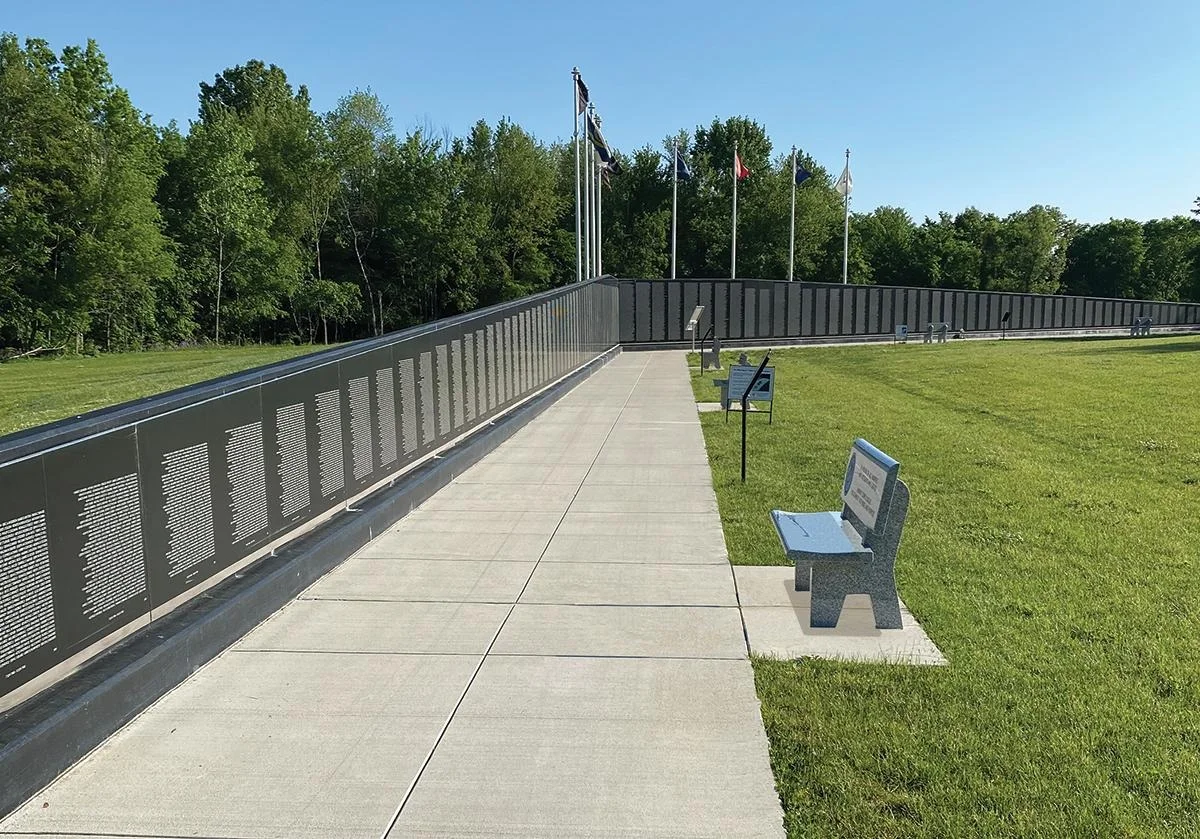
The first American killed in Vietnam was Lt. Col. A. Peter Dewey, an OSS officer shot at a Viet Minh roadblock near Saigon on September 26, 1945 — almost 20 years before U.S. combat troops landed. But depending on what you count, there are at least five other “first” Americans, and only some of them are on the Vietnam Veterans Memorial.
Key Facts
- First known American killed in Vietnam: Lt. Col. A. Peter Dewey, OSS — September 26, 1945
- First Americans killed in the French war: CIA-airline pilots James McGovern and Wallace Buford — May 6, 1954
- Earliest death on The Wall: Tech. Sgt. Richard Fitzgibbon Jr. — June 8, 1956 (added in 1999)
- First U.S. Army death: Capt. Harry Cramer Jr., Special Forces — October 21, 1957
- First killed by Viet Cong attack: Maj. Dale Buis and Master Sgt. Chester Ovnand — July 8, 1959
- Official start date for The Wall: November 1, 1955
Why There Is More Than One Answer
Ask most Americans when the Vietnam War started and they will say 1964 or 1965 — the Gulf of Tonkin, or the Marines landing at Da Nang. But Americans were dying in Vietnam long before that.
The answer depends on one question: when did the war begin? For years, the Department of Defense said January 1, 1961. In 1998 it moved the date back to November 1, 1955, the day the U.S. Military Assistance Advisory Group in Vietnam was created. Every change pulled new names onto the list of “firsts.” And some Americans died even before that.
Here they are, in order.
1945: Peter Dewey, the OSS Officer at the Roadblock
In September 1945, World War II had just ended. Peter Dewey, a 28-year-old officer of the OSS — America’s wartime intelligence agency — arrived in Saigon with a small team. His job was to look after American interests and help free Allied prisoners held by the Japanese. Working with the Viet Minh, the team helped arrange the release of more than 4,500 Allied POWs, including about 240 Americans.
Saigon was exploding. French troops were seizing back the city, and Vietnamese fighters were setting up roadblocks. British and French officials distrusted Dewey’s contacts with the Viet Minh, and he was ordered home.
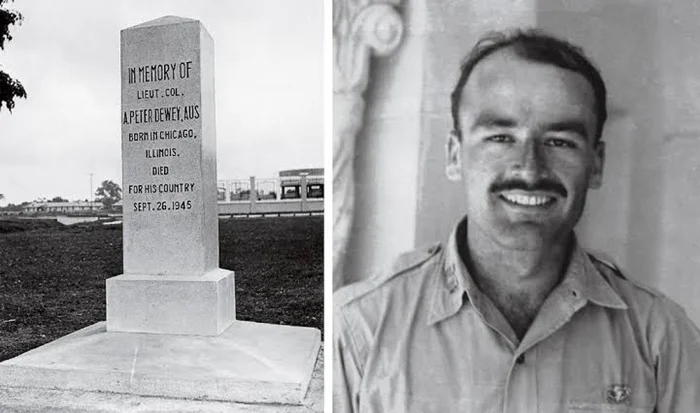
On September 26, his flight out was delayed. Driving back toward the OSS villa, Dewey came to a Viet Minh roadblock. He reportedly shouted at the men in French. They opened fire, apparently believing he was a French officer. Dewey was killed instantly. His body was never recovered.
Ho Chi Minh later wrote to President Truman to express his regret over Dewey’s death. Shortly before he died, Dewey had reportedly warned that the French position in Indochina was collapsing and that the United States should stay out of Southeast Asia.
1954: The Pilots Over Dien Bien Phu
Nine years later, France was losing its war in Vietnam, and the United States was paying most of the bill. At Dien Bien Phu, a French garrison was surrounded and could only be supplied by air.
Some of the pilots flying those supplies were American civilians working for Civil Air Transport, an airline secretly owned by the CIA. They flew American-built C-119 “Flying Boxcars” painted with French markings.
One of them was James B. McGovern Jr., a World War II fighter ace. He weighed about 260 pounds, and friends called him “Earthquake McGoon,” after a giant character in the comic strip Li’l Abner. His co-pilot was Wallace Buford, 28, of Kansas City, Kansas.
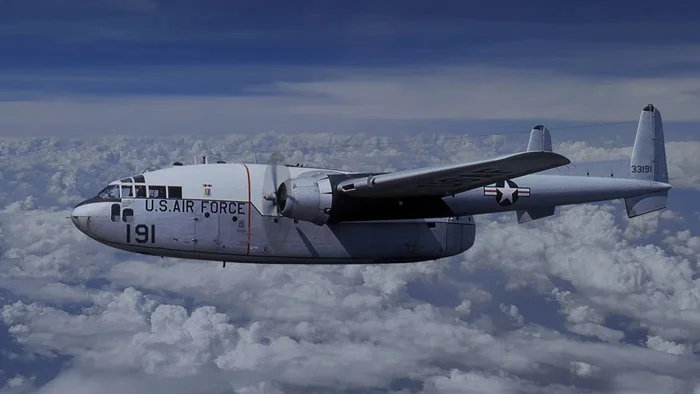
On May 6, 1954, while dropping an artillery piece to the French, their plane was hit by anti-aircraft fire. McGovern nursed the burning aircraft about 75 miles into Laos before it crashed. Both pilots and two French crewmen were killed. Dien Bien Phu fell the next day.
The CIA connection stayed secret for decades. McGovern’s remains were found in Laos in 2002, identified in 2006 and buried at Arlington National Cemetery in 2007. Buford’s remains have never been found. In 2005, France made both men Knights of the Legion of Honor.
1956: Richard Fitzgibbon Jr., the First Name on the List
Technical Sergeant Richard B. Fitzgibbon Jr. of the U.S. Air Force was serving with the advisory group in Saigon. On June 8, 1956, he was shot by another American airman. It was not combat, but he died on duty in Vietnam.
For decades, his name was missing from The Wall, because his death fell before the official 1961 start date. In 1988, a relative visiting the memorial found the name of Fitzgibbon’s son — Marine Lance Cpl. Richard Fitzgibbon III, killed in Vietnam in 1965 — but not the father’s. The family campaigned for years. With help from Rep. Ed Markey of Massachusetts, the Defense Department moved the start date to November 1, 1955.
On Memorial Day 1999, Richard Fitzgibbon Jr.’s name was added to The Wall. He is now the earliest death it honors. He and his son are one of only three father-and-son pairs killed in the war.
1957: Harry Cramer, the First Green Beret
Few Americans know that President Eisenhower sent Army Special Forces to Vietnam in 1957, years before President Kennedy. Capt. Harry G. Cramer Jr., a West Point graduate and Korean War veteran, led one of the first teams, training South Vietnamese soldiers near Nha Trang.
On October 21, 1957, Cramer was killed by an explosion during a training patrol. The Army called it an accident. A medic on the patrol later said they had come under mortar fire. Either way, Cramer was the first U.S. Army soldier and the first Special Forces soldier to die in Vietnam. After years of effort by his family, his name was added to The Wall in 1983.
1959: Two Advisers and a Hollywood Movie
On the evening of July 8, 1959, six American advisers at Bien Hoa, about 20 miles from Saigon, sat down in their mess hall to watch a movie, The Tattered Dress, starring Jeanne Crain.
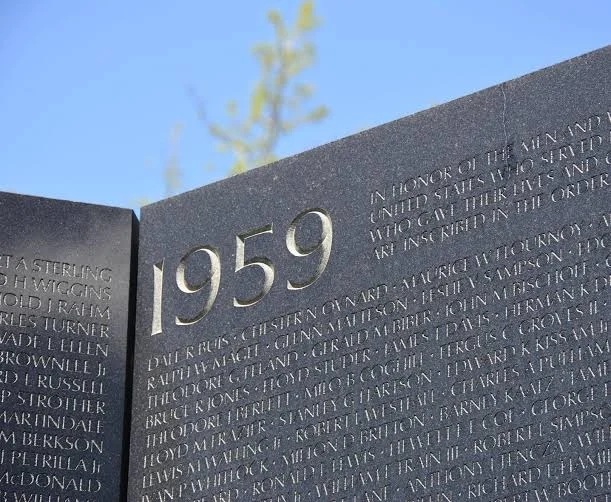
When the first reel ended, someone switched on the lights to change it. Viet Cong guerrillas waiting outside the windows opened fire. Major Dale R. Buis, who had arrived just two days earlier, and Master Sergeant Chester M. Ovnand, two months short of his 45th birthday, were killed.
They were the first Americans killed by an enemy attack in what Americans call the Vietnam War. For many years, they were the first two names on The Wall.
1961: Tom Davis and a President’s Words
Specialist 4 James T. “Tom” Davis of Livingston, Tennessee, was a radio specialist with the Army Security Agency. His job was to locate Viet Cong radio transmitters.
On December 22, 1961, his truck was ambushed near Saigon. Davis jumped out and fired back before he was killed. He is often called the first American killed in ground combat in Vietnam. President Lyndon Johnson later called him “the first American to fall in defense of our freedom in Vietnam.” His unit’s base was renamed Davis Station in his honor.
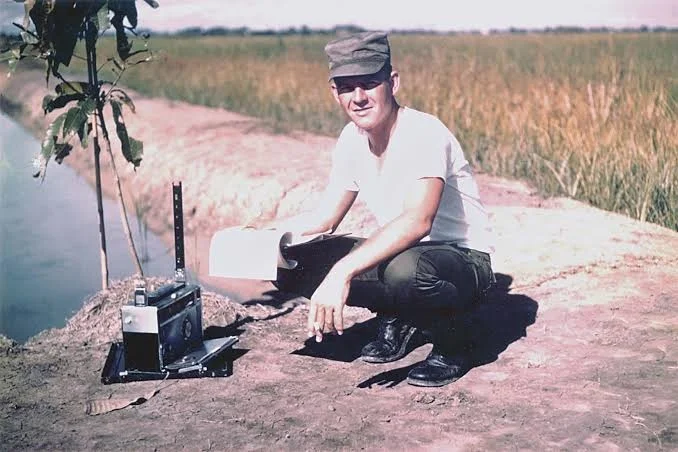
Johnson’s words helped fix 1961 as the official start of the war — which is why the earlier names had to be added to The Wall one by one.
| Date | Name | What makes him “first” | On The Wall? |
|---|---|---|---|
| Sept. 26, 1945 | Lt. Col. A. Peter Dewey (OSS) | First known American killed in Vietnam | No |
| May 6, 1954 | James McGovern & Wallace Buford (CIA airline pilots) | Only Americans killed in combat in the French Indochina War | No |
| June 8, 1956 | Tech. Sgt. Richard Fitzgibbon Jr. | Earliest death honored on The Wall | Yes (added 1999) |
| Oct. 21, 1957 | Capt. Harry Cramer Jr. | First U.S. Army and Special Forces death | Yes (added 1983) |
| July 8, 1959 | Maj. Dale Buis & Master Sgt. Chester Ovnand | First killed by Viet Cong attack | Yes |
| Dec. 22, 1961 | Spc. 4 James T. Davis | Called “first to fall” by President Johnson | Yes |
Why the Answer Still Matters
These men died in a war most Americans did not yet know existed. Their stories show how slowly, and how quietly, the United States moved into Vietnam: first a spy team in 1945, then secret pilots in 1954, then a few hundred advisers in the late 1950s.
By the time combat troops arrived in 1965, Americans had already been dying in Vietnam for 20 years. To understand how it started, see our summary of the First Indochina War.
Keep Reading
- The Vietnam War Explained: A Clear Summary (1955–1975)
- The First Indochina War: A Clear Summary of How France Lost Vietnam (1946–1954)
- What Happened to the French Prisoners After Dien Bien Phu?
- What Happened to South Vietnamese Soldiers After the Fall of Saigon?
- How Did the Vietnam Draft Lottery Work? The Night America Drew Birthdays From a Jar
- Inside Ho Thuy Tien, Vietnam’s Abandoned Water Park
Frequently Asked Questions
Who was the first American killed in the Vietnam War?
The first known American killed in Vietnam was OSS officer Lt. Col. A. Peter Dewey, on September 26, 1945. The earliest death honored on the Vietnam Veterans Memorial is Tech. Sgt. Richard Fitzgibbon Jr., who died on June 8, 1956.
When were the first Americans killed in Vietnam?
The first American died in Vietnam in 1945. Two American civilian pilots were killed in 1954, and the first U.S. military advisers died in 1956, 1957 and 1959 — all before U.S. combat troops arrived in 1965.
Who are the first names on the Vietnam Wall?
Maj. Dale Buis and Master Sgt. Chester Ovnand, killed on July 8, 1959, were long the first names on The Wall. Since 1999, the earliest death it honors is that of Richard Fitzgibbon Jr. (1956).
Why isn’t Peter Dewey on the Vietnam Wall?
The Wall only includes Americans who died on or after November 1, 1955, the official start date set by the Defense Department. Dewey died in 1945, and McGovern and Buford in 1954, so they are not listed.
Who was Earthquake McGoon?
Earthquake McGoon was the nickname of James B. McGovern Jr., a CIA-airline pilot killed with his co-pilot Wallace Buford while supplying the French at Dien Bien Phu on May 6, 1954.
Who was the last American killed in Vietnam?
The last U.S. service members killed in action in Vietnam were Marine Corporals Charles McMahon and Darwin Judge, on April 29, 1975, at Saigon’s Tan Son Nhut airport.
Sources
- Vietnam War Commemoration (U.S. Department of Defense) — “A. Peter Dewey is Killed by Viet Minh Troops,” vietnamwar50th.com
- Defense POW/MIA Accounting Agency — “CIA Pilot Missing in Action From Vietnam Is Identified (McGovern),” dpaa.mil
- U.S. Department of Defense, “Name of Technical Sergeant Richard B. Fitzgibbon to be added to the Vietnam Veterans Memorial” (1998)
- U.S. Army — “Army Marks 50 Years Since First Vietnam Casualty” (2007)
- DVIDS — “Ceremony Commemorates Vietnam War’s First Combat Casualties“
- National Security Agency — National Cryptologic Memorial: SP4 James T. Davis
- Vietnam Veterans Memorial Fund — Wall of Faces
- Time magazine, “Death at Intermission Time,” July 20, 1959
3 thoughts on “Who Was the First American Killed in Vietnam? The Answer Is Older Than You Think”