Last updated:
When Saigon fell on April 30, 1975, South Vietnam’s army — around a million men including militias — ceased to exist overnight. Some soldiers escaped abroad. Most went home, where the new communist government ordered them to register. Rank-and-file soldiers usually got a few days of political classes, but officers and officials were sent to re-education camps, many for years and some for more than a decade. Tens of thousands later rebuilt their lives in the United States.
Key Facts
- Army: Army of the Republic of Vietnam (ARVN) and the wider Republic of Vietnam Armed Forces
- Size in 1975: roughly 1 million men, including regional and local forces
- Surrender: April 30, 1975, ordered by President Duong Van Minh
- Re-education camps: at least 200,000–300,000 held for long periods; up to 1 million detained at least briefly
- Longest detentions: up to 17 years or more
- U.S. resettlement: Humanitarian Operation (H.O.) program, 1989–1994 — more than 70,000 former detainees and their families
- Deaths after 1975: unknown; Vietnam has never released figures, and estimates vary widely
April 30, 1975: An Army Disappears
On the morning of April 30, 1975, South Vietnam’s last president, Duong Van Minh, went on the radio. He ordered all South Vietnamese forces to stop fighting and wait to hand over to the incoming government. Hours later, North Vietnamese tanks drove through the gates of the Presidential Palace in Saigon.
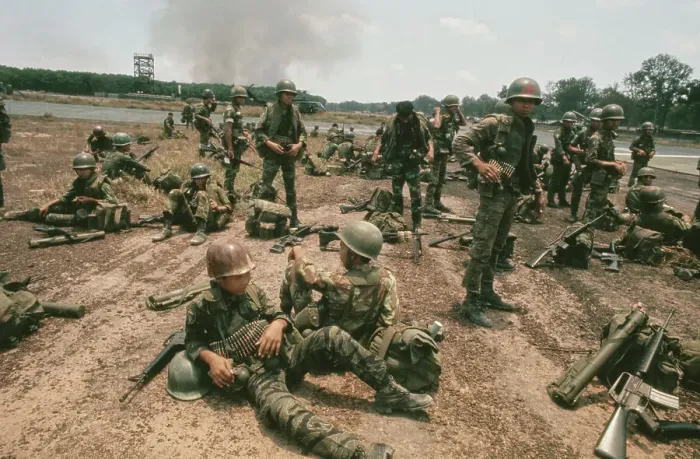
Across the country, soldiers took off their uniforms. Boots, helmets and rifles were left in piles along the roads. Men walked home in their undershirts, trying to look like civilians.
Some commanders chose another path. Several South Vietnamese generals took their own lives rather than surrender, among them General Nguyen Khoa Nam, the commander in the Mekong Delta, and his deputy, General Le Van Hung. In the South Vietnamese community abroad, they are still remembered as heroes.
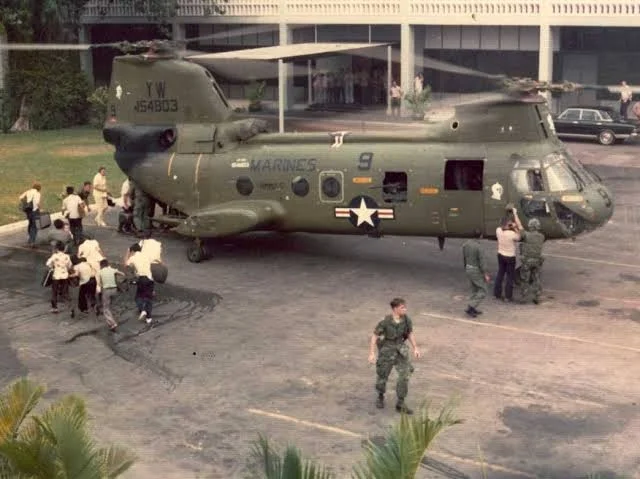
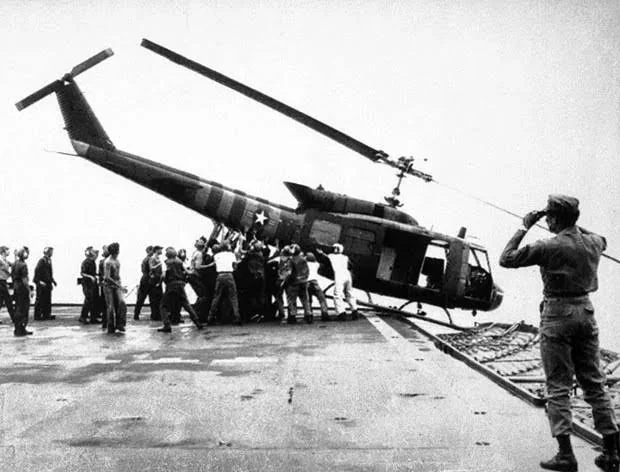
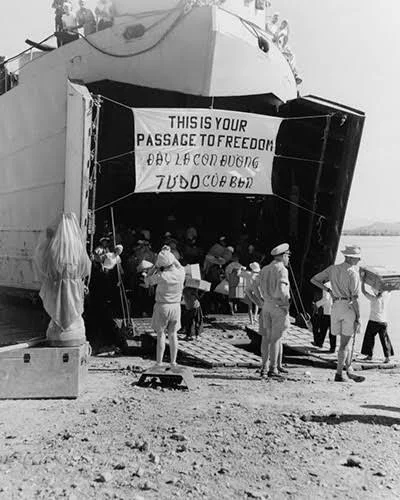
Thousands of others escaped in the final days — by U.S. helicopter, on South Vietnamese Navy ships, in small boats or by flying military aircraft to Thailand. (For how the war came to this point, see our clear Vietnam War summary.)
Registration: “Come Forward and Report”
In the weeks after the fall of Saigon, the new authorities posted orders: all former soldiers, police and officials of the old government must register.
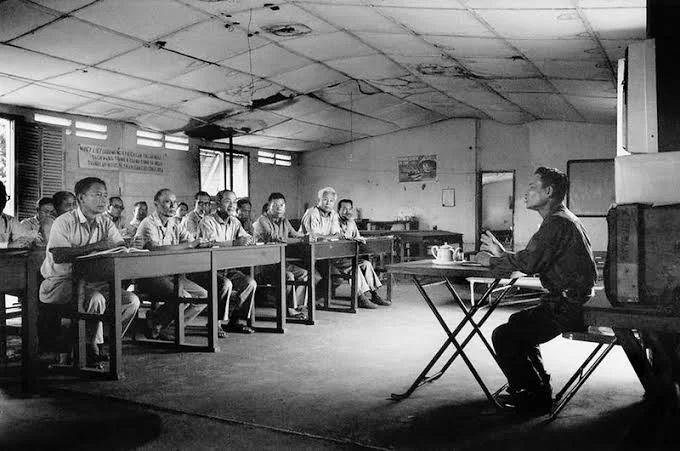
Ordinary soldiers and noncommissioned officers were generally sent to short political courses, often just three days long, then released — though they remained under watch and carried the label of the “old regime” for years.
Officers were treated very differently. In June 1975, they were told to report for “re-education” and to bring enough food, clothes and money for a set period — about ten days for junior officers and a month for senior officers and officials. Many families believed them. Most of those men would not come home for years.
Re-education Camps: “Ten Days” That Lasted Years
The camps — called trại cải tạo in Vietnamese — were spread across the country, from the Mekong Delta to remote mountains near the Chinese border. Many prisoners were moved north, far from their families.
Life in the camps centered on two things: political study and hard labor. Prisoners attended lessons on the crimes of the old government and the United States, and wrote long confessions about their past, again and again. They cleared jungle, built huts, dug ditches and farmed, often on starvation rations. Disease was common and medical care minimal.
How many people were held? A Vietnamese official said in 1987 that close to a million people had been placed in camps after 1975, most of them for only days or weeks. Historians generally estimate that 200,000 to 300,000 were held for long periods. Some prisoners spent 17 years or more in the camps.
How many died? Nobody knows. Vietnam has never published figures. Former prisoners and researchers in the U.S. and Europe have collected thousands of names of men who died of hunger, illness, exhaustion or, in some cases, execution after escape attempts. Some published estimates run into the tens of thousands or higher, but they are disputed and cannot be checked against official records.
Vietnam’s government has described the camps as a lenient alternative to trials and executions. Many Western historians note that the large-scale massacre some Americans had predicted after the war did not take place — but that the camps, and the punishment that followed, were a harsh system of political imprisonment.
Life After the Camps
Release did not mean freedom. Former prisoners were often placed under local supervision for years. Their family background, recorded in official files, could block their children from good schools, university places and government jobs.
Many families were pushed out of cities to “New Economic Zones” — undeveloped rural land where they were expected to farm with few tools. Disabled South Vietnamese veterans received no pensions or care from the new state and often survived by begging or selling lottery tickets on the street.
The South’s national military cemetery at Bien Hoa, where many soldiers were buried, was closed off and neglected for decades. Only in recent years have families been allowed to visit and restore graves more freely.
For many, the answer was to leave. Former soldiers and their families made up a large share of the hundreds of thousands of boat people who fled Vietnam by sea from the late 1970s.
The Long Road to America
For years, wives of imprisoned officers — many of them already resettled in the U.S. — lobbied Washington to help. One of the best known, Khuc Minh Tho, founded the Families of Vietnamese Political Prisoners Association in Virginia.
Their campaign worked. On July 30, 1989, the United States and Vietnam reached an agreement allowing former prisoners who had spent at least three years in re-education camps to emigrate with their families. It became known as the Humanitarian Operation, or H.O., program. The first H.O. families arrived in January 1990. By 1994, more than 70,000 former detainees and their families had resettled in the United States.
Many arrived in their forties and fifties, after a decade or more in the camps, with little English. Former colonels and majors took jobs in factories, restaurants and nail salons so their children could go to college. Today, communities such as Little Saigon in Orange County, California, and those in Houston, San Jose and northern Virginia include many H.O. families.
| Date | What happened |
|---|---|
| April 30, 1975 | Saigon falls; South Vietnam’s forces ordered to stop fighting |
| May–June 1975 | Former soldiers and officials ordered to register; officers report for “re-education” |
| Late 1970s | Many prisoners moved to camps in the North; boat people exodus begins |
| 1980s | Gradual releases; many former prisoners kept under local supervision |
| July 30, 1989 | U.S.–Vietnam agreement creates the H.O. program |
| January 1990 | First H.O. families arrive in the United States |
| 1994 | More than 70,000 former detainees and families have resettled in the U.S. |
Why It Still Matters to Americans
About 200,000 to 250,000 South Vietnamese soldiers died fighting alongside the United States, according to U.S. military estimates. For decades, their story was largely left out of how Americans remembered the war.
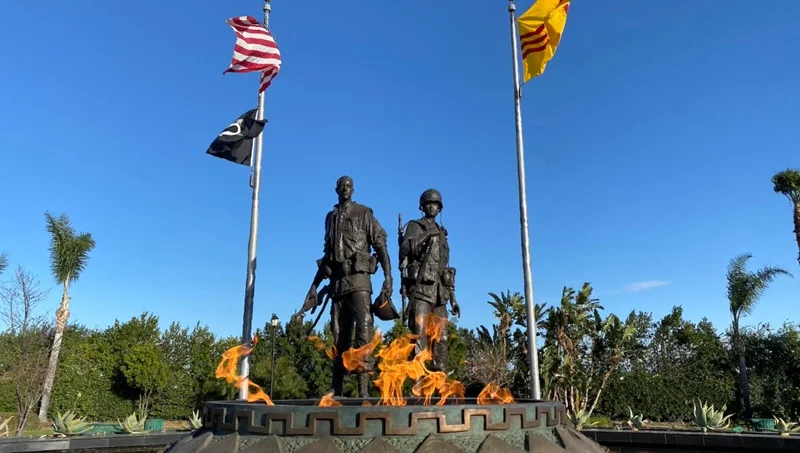
That has slowly changed. In 2003, Vietnamese Americans in Westminster, California, dedicated a Vietnam War Memorial showing an American and a South Vietnamese soldier standing side by side. For many former ARVN soldiers and their children, it was the first public recognition in the United States that they, too, had fought — and lost — the same war.
Keep Reading
- The Vietnam War Explained: A Clear Summary (1955–1975)
- The First Indochina War: A Clear Summary of How France Lost Vietnam (1946–1954)
- What Happened to the French Prisoners After Dien Bien Phu?
- Who Was the First American Killed in Vietnam? The Answer Is Older Than You Think
- How Did the Vietnam Draft Lottery Work? The Night America Drew Birthdays From a Jar
- Inside Ho Thuy Tien, Vietnam’s Abandoned Water Park
Frequently Asked Questions
What happened to ARVN soldiers after the war?
Most went home and were ordered to register with the new government. Enlisted men usually attended short political courses, while officers and officials were sent to re-education camps, often for years. Many later fled Vietnam or resettled in the United States.
How many South Vietnamese were killed after the fall of Saigon?
There is no reliable figure. Vietnam has never released numbers for deaths in the re-education camps or for executions after 1975. Researchers have documented thousands of deaths, and some estimates run much higher, but they are disputed. Many more people died at sea while fleeing as boat people.
How long were people kept in re-education camps?
It ranged from a few days for ordinary soldiers to many years for officers and officials. Some prisoners were held for 17 years or more.
What was the H.O. program?
The Humanitarian Operation program, created by a U.S.–Vietnam agreement in July 1989, allowed former South Vietnamese prisoners who had spent at least three years in re-education camps to emigrate to the United States with their families.
Did South Vietnamese soldiers get U.S. veterans’ benefits?
No. Soldiers of South Vietnam’s army are not U.S. veterans and are not eligible for VA benefits, though those who resettled in the U.S. could later become citizens and receive the same public benefits as other residents.
Sources
- EBSCO Research Starters — “Released Re-education Detainee Program” (Humanitarian Operation)
- Christian Science Monitor — “Rule-of-law campaign promises to open up Vietnam’s bamboo gulag” (1987) and “Vietnam Vets Finding Ways to Put War Behind” (1990)
- Encyclopaedia Britannica — “Vietnam War” (casualty estimates)
- Amanda C. Demmer, After Saigon’s Fall: Refugees and US–Vietnamese Relations, 1975–2000 (Cambridge University Press, 2021)
- Southeast Asian Archive, UC Irvine — “Post-1975 Emigration”
- Amnesty International reports on detention in Vietnam (1980s)