Last updated:
Hitler declared war on the United States on December 11, 1941, four days after Pearl Harbor, even though no treaty required him to. He believed war with America was coming anyway, that the U.S. was already fighting Germany at sea, and that Japan would keep American forces tied down in the Pacific. He also badly underestimated American power. Many historians call it one of his worst mistakes: it brought the world’s largest industrial economy into the war against him.
On December 8, 1941, Congress declared war only on Japan. Many Americans assumed the fight in Europe might still wait. Three days later, Hitler settled the question himself.
Key Facts
- Date: Thursday, December 11, 1941
- How: Foreign Minister Joachim von Ribbentrop read the declaration to the U.S. chargé d’affaires in Berlin; Hitler announced it in a speech to the Reichstag the same afternoon
- Also declared: Italy, the same day
- U.S. response: Congress declared war on Germany and Italy within hours, with no votes against
- Treaty obligation: none — the Tripartite Pact only required help if a member was attacked
Did Germany Have to Declare War?
No. Germany, Italy and Japan had signed the Tripartite Pact in September 1940, but it was a defensive alliance. It required members to help one another if attacked by a power not yet in the war. Japan had attacked the United States, not the other way around, so Germany had no legal duty to join.
Japan wanted Germany in anyway. On December 8, Japan’s ambassador in Berlin, Hiroshi Oshima, pressed Ribbentrop for a German declaration. Hitler had already privately promised Tokyo support in case of war with America — and he decided to keep that promise.
Why Did Hitler Do It?
Historians point to several reasons, which worked together:
| Reason | What Hitler was thinking |
|---|---|
| War seemed inevitable | He believed Roosevelt would bring America into the European war sooner or later. Better, in his view, to choose the moment himself. |
| America was already helping Britain and the Soviet Union | Lend-Lease shipments and U.S. Navy convoy escorts were keeping Germany’s enemies supplied. |
| Unleashing the U-boats | A declaration would let German submarines attack American ships freely, including along the U.S. East Coast. |
| Japan as a distraction | He expected Japan to keep American forces busy in the Pacific for years. |
| Contempt for America | Hitler saw the U.S. as racially mixed, soft and unready for war, and underestimated its industrial and military capacity. |
| Prestige and the alliance | Standing with Japan after its dramatic success kept the Axis together and looked like strength. |
Timing mattered too. In early December 1941, the German army had just been stopped outside Moscow. Some historians argue Hitler wanted a bold move to change the story of the war.
Were America and Germany Already Fighting?
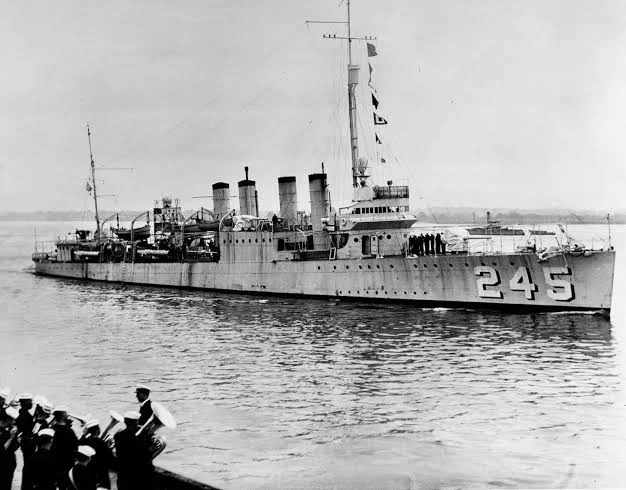
At sea, they were — without a declaration. By late 1941, the U.S. Navy was escorting convoys partway across the Atlantic, and clashes with German submarines had begun.
- March 1941: Congress passed Lend-Lease, letting the U.S. send weapons and supplies to Britain and, later, the Soviet Union.
- September 4, 1941: a German U-boat fired torpedoes at the destroyer USS Greer, which had been tracking it. Both missed.
- September 11, 1941: Roosevelt announced that U.S. warships would fire on German and Italian warships in waters important to American defense — the so-called “shoot on sight” order.
- October 17, 1941: the destroyer USS Kearny was torpedoed; 11 sailors died.
- October 31, 1941: USS Reuben James was sunk by a U-boat, with about 100 men killed — the first U.S. warship lost in the war.
Germany’s formal declaration on December 11 cited exactly these events, accusing Roosevelt’s “shoot on sight” order of turning an undeclared war into an open one.
What Happened on December 11, 1941?
In the early afternoon in Berlin, Ribbentrop summoned the American chargé d’affaires, Leland Morris, and read him the declaration of war in a few minutes. Later that afternoon, Hitler spoke to the Reichstag for over an hour. Much of the speech was a personal attack on Roosevelt, mixed with antisemitic conspiracy claims blaming Jews for the war.
Italy’s Benito Mussolini declared war on the United States the same day.
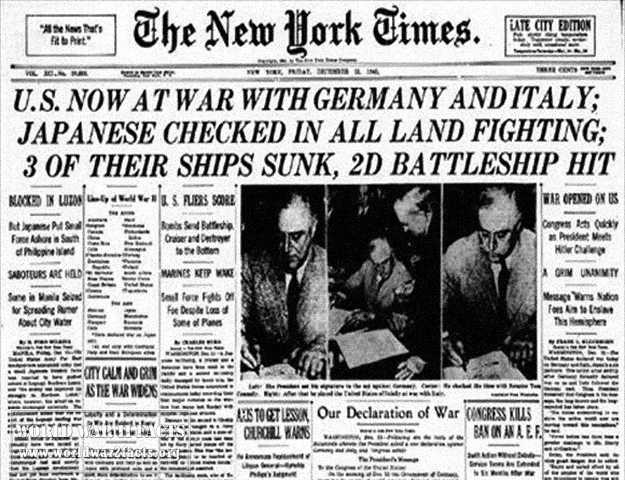
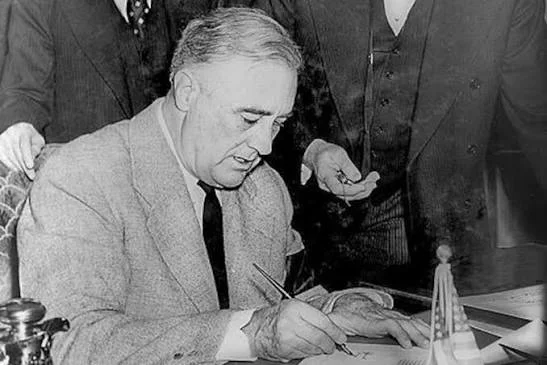
In Washington, Roosevelt sent a short message to Congress. That afternoon, the Senate voted 88–0 and the House 393–0 to declare war on Germany. Roosevelt signed the declaration the same day.
What If Hitler Had Not Declared War?
This is one of the most debated “what ifs” of the war. Two main views:
- It would have changed a lot: after Pearl Harbor, American anger was aimed at Japan. Without Hitler’s declaration, Roosevelt would have had to persuade Congress to fight Germany too, and public pressure might have pushed most U.S. strength into the Pacific — at least for a while.
- It would have changed little: Roosevelt’s military planners had already agreed with Britain on a “Europe First” strategy, and the naval war in the Atlantic was heating up. Historians Brendan Simms and Charlie Laderman argue that war between Germany and America was likely, but not inevitable, and that Hitler’s choice simply decided the timing.
Most historians agree on one thing: the declaration removed any political obstacle to Roosevelt’s goal of defeating Germany first.
Was It Hitler’s Biggest Mistake?
Many historians rank it alongside the invasion of the Soviet Union as one of his two decisive blunders. Within months, German U-boats did win a brief wave of success off the American coast — sinking hundreds of ships in early 1942. But the long-term balance tipped decisively against Germany. American factories went on to produce tens of thousands of tanks and planes, and less than a year later U.S. troops were landing in North Africa.
Hitler had expected to face a distracted, unprepared America. Instead, he faced one that had been preparing to fight him all along.
Keep Reading
- What Happened to Japanese Americans After the Internment Camps?
- What Happened to Easy Company After WWII? The Real “Band of Brothers” After the War
- What Happened to the Nazi Scientists Brought to America? Operation Paperclip Explained
- What Happened to the Doolittle Raiders Captured by Japan? The Fate of the Eight
- Why Did Japanese Soldiers Refuse to Surrender in WWII? From Iwo Jima to Hiroo Onoda
Frequently Asked Questions
Did the U.S. declare war on Germany first?
No. Germany declared war on the United States first, on December 11, 1941. Congress responded with its own declaration the same day.
Why didn’t the U.S. declare war on Germany after Pearl Harbor?
Pearl Harbor was an attack by Japan, and Germany had not attacked the U.S. directly. On December 8, Roosevelt asked Congress for war against Japan only, possibly expecting Germany to make the next move.
Did Japan declare war on the Soviet Union in return?
No. Japan kept its 1941 neutrality pact with the Soviet Union until August 1945 — Hitler’s ally did not join his war against the USSR.
Why It Still Matters
On December 7, 1941, America went to war with Japan. On December 11, it went to war with the world. Hitler’s declaration turned two separate wars, in Europe and the Pacific, into one global conflict — and put the full weight of the United States against him. It’s a reminder that wars are often decided not just on battlefields, but by leaders who misjudge their enemies.
Sources
- Brendan Simms and Charlie Laderman, Hitler’s American Gamble: Pearl Harbor and Germany’s March to Global War (Basic Books, 2021)
- Ian Kershaw, Fateful Choices: Ten Decisions That Changed the World, 1940–1941 (Penguin, 2007)
- History.com — “Germany declares war on the United States”
- EBSCO Research Starters — “Germany and Italy Declare War on the United States”
- The History Place — “Hitler Declares War on the United States”
- Naval History and Heritage Command — histories of USS Greer, USS Kearny and USS Reuben James
- U.S. National Archives — Joint Resolution declaring a state of war with Germany, December 11, 1941