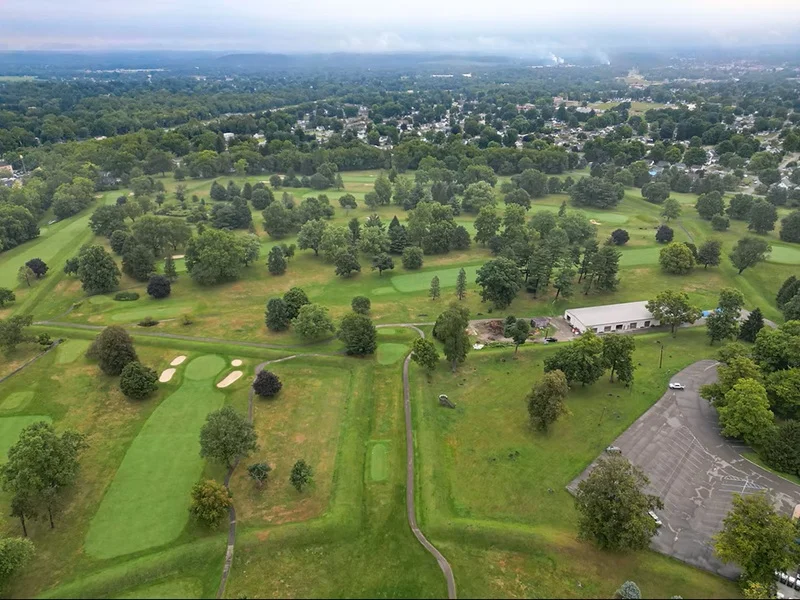
The Newark Earthworks in central Ohio are giant earthen walls built by Native Americans of the Hopewell culture about 2,000 years ago — and their Octagon is lined up with the Moon. Once every 18.6 years, the Moon rises at its northernmost point on the horizon, and from the right spot it appears almost exactly down the center line of the Octagon. Long hidden inside a private golf course, the site became a UNESCO World Heritage Site in 2023 and opened fully to the public on January 1, 2025.
Key Facts
- Location: Newark and Heath, Licking County, Ohio
- Built by: the Hopewell culture, roughly 100 BC – AD 400
- Surviving parts: the Great Circle, the Octagon Earthworks and a corner of the Wright Square
- Octagon size: 50 acres, eight walls about 550 feet long; joined to a 20-acre circle
- Astronomy: aligned to the Moon’s 18.6-year cycle (identified in 1982)
- Status: National Historic Landmark; UNESCO World Heritage Site since September 2023
- Open to the public: Great Circle for decades; Octagon fully since January 1, 2025
What Are the Newark Earthworks?
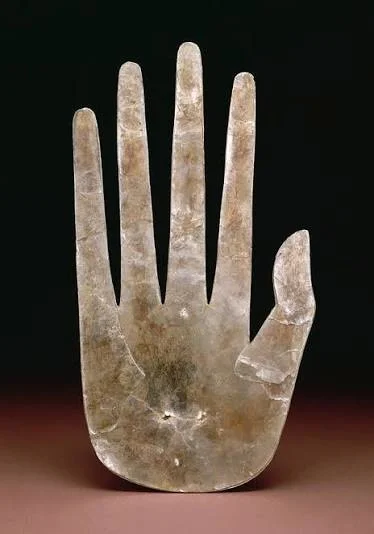
When European-American settlers reached the Licking River valley, they found a landscape of geometric walls covering roughly four and a half square miles: a huge circle, a square, an oval full of burial mounds, an octagon joined to another circle, and long parallel walls linking them together. It was the largest set of connected geometric earthworks ever built.
Most of it is gone. Canal digging and the growth of the city of Newark in the 1800s erased much of the complex, and less than 10 percent survives today. Three pieces remain:
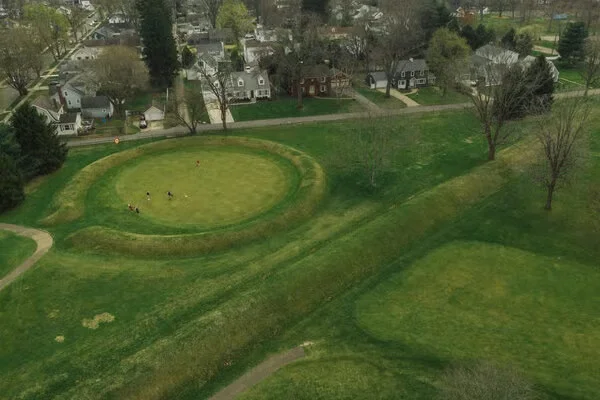
- The Great Circle — about 1,200 feet across, with walls surrounding an inner ditch 8 to 13 feet deep. The Great Pyramid of Giza could fit inside it.
- The Octagon Earthworks — an eight-sided enclosure of 50 acres, connected by a short avenue to the 20-acre Observatory Circle.
- The Wright Earthworks — a small surviving corner of the old square.
These were not houses or forts. Archaeologists see them as ceremonial spaces — places where people from many communities came together.
Who Built Them? Meet the Hopewell
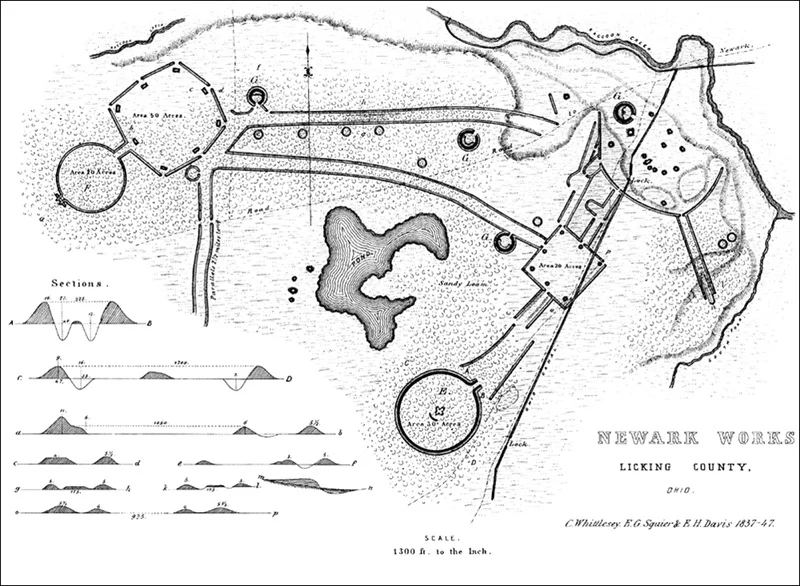
“Hopewell” is not the name of a single tribe. It is the label archaeologists use for a network of Native American communities that flourished across eastern North America between about 100 BC and AD 400, with its heart in southern and central Ohio.
The Hopewell lived in small villages of wooden houses, yet they came together to move enormous amounts of soil, much of it carried by the basketload, into walls of near-perfect geometry. Their ceremonies drew remarkable materials from across the continent:
- Obsidian (volcanic glass) from the Yellowstone area — about 1,500 miles away
- Copper from the upper Great Lakes
- Mica sheets from the southern Appalachian Mountains
- Shells and shark teeth from the Gulf and Atlantic coasts
Because there is no clear trail of these goods from village to village, some archaeologists think the Hopewell may have made long journeys to collect them directly — possibly as pilgrimages.
How many people gathered at Newark? In the 1870s, a reunion of Civil War veterans packed an estimated 15,000 to 20,000 people into the Great Circle. Lepper suggests the larger Octagon could, in theory, have held around 75,000.
How the Octagon Tracks the Moon
The Moon’s 18.6-year cycle, explained simply
Everyone knows the Sun rises in different places through the year: farther north in summer, farther south in winter. The Moon does something similar, but it swings from north to south every month.
Here is the twist: the width of that monthly swing slowly grows and shrinks over a cycle of 18.6 years. At the widest point of the cycle, called a major lunar standstill, the Moon rises farther north and farther south on the horizon than at any other time. The most recent major standstill peaked in 2024–2025. The next one will come around 2043.
You would only notice this pattern if you watched the Moon carefully — and kept track — for many years. That is what makes the Octagon so remarkable.
What the alignment looks like on the ground
Picture yourself standing on Observatory Mound, on the far edge of Observatory Circle. You look across the circle, through the gateway and down the avenue into the Octagon. During a major standstill, the Moon rises at its northernmost point right along that line — within about half a degree of the Octagon’s center.
That is only the start. Earlham College professors Ray Hively and Robert Horn argued that the walls of the Octagon point to several other key rise and set points in the lunar cycle. In a 2013 study, they added that sightlines between four hilltops around Newark mark the Moon’s extreme risings and the Sun’s solstices — and that these lines cross near the middle of the whole complex.
Did They Really Build It for the Moon?
The lunar idea did not come from someone hunting for mysteries. It came from two skeptics.
In 1982, Hively and Horn, professors at Earlham College in Indiana, wanted to test a popular claim that Stonehenge was an astronomical computer. Their suspicion: draw enough lines through any complicated monument and you will find a sunrise alignment by pure chance. They tried it on Newark’s Octagon — and found no solar alignment at all. Puzzled, they checked the Moon. The lunar alignments were there.
To be sure, they tested the only other circle-and-octagon the Hopewell built: High Bank Works near Chillicothe, about 60 miles away. It used the same lunar alignments.
Later, they used statistics to ask how likely it was that all of this happened by accident. Even with assumptions generous to chance, they put the odds at about one in a thousand; with more realistic assumptions, far lower.
What is still debated:
- Researchers agree the Octagon’s main axis is aligned with the northernmost moonrise. Whether every single wall was meant to mark a lunar point is less certain.
- Some numbers are pure coincidence. For example, Observatory Circle covers about 18.6 acres — matching the 18.6-year cycle by accident, as Horn himself pointed out.
- “Observatory” is a modern word. The Hopewell left no writing, so we cannot know exactly what the Moon meant to them. Most scholars see the alignments as part of religious ceremonies, not a science lab.
From Sacred Site to Golf Course
The Octagon’s survival is a near miss. From 1892 to 1908 the state used it as a camp for the Ohio militia. In 1910 the land was leased to the Mound Builders Country Club, which opened a golf course there the next year and expanded it to 18 holes in 1923. Greens and fairways were laid out among the ancient walls; one small circle became a putting green.
The state historical society — today the Ohio History Connection — became the owner in 1933 but kept renewing the club’s lease. For most of the year, the public could only view the Octagon from a small platform.
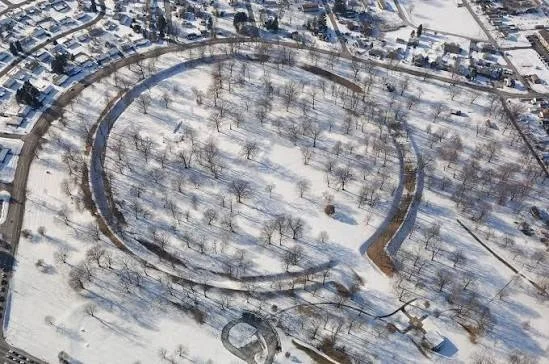
That changed when the push for UNESCO status began. A World Heritage Site needed full public access, so the Ohio History Connection went to court to take back the lease. In December 2022 the Ohio Supreme Court ruled in its favor. The two sides reached a settlement in August 2024 for an undisclosed sum, and on January 1, 2025, the Octagon opened to everyone.
| Year | What happened |
|---|---|
| c. 100 BC – AD 400 | Hopewell communities build the Newark Earthworks |
| 1848 | Squier and Davis publish a detailed survey of the earthworks |
| 1800s | Canal and city growth destroy most of the complex |
| 1892–1908 | The Octagon is used as an Ohio militia camp |
| 1910–1911 | Land leased to a country club; golf course opens |
| 1933 | The state historical society becomes the owner |
| 1982 | Hively and Horn publish the lunar alignments |
| 2022 | Ohio Supreme Court lets the Ohio History Connection reclaim the lease |
| Sept. 2023 | Hopewell Ceremonial Earthworks named a UNESCO World Heritage Site |
| Jan. 1, 2025 | The Octagon opens fully to the public |
| 2024–2025 | Major lunar standstill; public moonrise events at the Octagon |
Visiting the Newark Earthworks Today
The Newark Earthworks are part of the Hopewell Ceremonial Earthworks, Ohio’s first UNESCO World Heritage Site, together with Fort Ancient and five sites in Hopewell Culture National Historical Park.
- Octagon Earthworks: 125 N. 33rd St., Newark, OH
- Great Circle Earthworks: 455 Hebron Rd., Heath, OH — with a small museum
Check the Ohio History Connection website for current hours and guided tours. The major standstill season has passed, but the Moon still rises along other alignments each month, and moonrise tours are held from time to time.
Keep Reading
- Who Was the First American Killed in Vietnam? The Answer Is Older Than You Think
- Benedict Arnold: How a Revolutionary War Hero Became America’s Most Famous Traitor
- How Did the Vietnam Draft Lottery Work? The Night America Drew Birthdays From a Jar
- Why Were the Visby Soldiers Buried in Their Armor? The Mystery of the 1361 Mass Graves
Frequently Asked Questions
How old are the Newark Earthworks?
About 2,000 years old. They were built by the Hopewell culture between roughly 100 BC and AD 400.
Is the Octagon Earthworks really a lunar observatory?
Its main axis lines up with the northernmost moonrise of the 18.6-year lunar cycle, and statistical tests suggest this is very unlikely to be chance. Scholars still debate how many of its other walls were meant to mark the Moon, and “observatory” is a modern label for what was probably a ceremonial site.
What is a major lunar standstill?
It is the point in the Moon’s 18.6-year cycle when it rises and sets at its most northern and southern positions on the horizon. The last one peaked in 2024–2025; the next will be around 2043.
Is the Newark Octagon still a golf course?
No. After a legal battle and a 2024 settlement, the golf club left, and the Octagon has been fully open to the public since January 1, 2025.
Is the Newark Earthworks bigger than Stonehenge?
Much bigger. Stonehenge’s stone circle would fit inside one of the small circles next to the Octagon, and the Octagon itself could hold four Roman Colosseums.
Who were the Hopewell people?
A network of Native American communities in eastern North America, centered in Ohio, known for huge geometric earthworks and artifacts made from materials gathered across the continent.
Sources
- Ohio History Connection, “The Newark Earthworks and the Moon” — ohiohistory.org
- Hively, R. and Horn, R., “A New and Extended Case for Lunar (and Solar) Astronomy at the Newark Earthworks,” Midcontinental Journal of Archaeology, 2013
- Smithsonian Magazine, “An Ohio Earthwork Where Thousands Once Gathered for Celestial Observations…” (2025)
- Atlas Obscura, “Octagon Earthworks, Ohio” (2025)
- UNESCO World Heritage Centre, “Hopewell Ceremonial Earthworks“
- Hopewell Ceremonial Earthworks official site — hopewellearthworks.org
- National Geographic Education, “Intriguing Interactions” (Hopewell Interaction Sphere)